
Welcome to Fruit Tree Guide
You’re standing in front of a bare patch of earth, a trowel in your hand, wondering if the seed packet’s promise of a ‘hardy, low-maintenance’ fruit tree is just another gardening myth.
Or maybe you’re already knee-deep in soil, but the last three plants you tried died before they could bear fruit. Either way, you’re here because someone told you ‘it’s easy’—and you know that’s not true.
This site is for the people who don’t want to gamble with their garden. No vague advice, no ‘wait and see’ timelines, no ‘it depends.’ Just the steps that actually work, the mistakes that actually happen, and the small adjustments that turn a maybe into a harvest.
Whether you’re planting your first sapling or your tenth, we’re here for the dirt under the nails and the fruit on the branch.
Our story
The first time Cecilia Whitaker tried growing a fruit tree, it was a fig seedling her grandfather had pressed into a pot of potting mix ‘just to see.’ She was eight years old, and by the time she was ten, that same seedling had produced a single, lopsided fig—one she smuggled into the house as a snack, convinced no one would notice the dirt still clinging to its skin.
The tree itself lived for another twenty years, long enough to teach her that gardening isn’t about luck. It’s about paying attention to the things no one writes down.
The missing piece wasn’t more books or YouTube tutorials. It was the unspoken rules: the way a peach tree’s roots need to be buried deeper than the nursery tag says, or how a plum’s branches should be thinned in *February*, not spring.
When Cecilia started sharing those details with neighbors—first in a notebook left on a fence post, then in a blog that grew into this site—the responses were the same: *‘Why didn’t anyone tell me this before?’*
The turning point came on a Tuesday afternoon in late April, when she was watering a client’s new apple orchard in the foothills of the Sierra Nevadas. The trees were thriving, but the client’s hands were shaking as she pointed to a branch: *‘This one’s always smaller.
Is it dying?’* Cecilia crouched down, ran her fingers along the bark, and found the telltale scar where a woodpecker had pecked at it the winter before. A five-minute fix with pruning shears and a dab of wound sealant saved the branch—and the client’s patience.
That’s when she realized the site needed to do more than explain *what* to do. It needed to teach people how to *see* the problems before they became disasters.
What we stand for
We believe a fruit tree should feed you, not just fill your Instagram feed. That means no ‘aesthetic’ guides that ignore the fact your soil is alkaline, or ‘easy’ advice that assumes you have a greenhouse.
We’re here for the people who show up with a shovel and a hope—and leave with a plan.
What you will always get here
- A ‘red flag’ section in every guide—signs your plant is in trouble *before* the leaves turn brown.
- Photos of both the healthy plant *and* the one that’s already gone wrong (so you recognize it in time).
- Climate-specific advice, because a ‘warm season’ in Arizona isn’t the same as one in Oregon.
- A ‘first-year checklist’ for new trees, including the one thing 90% of beginners forget to do in month three.
Behind *Fruit Tree Guide* is a team of growers who’ve lost trees to frost, overwatered seedlings until they rotted, and still wake up at 4 a.m. to check on their orchards during heatwaves.
They’re not academics or celebrity gardeners—they’re the people who show up to work with mud on their boots and call it a good day.
Cecilia Whitaker
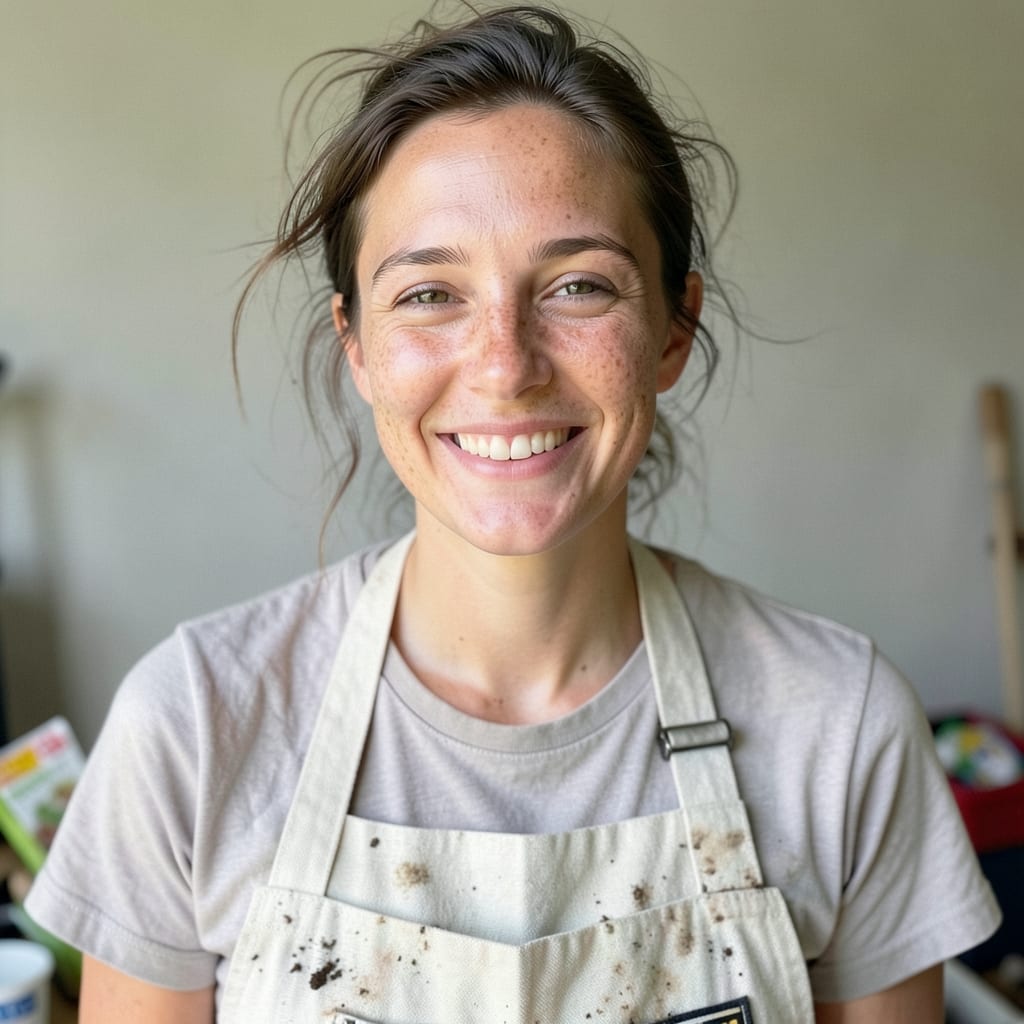
Cecilia Whitaker is the founder and editor of *Fruit Tree Guide*, though she’d rather be outside than at a desk. Her background is in permaculture design, but her real education came from her grandfather’s orchard, where she learned that the best lessons often arrive with a crowbar in hand.
She’s the one who notices when the soil’s too compacted before the plants do, and she’s also the person who once pruned a peach tree in the wrong season—an error that’s now documented in the site’s ‘Mistakes to Avoid’ section.
On her desk, there’s always a half-empty mug of cold coffee (she drinks it black, no sugar, and forgets to refill it), a pair of gloves that still smell like last year’s compost, and a notepad where she scribbles down plant names in the margins of grocery receipts.
Her biggest frustration? People who assume gardening is passive. ‘You can’t just *plant* something and walk away,’ she says. ‘It’s more like babysitting—except the baby is stubborn, and it judges you if you’re late with the water.’
'I’d rather tell you exactly how much to water—even if it means admitting I got it wrong three times myself—than let you guess and lose a tree. The soil doesn’t care about your feelings. It just wants to know if you’re paying attention.'
Cecilia Whitaker
How we create our content
Every piece starts with a problem someone brought to us—either in person, in an email to the contact page, or in a comment on a forum where gardeners trade war stories. We don’t invent questions. We answer the ones that keep people up at night.
The research phase
For the first two weeks, we dig into the science *and* the real-world failures. That means poring over soil charts, calling extension agents, and—most importantly—talking to growers who’ve already made the mistakes we’re trying to avoid.
We test seeds in three different soil mixes, track moisture levels with a meter (not our eyeballs), and take notes on what dies before it sprouts. No shortcuts. If a method hasn’t been tried in at least three climates, it doesn’t get written about.
The fix-it phase
The second stage is where the ‘what if’ becomes ‘here’s how.’ We replant failed experiments with adjusted variables—deeper roots, slower watering, a different fertilizer—and document the changes. If a tree’s leaves curl in drought but recover with a deep soak, we write that down.
If another one collapses in heat, we note the exact temperature (and the fact that shade cloth makes a difference). The goal isn’t perfection. It’s finding the version that *actually* works, even if it’s messy.
Join our community
This isn’t a site where you read and forget. Here, your questions get answers—whether it’s *‘Why is my lemon tree dropping fruit?’* or *‘How do I save a branch that’s been chewed by rabbits?’*—and your own experiences help others avoid the same pitfalls.
Good suggestions get turned into guides (with credit, of course), and the toughest problems become case studies that save someone else’s harvest next year. The only rule? No question is too basic. We’d rather you ask *‘Is this soil too sandy?’* than assume and fail.
Let's connect
We love hearing about your first harvest, your biggest lesson, or even the tree that outsmarted you. Did a fig thrive in your urban balcony when the nursery swore it needed full sun? Did a peach tree survive a late frost because of a trick you read somewhere?
Tell us—we’ll test it, write it up, and maybe save someone else the headache. If you’ve got a story (or a stump), the contact page is where to share it.
The guides are grouped by category: Advice, Aphids, Blooming, Companion Plants, Container Gardens and Diseases.