
Pruning
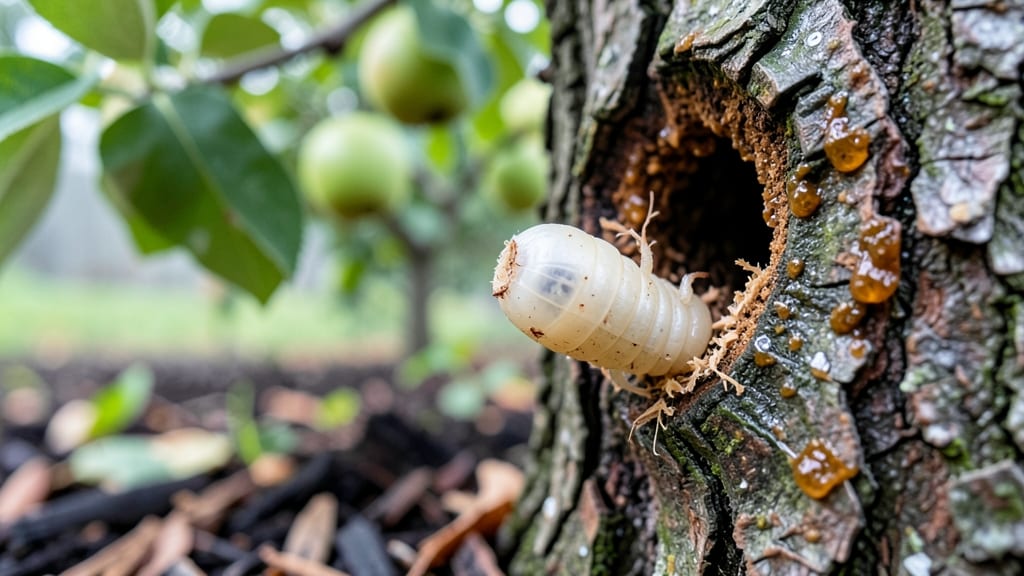
The good news? You don't need to chop down the whole tree. By drilling small holes into the damaged wood and injecting organic treatments like neem oil or beneficial nematodes, you starve the borers and restore moisture flow.
This method works best in late spring when borers are active but before they tunnel too deep.
What you'll end up with is a tree that stops declining and starts recovering—new growth appears within weeks, and the worst damage gets contained. The key is acting fast before the infestation spreads to healthy branches.
Works for apple, peach, cherry, and citrus trees alike. Here's exactly how to do it step by step, including when to call in a professional arborist for advanced cases.
Root Causes of Fruit Tree Borer Infestations
Fruit tree borers—those sneaky, wood-boring pests—don’t just appear out of nowhere. Their presence is usually a sign of deeper stress in your tree, often linked to environmental, biological, or even human factors.
Understanding why these pests target your fruit trees is the first step in preventing and treating them effectively. Let’s dig into the key reasons these destructive larvae invade your trees.
Borer larvae are drawn to weakened trees because stressed wood is easier to penetrate and colonize. Environmental stressors create the perfect entry point for these pests. Here’s how it happens:
- Drought or Waterlogging:
Both extremes—prolonged drought and waterlogged soil—weaken a tree’s defenses. Drought causes bark to dry and crack, while excess moisture rots roots and trunk tissue, making the wood soft and vulnerable.
Borers detect these changes through pheromones and chemical cues, signaling an easy meal. 💡 Pro Tip: Maintain consistent soil moisture (1–2 inches deep) to keep trees resilient.
- Extreme Temperatures:
Sudden temperature swings, frost damage, or heatwaves can shock a tree’s vascular system. Cold snaps kill cambium layers (the tree’s growth tissue), while scorching heat desiccates leaves and bark. Weakened trees produce less resin—a natural pest repellent—inviting borers to feast on compromised areas.
- Poor Soil Health:
Nutrient-deficient or compacted soil starves trees of essential minerals like nitrogen, potassium, and phosphorus. Malnourished trees grow slowly, develop thin bark, and produce weak structural wood—all prime targets for borers. 🌱 Fix It: Test soil pH and amend with compost or organic matter to boost vitality.
Borer larvae exploit any opening in a tree’s bark or wood. Even minor injuries can become gateways for infestation. Here’s how human (or animal) activity paves the way:
- Improper Pruning Cuts:
When pruning tools leave jagged edges or cut too close to the trunk, they create rough surfaces that trap moisture and debris. This soggy environment fosters fungal growth, which borers love.
Always use sharp, sterilized tools and make clean cuts at a <45° angle just outside the branch collar. ⚠️ Warning: Avoid tearing bark—it’s an open invitation to pests.
- Animal or Machinery Scratches:
Deer rubbing antlers against trunks, lawnmowers nicking bark, or even birds pecking at sap can create micro-wounds. These injuries expose the cambium layer, which borers detect as a signal to lay eggs. Inspect trunks regularly for any irregularities, especially after storms or seasonal animal activity.
- Sun Scorch or Hail Damage:
Exposed bark (common on south-facing sides of trees) or hail-induced bruising can kill tissue, leaving dead zones where borers thrive. Thinning canopies to improve airflow and applying protective tree wrap can mitigate this risk.
Just like humans, trees have immune systems. When a tree is already battling disease or previous pest attacks, its defenses weaken, making it susceptible to secondary invaders like borers. Here’s how it plays out:
- Fungal or Bacterial Infections:
Diseases like canker (e.g., bacterial leaf scorch) or root rot create decayed wood that’s easy for borers to tunnel through. Fungi like Armillaria (honey fungus) further break down structural integrity, turning the tree into a borer buffet. 🔍 Look For: Oozing sap, discolored bark, or mushrooms at the base.
- Previous Pest Infestations:
If your tree has hosted sap-sucking pests (e.g., aphids, scale insects) or bark beetles, it’s already compromised. These pests weaken the tree by feeding on sap or laying eggs in the bark, creating entry points for borers. A tree under siege from multiple pests is a magnet for borer larvae.
- Genetic Vulnerabilities:
Some fruit tree varieties are naturally more susceptible to borers due to thin bark or low resin production. For example, young peach or apple trees are often targeted because their bark is softer. If you’re planting new trees, research borer-resistant cultivars (e.g., ‘Liberty’ apple or ‘Relenta’ peach).
Trees left to grow in dense clusters or shaded by other plants struggle to photosynthesize efficiently. This stunts growth, thickens bark unevenly, and creates moist microclimates—ideal conditions for borer eggs to hatch and larvae to thrive.
- Shaded or Overgrown Canopies:
When lower branches are blocked from sunlight, they produce weak, spindly growth. These branches often die back, creating dead wood that borers colonize. Thin out canopies to improve light penetration and airflow.
- Competition for Resources:
Trees competing with weeds, grass, or neighboring plants divert energy away from trunk and root health. This resource drain makes them more attractive to borers. Mulch strategically (keep mulch 3–4 inches deep, 6 inches from the trunk) to reduce competition.
By addressing these root causes—whether through proper care, preventive maintenance, or targeted treatments—you can starve out borer infestations before they take hold. The key is proactive management: healthy trees are far less appealing to these wood-boring menaces.
How to Fix Fruit Tree Borer Damage
Now that you understand the signs and causes of fruit tree borer infestations, it’s time to take action! The good news? With the right approach, you can revive your tree and prevent future damage.
Below, we’ll break down practical, step-by-step solutions tailored to the root causes—whether it’s active borers, dead wood, or weakened tree health.
If you’ve spotted sawdust-like frass, oozing sap, or exit holes, the borer larvae are already inside. Cutting out the damaged wood is critical to stopping the spread.
🔪 How to Prune Infested Branches
- Sterilize your tools – Use rubbing alcohol or a bleach solution (1 part bleach to 9 parts water) to disinfect pruners before and after cutting.
- Locate the damage – Look for small holes, sap leaks, or wilting leaves—these are clues to borer activity.
- Cut 6–12 inches beyond visible damage – Borers can tunnel farther than you see, so over-cut to ensure you remove the entire infested section.
- Seal the wound – Apply tree wound paint or pruning sealant to prevent secondary infections (like fungal rot).
> 💡 Pro Tip: If the branch is completely dead, remove it entirely—dead wood is a borer magnet and won’t recover.
If the borers have penetrated deep into the trunk or large branches, pruning alone won’t save your tree. The organic drill-and-drench method is a highly effective way to flush out larvae and deliver treatment directly to the infestation.
⚡ How to Drill and Drench (Step-by-Step)
- Choose the right drill bit – Use a 1/8-inch to 1/4-inch wood bit (avoid larger holes, which can harm the tree).
- Drill holes in a zigzag pattern – Space them 6–12 inches apart along the infested area. Aim for the sapwood (just under the bark).
- Apply the drench solution – - Organic option: Mix 1 part horticultural oil or neem oil with 1 part water and add a few drops of dish soap (as a surfactant). - Alternative: Use spinosad-based spray (like Captain Jack’s) for a stronger organic kill.
- Let it soak in – Wait 10–15 minutes, then plug the holes with wooden toothpicks or twine to keep pests out.
- Repeat weekly for 3–4 weeks – This ensures larvae at all stages are killed.
> 🌡️ Pro Tip: Do this early in the morning or late afternoon to avoid heat stress on the tree.
A weak or stressed tree is an open invitation for borers. Strengthening your tree’s natural defenses is key to long-term protection.
🌱 How to Revitalize Your Tree
| Issue | Solution |
|---|---|
| Poor soil nutrition | Test soil and add compost or organic fertilizer (high in phosphorus & potassium). |
| Drought stress | Deep water 1–2 times per week (1–2 inches of water per session). |
| Weak root system | Apply mycorrhizal fungi or fish emulsion to boost root growth. |
| Over-pruning | Avoid heavy pruning in late summer/fall—borers thrive on fresh cuts. |
> ✨ Pro Tip: Beneficial nematodes (like Steinernema carpocapsae) can target borer larvae naturally—apply them to the soil around the tree’s drip line.
Once your tree is borer-free, keep it that way with proactive care.
🔒 Long-Term Prevention Strategies
✅ Inspect regularly – Check for new holes or sap leaks every 2–4 weeks during growing season. ✅ Encourage natural predators – Ladybugs, parasitic wasps, and birds eat borer eggs/larvae.
Plant native flowers to attract them. ✅ Avoid over-fertilizing with nitrogen – Too much fast-release N weakens wood, making trees more susceptible. ✅ Keep the base clean – Remove fallen fruit, mulch, and debris—borers lay eggs in decaying matter. ✅ Apply preventive sprays – In early spring, spray neem oil or kaolin clay as a borer deterrent.
If your tree is large, valuable, or severely damaged, consider hiring an arborist. They can:
- Assess structural integrity (some borer damage weakens wood dangerously).
- Perform deep treatments (like injection systems for big trees).
- Recommend species-specific solutions (some fruit trees need tailored care).
Final Thought: With pruning, drill-and-drench, and preventive care, you can not only save your tree but also restore its health—giving you years of fruit harvests to come! 🍎🌳
Frequently asked questions
How do I know if my fruit tree has borers and not just regular wear?
Look for these key signs: sawdust-like frass (borer poop) around holes, oozing sap from small exit holes, or wilting branches that die suddenly. Tap the trunk—if it sounds hollow, borers may have tunneled deep. Unlike normal wear, borer damage often appears in clusters near branch unions or old pruning wounds.
Can I use vinegar or bleach to treat borers?
No—never use vinegar or bleach on trees! Vinegar burns plant tissue, and bleach can damage roots. Instead, stick to neem oil, horticultural oil, or spinosad-based sprays (like Captain Jack’s). For deep infestations, the drill-and-drench method with organic solutions works best without harming the tree.
Will drilling holes in my tree kill it?
Not if done correctly! Use a 1/8-inch to 1/4-inch drill bit and aim for the sapwood (just under the bark). The holes are too small to harm the tree’s structure, and sealing them afterward prevents pests. Think of it like giving your tree a vitamin shot—the treatment gets right where the borers are hiding.
How long until I see results after treating borers?
You may notice new growth within 2–4 weeks, but full recovery can take 1–2 seasons. The drill-and-drench method kills larvae quickly, but the tree needs time to heal damaged areas. Monitor for fewer frass piles and less sap oozing as signs of improvement.
Are some fruit trees more prone to borers than others?
Yes! Young peach, apple, and citrus trees are especially vulnerable due to their thin bark. Older trees with healthy bark and strong roots resist borers better. If you’re planting new trees, choose borer-resistant cultivars like ‘Liberty’ apples or ‘Relenta’ peaches for added protection.