
How To
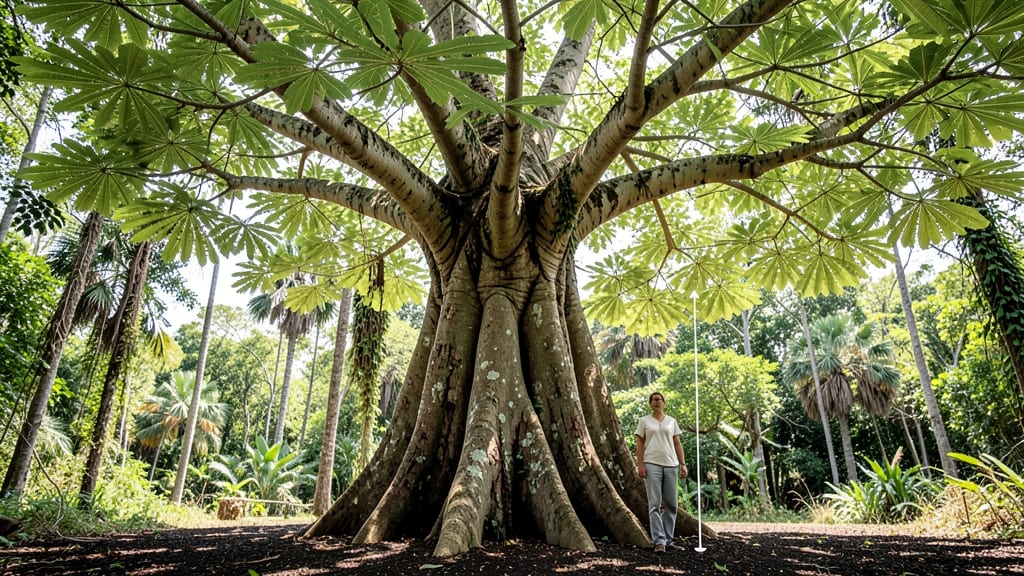
A kapok tree can grow to 200 feet tall—taller than a 15-story building—making it one of nature’s most impressive giants 🌳.
If you've ever dreamed of a towering jungle giant in your backyard—or simply want to understand the kapok tree's astonishing growth potential—you're in the right place.
This fast-growing species thrives in tropical climates, where it can shoot up 10 feet per year under ideal conditions. But its rapid ascent isn’t just about height—it’s also about how quickly it spreads its wide canopy, creating shade and habitat in a matter of decades.
Here’s what you need to know about its growth secrets, from soil prep to sunlight needs, so you can nurture one of these magnificent trees in your own landscape.

Kapok tree height: how tall can Ceiba pentandra really grow?
The kapok tree (Ceiba pentandra), also called the silk-cotton tree, is one of nature's most impressive giants. In its native tropical habitats, this species can grow to staggering heights—often surpassing 150 feet and sometimes reaching over 200 feet.
That’s taller than a 15-story building! But how does it achieve such monumental growth, and what factors influence its height potential?
Native to Central and South America, the kapok tree thrives in tropical climates with year-round warmth and abundant rainfall. Its rapid growth rate—adding 3 to 6 feet annually—allows it to dominate its surroundings.
However, its height isn’t just about genetics; soil quality, sunlight exposure, and water availability play critical roles in determining how tall a kapok tree can grow.
| Factor | Impact on Height | Optimal Conditions |
|---|---|---|
| Genetics | Determines max potential (150–200 ft) | Native tropical varieties |
| Climate | Warmer = faster growth (3–6 ft/year) | USDA Zones 10–12 |
| Soil | Poor drainage = stunted growth | Well-drained, fertile soil |
| Sunlight | <6 hrs sun = slower growth | Full sun (6+ hrs/day) |
| Water | Drought stress = height loss | Deep weekly watering |
In wild settings, kapok trees often reach their full height potential due to minimal competition and ideal conditions. For example, in Amazon rainforests, mature kapok trees frequently exceed 180 feet.
However, in urban or suburban landscapes, their growth may be limited by space constraints or less-than-ideal soil. Even so, with proper care, a kapok tree can still grow to 80–100 feet in a backyard setting.
One of the most fascinating aspects of the kapok tree’s growth is its canopy spread. Mature trees develop wide, umbrella-like canopies that can span 50–70 feet in diameter. This expansive growth habit means gardeners must account for both height and width when planting.
If you’re considering adding a kapok tree to your landscape, ensure there’s ample horizontal space to accommodate its mature size.
The kapok tree’s fast growth rate is another key factor in its height potential. Within just 3–5 years, a young kapok tree can reach 30–50 feet tall.
This rapid ascent is due to its deep taproot system, which allows it to access nutrients and water from deep within the soil.
However, this deep root system also makes young kapok trees highly sensitive to transplant shock, so it’s best to plant them in their permanent location as seedlings.
Regional variations also play a role in the kapok tree’s height. In coastal tropical regions, where humidity and rainfall are high, kapok trees tend to grow taller and faster than in drier inland areas.
For instance, kapok trees in Florida’s subtropical climate may reach 120–150 feet, while those in drier parts of Mexico might max out at 80–100 feet. Understanding these regional differences can help you set realistic expectations for your kapok tree’s growth.
If you’re growing a kapok tree in a container, its height will be significantly limited due to root restrictions. While container-grown kapok trees can still reach 20–30 feet with proper care, they will never achieve the monumental heights of their wild counterparts.
For maximum height potential, planting in well-draining soil with full sun exposure is essential. Avoid waterlogged conditions, as they can lead to root rot and stunt growth.
Finally, pruning plays a surprising role in a kapok tree’s height. While pruning can shape its canopy, over-pruning—especially in young trees—can reduce height potential by diverting energy away from vertical growth.
If you want your kapok tree to reach its full height, avoid heavy pruning during its first 5–10 years. Instead, focus on removing dead or diseased branches and allowing the tree to grow naturally.
In summary, the kapok tree’s height is a result of genetics, climate, soil, and care. With the right conditions—tropical warmth, full sun, and well-drained soil—your kapok tree can grow into a true jungle giant, reaching heights that will leave your neighbors in awe.
Just remember: patience and proper care are key to unlocking its full potential! 🌳
Fast growth secrets: how kapok trees reach giant heights so quickly
The kapok tree (Ceiba pentandra) isn't just tall—it's a growth powerhouse that can shoot up 10 feet per year under ideal conditions. This tropical giant owes its rapid ascent to a combination of biological adaptations and environmental factors that gardeners can replicate.
Let's uncover the science behind its explosive growth and how you can encourage similar results in your own tropical garden.
First, the kapok tree's deep taproot system anchors it firmly while accessing nutrient-rich water deep underground. This root structure also allows it to stabilize quickly, even in loose, tropical soils.
Pair that with its symbiotic relationship with nitrogen-fixing bacteria in the soil, and you've got a tree that self-fertilizes while growing. These natural partnerships mean less fertilizer dependency and more organic growth fuel.
- Deep Taproot System: Accesses water/nutrients 20+ ft deep
- Symbiotic Bacteria: Fixes nitrogen naturally in soil
- Seasonal Growth: Wet season = 90% of yearly growth
- Light Demands: Full sun = 3x faster growth than shade
- Canopy Spread: Wider canopy = more photosynthesis for height
Seasonality plays a huge role in the kapok tree's vertical sprint. During the wet season, these trees can grow up to 3 feet per month thanks to consistent moisture and high humidity.
This is when they allocate most of their energy to height rather than leaf or root expansion. To mimic this, gardeners in subtropical zones should focus on deep, infrequent watering during growing seasons—never letting the soil dry out completely.
Another growth accelerator is the kapok tree's wide-spreading canopy, which captures maximum sunlight for photosynthesis. The larger the canopy, the more energy the tree produces, directly fueling its rapid vertical growth.
In your garden, this means pruning strategically to encourage horizontal branch development early on, rather than top-heavy pruning that stunts height potential. Think of it as building a wider foundation for taller growth later.
For gardeners outside tropical climates, replicating these conditions requires careful planning. Start with well-draining, slightly acidic soil (pH 5.5-6.5) mixed with compost to mimic jungle loam. Use mulch heavily to retain moisture and regulate soil temperature, then supplement with slow-release fertilizer during active growth months.
Avoid over-fertilizing with nitrogen, as this can promote leafy growth at the expense of height.
Finally, patience and consistency are key. While kapok trees can bolt upright quickly, their long-term height potential depends on year-round care.
In USDA zones 10-12, they thrive year-round, but even in warmer subtropical zones, protecting young trees from cold snaps and drought ensures they reach their full genetic height. With the right conditions, your kapok tree could be towering over your neighbors in just a few years!