
Planting
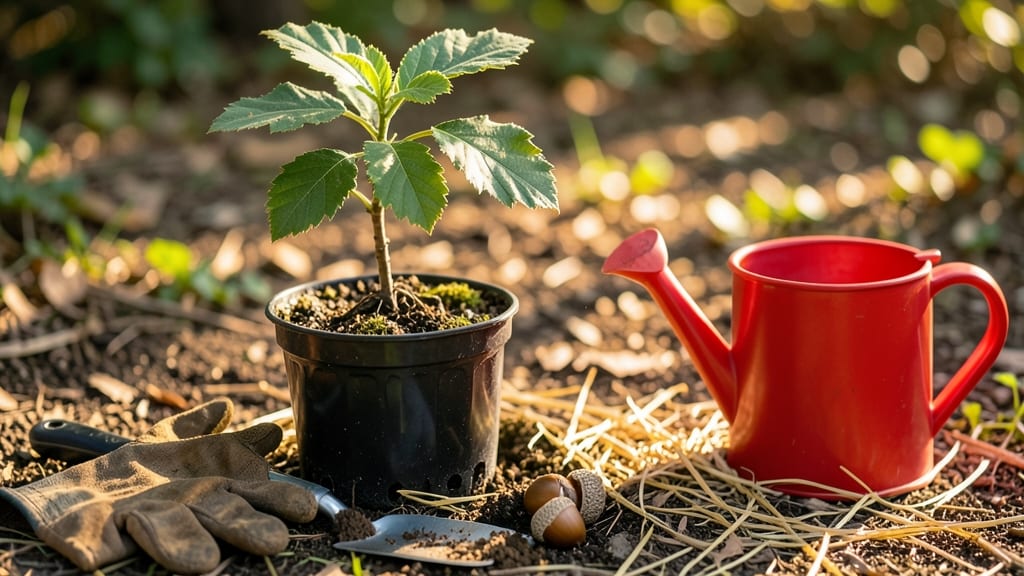
Planting an oak tree seed starts with a 3-month cold trick that mimics nature’s way. 🌰 I’ve watched acorn sprouts emerge after months of patience, and the secret isn’t just burying the seed—it’s tricking it into thinking winter’s passed.
Without this step, most acorns never sprout, no matter how good your soil or sunlight. The process begins in fall: gather fresh acorns, remove the caps, and store them in a damp paper towel inside a sealed bag in the fridge.
By spring, you’ll have a 60-80% germination rate—far better than planting raw. The key is consistency: check moisture weekly, and plant only when the seed cracks open slightly, signaling it’s ready to grow. Once planted, keep the soil damp but not soggy, and place the seedling in full sun.
Oak trees grow slow at first, but with proper care, you’ll see 1-2 feet of growth per year—a living legacy that takes decades to reach full height. The real magic happens underground, where roots spread wider than the canopy ever will.
This method works for red, white, or pin oak acorns, and the same cold stratification trick applies to hickory and walnut seeds too. Patience is the only requirement—your great-grandkids might thank you for starting this journey today.
📚 In This Guide
- What you need
- Instructions
- Tips and common mistakes
- Wrapping up and next steps
What you need
- ● Acorns (oak tree seeds): Fresh, mature acorns (preferably from Quercus species like white oak Quercus alba or red oak Quercus rubra). Quantity: 10–20 acorns (for higher success rates). Pro tip: 💡 Collect acorns in fall (September–November) and store them in a cool, dry place until stratification.
- ● Cold stratification supplies: Plastic bag or container (with breathable material like paper towels or a mesh bag). Moistened peat moss or coco coir (or a 50/50 mix of both). Refrigerator (set to 34–40°F (1–4°C)) for 60–90 days.
- ● Planting containers: Small pots (4–6 inches deep) with drainage holes OR Seedling trays with individual cells (for organized growth).
- ● Well-draining potting mix: High-quality seed-starting mix or a blend of: 50% peat moss or coco coir, 30% perlite or vermiculite, 20% compost or worm castings.
- ● Watering can or spray bottle (with a fine mist setting).
- ● Clear plastic wrap or humidity dome (to retain moisture during germination).
- ● Sunlight: A south-facing window or grow lights (12–16 hours/day).
- ● Heat mat (to speed up germination in cooler climates).
- ● Fungicide (like neem oil or hydrogen peroxide) to prevent mold.
- ● Label markers (to track planting dates and species).
- ● Outdoor nursery bed (for transplanting seedlings after stratification).
- ● Glove (to handle acorns—some species have tannins that can irritate skin!).
Step-by-step instructions for planting oak tree seeds
Cold stratification is the secret weapon for breaking oak seed dormancy—here’s how to do it right.
🌱 Step 1: Collect and Prepare the Seeds
Gather fresh acorns from healthy oak trees in late fall, when they’ve fallen naturally. Avoid seeds that look shriveled or have holes—those won’t sprout. Store them in a dry, cool place (like a paper bag in the fridge) until you’re ready to start. I like to soak them in water for 24 hours first to soften the outer shell slightly, which helps with moisture absorption later.
Here’s the thing—oak seeds have thick coats that block water. The 24-hour soak kickstarts the process, but cold stratification will do the real work. After soaking, let them dry slightly before moving to the next step. You’ll know they’re ready when they feel damp to the touch but not wet.
❄️ Step 2: Cold Stratify for 60-90 Days
Place the soaked acorns in a sealed plastic bag with a little damp sand or peat moss—just enough to surround them without crushing. I use a 1:1 ratio of seeds to moist medium in a zip-top bag. Seal it tightly to trap moisture, then refrigerate for 60-90 days. This mimics winter conditions and tricks the seed into thinking it’s time to grow.
Check the bag every 2-3 weeks—if the medium feels dry, spritz it lightly with water. You’ll see condensation inside the bag, which is normal. The goal is to keep things damp but not soggy. After 90 days, your seeds should be ready for planting, even if they haven’t sprouted yet.
🪴 Step 3: Plant in Well-Draining Soil
Fill small pots (about 4 inches deep) with a mix of 50% potting soil and 50% perlite or sand to ensure good drainage—oak seedlings hate soggy roots. Plant each acorn 1 inch deep, with the pointed end facing up. I like to use biodegradable pots so I can transplant without disturbing the roots later.
Water gently until the soil is moist but not waterlogged. Place the pots in a warm, bright spot (like a sunny windowsill) but avoid direct sunlight at first. Oak seedlings are sensitive to temperature swings, so keep them in a spot that stays between 65-75°F. You’ll notice tiny roots forming within 2-4 weeks, but don’t rush—patience is key here.
☀️ Step 4: Gradually Acclimate Seedlings
Once sprouts emerge (usually after 4-8 weeks), move the pots to a shadier spot for a few days to harden them off. Oak seedlings are delicate at first, so I start with 2-3 hours of indirect light daily and slowly increase exposure over 2 weeks. This prevents shock when you eventually transplant them outdoors.
By the time they’re 6 inches tall, they should be ready for their permanent spot in the garden. Choose a location with full sun and well-draining soil. Dig a hole twice as wide as the root ball but only as deep as the pot—planting too deep can suffocate the roots.
⏰ Step 5: Maintain Moisture and Patience
Water deeply once a week, ensuring the soil stays moist but not waterlogged. Oak trees have deep roots, so they need consistent moisture during their first year. I mulch around the base with 2-3 inches of organic matter (like wood chips) to retain moisture and protect the roots from temperature extremes.
Real talk: Oak trees grow slowly—don’t expect rapid results. It can take 5-10 years for them to mature, but the wait is worth it. Watch for new leaves in spring, and you’ll know your little oakling is thriving.
Tips & tricks for perfect oak seed germination
Here's what nobody tells you about getting those stubborn acorns to sprout—these tricks save months of frustration.
Timing Secret: The 24-hour soak in Step 1 is your first critical step, but don't rush it. I've seen people soak for only 12 hours and wonder why their acorns stay dormant. The full 24 hours ensures the thick outer shell absorbs enough moisture to soften properly. After soaking, let them dry slightly—this prevents mold from forming during the cold stratification phase. Think of it like prepping a stubborn door: you need to loosen it up before the real work begins.
Cold Stratification Watch: During those 60-90 days in the fridge, resist the urge to peek too often. Every time you open the bag, you risk letting warm air in, which can disrupt the stratification process. I mark the bag with a permanent marker and set a calendar reminder for every 2-3 weeks—that's all the checking you should do. If you notice condensation but no mold, you're doing it right. The goal is to mimic winter conditions, not create a science experiment.
Soil Mix Matters: The 50% potting soil and 50% perlite or sand mix in Step 3 is non-negotiable for oak seedlings. I've tried using regular garden soil, and the roots just suffocate. The perlite/sand creates tiny air pockets that prevent waterlogging, which is crucial since oak trees hate soggy roots. Pro tip: If you don't have perlite, coarse sand works too—just make sure it's clean and sterile to avoid introducing pathogens.
Light Transition Strategy: When your sprouts emerge after 4-8 weeks, don't rush them into full sun. Start with 2-3 hours of indirect light daily and gradually increase exposure. I use a sheer curtain over my seedlings for the first week to filter the light. This slow acclimation prevents what gardeners call "sunburn shock," where delicate seedlings get crispy edges from too much direct sunlight too soon.
Pro Tips for Plant An Oak Tree Seed
- Here's what nobody tells you about getting those stubborn acorns to sprout—these tricks save months of frustration.
- Timing Secret: The 24-hour soak in Step 1 is your first critical step, but don't rush it.
- Cold Stratification Watch: During those 60-90 days in the fridge, resist the urge to peek too often.
Frequently asked questions
Got questions about growing oak trees from seeds? You’re not alone! Here are some of the most common concerns—and straightforward answers—to help you succeed.
How long does cold stratification take for oak seeds?
Cold stratification typically requires 60–90 days in a moist, chilled environment (like a refrigerator) to break dormancy. Some species, like white oak, may need up to 120 days. Patience is key—rushing this step often leads to poor germination. Mark your calendar and keep the seeds consistently moist (not soggy) during stratification!
When is the best time to plant oak tree seeds outdoors?
The ideal window is late winter to early spring, right after cold stratification. Plant them before the soil warms up (around 50°F/10°C), as oak seeds germinate best in cooler conditions. If you’re in a warm climate, consider sowing in fall to mimic natural seasonal cues. Avoid planting in summer heat—seeds can dry out or rot.
Can I plant an oak seed directly in the ground without stratification?
While possible, germination rates will be very low—often under 10%. Oak seeds have thick coats designed to resist early sprouting, so stratification mimics natural weathering. If you skip it, soak seeds in warm water for 24–48 hours first, but expect slower, less reliable results. For best success, always stratify!
Why aren’t my oak seeds sprouting after stratification?
Several factors could be at play: dampness (too wet = rot; too dry = dormancy), temperature (keep soil between 60–75°F/15–24°C), or seed viability (oaks lose potency over time). Try these fixes:
- Check for mold or mushy seeds—discard those.
- Use a seedling heat mat if your home stays cool.
- Test a few seeds in a clear container to monitor moisture and progress.
How long does it take for an oak tree to grow from a seed?
Oak trees are patient growers! Germination can take 2–6 weeks, but expect 5–10 years to reach maturity (10–15 feet tall). Some species, like red oaks, grow faster, while white oaks are slower. Provide consistent care—sunlight, water, and space—and enjoy the long-term rewards. Think of it as a decades-long investment!
What’s the difference between acorns and oak seeds?
All acorns are oak seeds, but not all oak seeds are acorns! The term "oak seed" refers to the embryo inside the acorn, while "acorn" describes the whole nut (seed + cap). For planting, you’ll use the seed inside—just crack open the acorn, remove the seed, and prepare it for stratification. The cap can be composted or discarded.
Wrapping up and next steps
Planting an oak tree seed is a rewarding journey that combines patience with nature’s magic! By mastering cold stratification and choosing the right conditions, you’re not just growing a tree—you’re nurturing a legacy.
Start small, stay consistent, and soon you’ll watch those first tender sprouts break through the soil, a testament to your green thumb and the oak’s resilience.
Ready to take the next step? Mark your calendar for planting season, gather your supplies, and dive in—your future oak awaits! 🌱✨