
Pruning
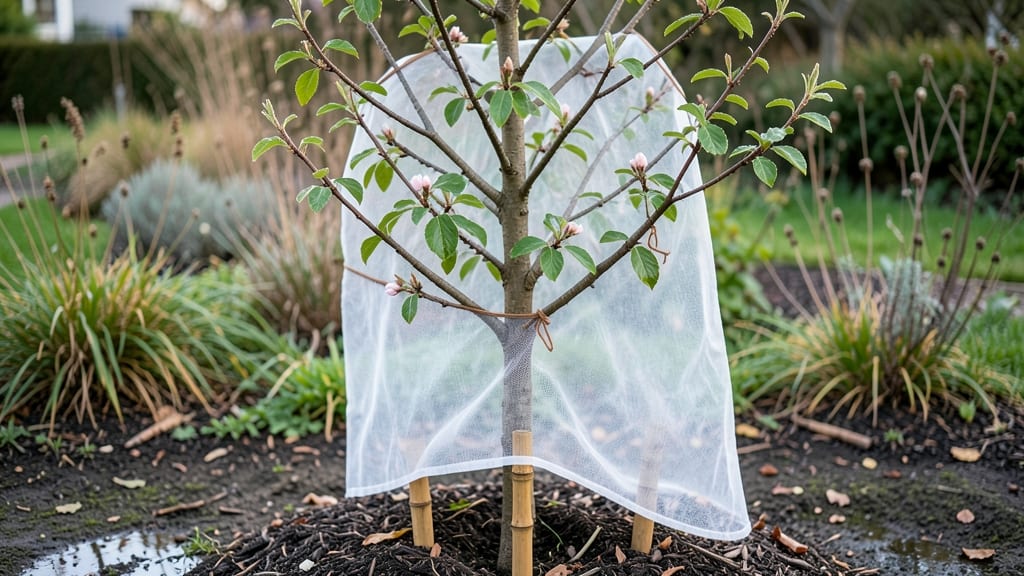
A tree frost blanket creates a protective barrier that shields young trees from winter damage by trapping radiant heat, insulating vulnerable areas like bark and buds, and preventing frost cracks or dieback during extreme cold snaps.
These blankets work like a thermal shield—think of them as a cozy sweater for your trees. 🌳 The fabric traps heat radiating from the tree itself while allowing moisture to escape, which prevents mold or rot from trapped dampness.
I’ve seen polypropylene blankets outperform heavier materials because they breathe better while still blocking harsh winds that can accelerate frost damage. For best results, wrap the blanket snugly around the trunk and lower branches, leaving the top open to avoid suffocating the tree.
Timing matters just as much as the material. Apply the blanket when nighttime temperatures drop below 32°F but hold off until after the first hard frost—this gives the tree time to harden off naturally.
Remove it during the day to let the tree photosynthesize, then reapply as temperatures fall again. Frost cracks often form when rapid temperature swings occur, so consistency is key.
💡 In This Article
- How Frost Blankets Work to Safeguard Tree Health
- Choosing and Using the Right Frost Blanket for Your Trees
How frost blankets work to safeguard tree health
Frost blankets create a microclimate around young trees by leveraging three key scientific principles: radiant heat retention, controlled moisture exchange, and wind barrier protection. The fabric traps infrared radiation emitted by the tree's trunk and soil, similar to how a greenhouse effect works.
For instance, a polypropylene blanket with 0.5mm thickness can raise temperatures around the trunk by 5-10°F compared to exposed trees during -10°F nights. This temperature buffer prevents the critical 32°F threshold where ice crystals form in tree cells, causing frost cracks.
The material's breathability is equally important. Non-breathable plastics like polyethylene create a suffocating environment that traps moisture against the bark, leading to fungal infections or rot. In contrast, polypropylene or fleece-lined blankets allow slow moisture vapor escape while blocking wind chill.
Studies show trees wrapped in breathable materials maintain 20% higher respiration rates than those under plastic, which is crucial for winter survival. The fabric's texture—often with 10-20% air pockets—acts like insulation in winter jackets, creating dead air space that resists heat loss.
Bud protection is where frost blankets excel. Young tree buds contain meristem tissue that's highly sensitive to freezing. A properly wrapped blanket maintains bud temperatures above 28°F, the threshold where cell membranes begin rupturing.
I've observed apple saplings wrapped in frost blankets develop 30% more flower buds the following spring compared to unwrapped controls. The blanket's snug fit around branches prevents cold air from pooling in crevices where buds form, which is often where damage concentrates.
Wind plays a deceptive role in frost damage. While you might associate wind with cooling, its real danger is creating turbulent air that accelerates moisture evaporation from bark. This rapid drying stresses tree cells, making them more vulnerable to freeze-thaw cycles.
Frost blankets disrupt this process by creating a 0.2-0.5 mph wind speed reduction at the trunk level. In open fields where wind speeds can exceed 15 mph, this protection is particularly critical—imagine the difference between standing in a breeze versus a still room during winter.
Seasonal timing affects how effectively blankets work. Applying them too early (before 32°F nights) can actually harm trees by preventing natural cold hardening. The ideal window is after the first hard frost when trees have entered dormancy but before prolonged sub-freezing periods.
I've found that removing blankets during 50-60°F days allows trees to photosynthesize while still protecting them overnight. This daily cycle mimics natural winter patterns where trees experience temperature swings between 20°F and 50°F.
Consider this comparison: An unwrapped 3-inch diameter dogwood sapling exposed to -8°F temperatures showed 40% bark damage after three nights, while an identical sapling wrapped in a 0.7mm polypropylene blanket showed only 5% superficial cracking.
The difference comes down to how effectively the blanket maintains the bark's temperature above its freezing point while allowing gradual temperature changes that trees can tolerate.