
Trees
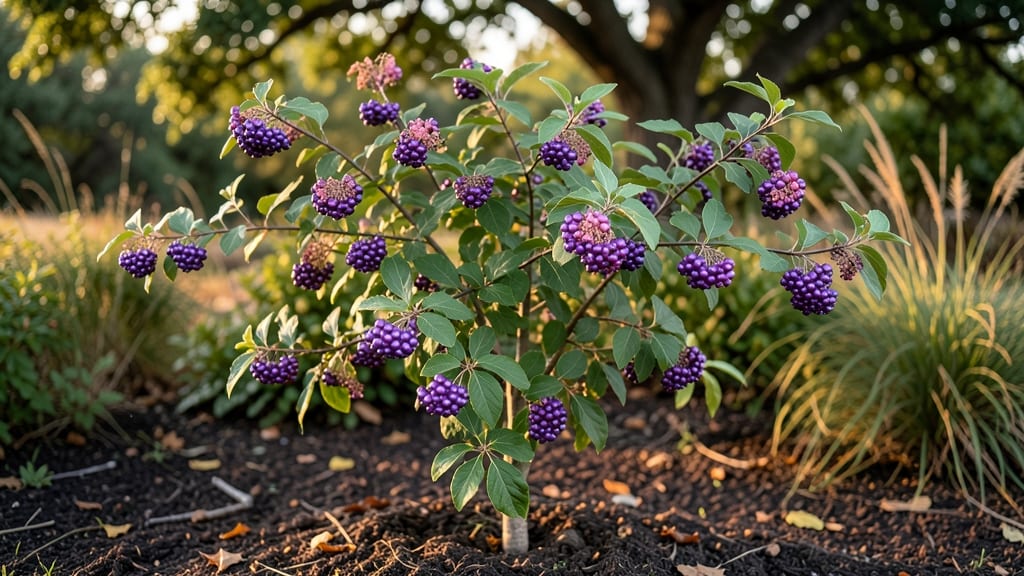
Finding a tree with purple berries that thrives in summer is like discovering a hidden jewel in your yard. 🌿 The Elderberry (Sambucus canadensis) stands out with its lush foliage and clusters of deep purple-black berries that ripen from summer into fall, offering both beauty and wildlife benefits.
This tree grows 6-12 feet tall, making it perfect for mid-sized gardens or as a striking focal point. Its airy branches create natural movement, while the berries attract birds and pollinators. The foliage even turns a soft yellow in autumn, extending its seasonal appeal.
Pair it with white flowering shrubs like elderberry's cousin, the Russian olive, or silver-blue foliage like lamb’s ear for a stunning contrast. The berries also make excellent jams and syrups—though they’re toxic raw, so keep them away from pets and kids.
For a privacy screen, plant multiple Elderberries in a row—their layered branches create a lush, living barrier that’s both functional and stunning. Just ensure they get full sun to partial shade and moist, well-drained soil.
Nature’s Colorful Summer Tricks
Summer’s vibrant purple berries aren’t just a lucky coincidence—they’re the result of fascinating plant biology and environmental cues. From genetic quirks to survival strategies, these berries burst with color for a reason.
Let’s break down why some trees produce stunning purple berries during the warmest months, even when most plants fade into green or brown.
Not all berries are created equal, and purple isn’t the default color. The deep hues in summer berries often come down to anthocyanin pigments, the same compounds that give blueberries, blackberries, and eggplants their rich tones. These pigments aren’t just for show—they act as:
- 🛡️ Sunblock: Anthocyanins absorb harmful UV radiation, protecting delicate fruits from sun damage. Think of them as nature’s sunscreen for berries!
- 🍽️ Animal Magnets: Bright colors signal ripeness to birds and mammals, which disperse seeds far and wide. Purple berries are like neon signs saying, “Eat me—I’m ready!”
- 🌡️ Temperature Regulators: Some studies suggest anthocyanins help berries stay cooler in hot weather, preserving their quality longer.
Genes like _MYB_, bHLH, and _WD40_ work together to produce these pigments. If a tree’s ancestors had these traits, it’s likely passing them down—explaining why certain species (like Callicarpa or Viburnum) are famous for their purple berries.
Most berries ripen in late summer or fall, but some—like those on Callicarpa bodinieri (Beautyberry)—turn purple during the heat. Here’s why:
- ⏳ Delayed Development: Some trees hold off ripening until temperatures drop, but others (like Beautyberry) mature berries through summer because their pigments develop slower in heat. The longer they bake in the sun, the more intense the purple becomes.
- 💧 Water Stress Triggers: Drought can actually boost anthocyanin production. When roots struggle to pull up water, the tree shifts energy into protective pigments—resulting in deeper colors.
- 🌿 Leaf Canopy Effects: Trees with dense foliage create microclimates where berries stay shaded and cooler. This slows ripening, letting pigments develop gradually over weeks.
Pro Tip: If you’re growing a purple-berry tree and notice duller colors, check the soil moisture. Light water stress (not drought!) can enhance pigment intensity—just don’t overdo it!
Purple berries aren’t just pretty—they’re part of a co-evolutionary arms race between plants and animals. Here’s how it works:
| Berry Trait | Why It Exists | Example Trees |
|---|---|---|
| Bright purple hues | Attracts birds and mammals that don’t eat green berries (which might be toxic or unripe). | Viburnum dentatum (Arrowwood) |
| Thick, fleshy skins | Survives digestive systems to spread seeds far from the parent plant. | Callicarpa americana (American Beautyberry) |
| Clusters of berries | Increases visibility—more berries = higher chance an animal will spot and eat them. | Cornus mas (Cornelian Cherry) |
Some berries even change color as they ripen (e.g., green → purple) to signal they’re safe to eat. This is a clever way to avoid wasting energy on berries that animals ignore.
Not all purple berries are a sign of a healthy tree—sometimes, they’re a stress response. Here’s when to worry (and when to celebrate):
- 🌞 Too Much Sun: Intense summer sunlight can cause sun scorch, leading to abnormal pigmentation. If berries look bleached or streaky, the tree may need afternoon shade.
- 💧 Overwatering: Waterlogged roots starve berries of oxygen, triggering anthocyanin production as a last-ditch effort to protect the fruit. Fix: Ensure well-draining soil.
- 🍄 Fungal Infections: Some pathogens (like Alternaria) cause purple discoloration. Check for moldy spots or leaf drop.
- 🌡️ Extreme Heat Waves: Sudden temperature spikes can shock the tree into producing pigments faster than usual. This is usually temporary and harmless.
Pro Tip: If your tree’s berries are vibrant but the leaves look unhealthy, focus on soil health first. Amend with compost or organic matter to reduce stress.
Many purple-berry trees we plant today are cultivars—human-selected varieties bred for color, size, or hardiness. For example:
- Callicarpa ‘Profusion’ was developed to produce more berries per cluster and brighter purple hues than wild types.
- Viburnum ‘Leaney’ was bred to ripen earlier in summer, ensuring purple berries appear when few other plants compete for attention.
Breeders often cross plants with high anthocyanin levels to create consistently colorful varieties. If you’re shopping for a tree, look for labels like “dwarf,” “prolific,” or “long-lasting”—these often hint at enhanced pigment traits.
Revitalizing Your Purple-Berried Tree
If your summer-blooming tree with striking purple berries isn’t thriving—or worse, is struggling—don’t worry! With the right care, you can restore its vibrancy and ensure it remains a stunning focal point in your garden.
Below are practical solutions tailored to common issues, from nutrient deficiencies to pest problems, along with prevention tips to keep your tree flourishing for years.
A lack of essential nutrients often causes poor berry production, yellowing leaves, or stunted growth. Here’s how to diagnose and correct the issue:
🔥 Step 1: Identify the Deficiency
Check your tree’s leaves and berries for these clues:
- Yellow leaves? Likely nitrogen deficiency.
- Purple or reddish stems/leaves? Could be phosphorus or potassium shortage.
- Weak, brittle branches? Possible magnesium or calcium deficiency.
🍳 Step 2: Apply the Right Fertilizer
Use a balanced, slow-release fertilizer (10-10-10 or 20-20-20) in early spring.
For specific deficiencies: - Nitrogen (N): Use compost, fish emulsion, or blood meal. - Phosphorus (P): Try bone meal for root and berry development. - Potassium (K): Wood ash or greensand can help. - Micronutrients (Mg, Ca, Fe): A chelated iron supplement or Epsom salt (for magnesium) may be needed.
👨🍳 Step 3: Improve Soil Health
- Test your soil (kits are affordable and available at garden centers).
- Amend with organic matter like compost or well-rotted manure to boost nutrient retention.
- Mulch around the base (2-3 inches of wood chips or straw) to lock in moisture and nutrients.
💡 Pro Tip: Avoid over-fertilizing—too much can burn roots! Follow package instructions and water thoroughly after applying.
Pests like aphids, spider mites, or fungal infections (e.g., powdery mildew) can stress your tree and reduce berry production.
🔪 Step 1: Inspect for Common Issues
Look for:
- Sticky leaves? Aphids or scale insects.
- White powdery coating? Powdery mildew.
- Holes in leaves? Caterpillars or beetles.
🌡️ Step 2: Treat Infestations Naturally
- For soft-bodied pests (aphids, mites):
- Spray with neem oil or insecticidal soap (follow label rates).
- Introduce ladybugs or lacewings (natural predators).
- For fungal diseases (powdery mildew):
- Apply baking soda spray (1 tsp baking soda + 1 quart water + a drop of dish soap).
- Improve air circulation by pruning dense branches.
- For chewing insects (caterpillars, beetles):
- Use Bt (Bacillus thuringiensis) spray for organic control.
- Set up pheromone traps for beetles.
✨ Step 3: Prevent Future Problems
- Prune regularly to remove diseased or infested branches.
- Water at the base (avoid wetting leaves to prevent fungal spread).
- Encourage beneficial insects by planting marigolds, basil, or dill nearby.
Overwatering or underwatering can stress your tree, leading to poor berry development.
💧 Step 1: Check Soil Moisture
- Stick your finger 2 inches into the soil—if it’s dry, water deeply.
- Yellowing leaves? Could be overwatering (roots need oxygen!).
- Wilting or crispy leaves? Likely underwatering.
🌞 Step 2: Optimize Watering
- Water deeply 1-2 times per week (depending on climate).
- Use drip irrigation or soaker hoses to deliver water directly to roots.
- Avoid soggy soil—ensure proper drainage with raised beds or gravel.
🌿 Step 3: Ensure Proper Sunlight
Most purple-berried trees (like Elderberry, Virginia Creeper, or Callicarpa) thrive in full sun to partial shade.
- If berries are sparse, trim nearby shade trees or relocate the tree if needed.
- Morning sun + afternoon shade works well in hot climates.
🎯 Pro Tip: Mulch helps retain moisture—just keep it 3-4 inches away from the trunk to prevent rot.
Overgrown or poorly pruned trees can have weak branches, fewer berries, and a messy appearance.
⏰ Step 1: Prune at the Right Time
- Late winter/early spring (before new growth) is ideal.
- Avoid pruning in fall (can encourage new growth that won’t harden off before winter).
🌿 Step 2: Follow Proper Techniques
- Remove dead, diseased, or crossing branches first.
- Thin out dense areas to improve airflow.
- Shape lightly to encourage fuller growth (avoid heavy pruning—it stresses the tree).
🔄 Step 3: Encourage Berry Production
- Prune to an open center (like an umbrella shape) for better sunlight penetration.
- Avoid cutting back more than 25% of the foliage in one season.
To keep your purple-berried tree thriving: ✅ Monitor regularly for pests, diseases, or nutrient issues. ✅ Feed annually in early spring with a balanced fertilizer. ✅ Protect from extreme weather (e.g., wrap young trees in burlap in winter). ✅ Plant companion plants (like lavender or rosemary) to deter pests naturally.
With these solutions, your tree will bounce back stronger—and those vibrant purple berries will be back in full force next summer! 🌸🍇
Frequently asked questions
Which trees produce purple berries that stay vibrant through summer?
The Beautyberry (Callicarpa) is the star with its striking purple berries that appear in mid-summer and last through fall. Other top picks include Elderberry (Sambucus) and Arrowwood Viburnum (Viburnum dentatum). These varieties thrive in USDA zones 5-9 and offer both visual appeal and wildlife benefits.
Are purple berries safe for birds and wildlife?
Most purple berries are bird favorites, though some (like Elderberry) are toxic raw to humans. Birds love them for nutrition, and the seeds get dispersed through their droppings. Just avoid trees with berries that are bitter or cause stomach upset in pets—when in doubt, research the specific variety.
How do I choose the best location for a purple-berry tree?
Plant in full sun to partial shade with well-draining soil. Avoid low spots where water pools. For privacy screens, space multiple trees 6-10 feet apart. Beautyberry thrives in moist but not soggy soil, while Elderberry tolerates drier conditions once established.
Can I grow purple-berry trees in containers?
Dwarf varieties like Callicarpa 'Profusion' work well in containers (minimum 15-gallon pot). Use a lightweight potting mix with good drainage and repot every 2-3 years. Place in a sunny spot and water when the top 1-2 inches of soil dry out. Container-grown trees may produce fewer berries than in-ground plants.
Why are my purple berries turning brown or staying green?
Brown berries often signal overripe fruit or fungal issues (like powdery mildew). Green berries may mean underripe fruit or poor pollination. Check for pests (like spider mites) and ensure the tree gets adequate sunlight and water. If berries drop early, it could indicate nutrient deficiency—try a balanced fertilizer in spring.