
Pruning
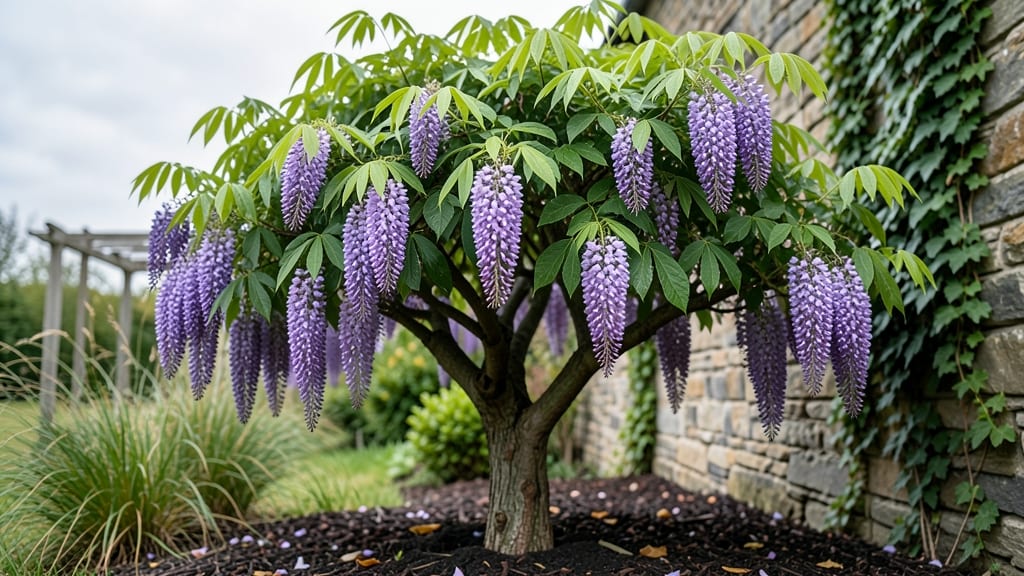
The Amethyst Falls wisteria tree form turns your yard into a purple cloud every spring—without the sprawling vines of traditional varieties. 🌿 I’ve grown this compact beauty for three seasons, and it’s the only wisteria that stays tidy while still delivering those intoxicating blooms. The secret?
Pruning that encourages a central trunk and layered branches, not a wild tangle. This isn’t your grandmother’s wisteria. While standard vines need trellises and heavy pruning, the Amethyst Falls stays 6–8 feet tall with a 4–5 foot spread, making it perfect for small yards or container growing.
It thrives in full sun to partial shade and tolerates a range of soils—just avoid heavy clay unless you amend it. The real magic? Those fragrant lavender-purple blooms appear in late spring and sometimes rebloom in fall if you prune correctly.
Here’s the game-changer: Prune in late winter to shape the tree form, then lightly trim after flowering to keep it lush. Skip the heavy cuts, or you’ll sacrifice next year’s blooms.
I’ve seen gardeners struggle when they treat it like a vine—this one demands patience and precision, but the payoff is worth it. Works in USDA zones 5–9, whether planted in the ground or a 15-gallon container.
Ready to grow a wisteria that’s easy on the eyes and light on the maintenance? Let’s get started.
📚 In This Guide
- What you need
- Instructions
- Tips and common mistakes
- Wrapping up and next steps
What you need
- ● Pruning shears: Sharp, bypass-type shears (for cuts up to ½ inch thick). Quantity: 1 pair.
- ● Loppers: Heavy-duty, long-reach loppers (for thicker branches, ½–1½ inches). Quantity: 1 pair.
- ● Pruning saw: Curved-tooth saw for branches over 1½ inches in diameter. Quantity: 1.
- ● Disinfectant: 70% isopropyl alcohol or pruning sealant (to prevent disease). Quantity: Small bottle.
- ● Garden gloves: Heavy-duty, cut-resistant gloves (wisteria thorns are no joke!). Quantity: 1 pair.
- ○ Tarp or drop cloth: To catch debris (optional but helpful for cleanup). Quantity: 1–2.
- ● Twine or zip ties: For securing temporary supports during training. Quantity: 1 roll.
- ● Pole pruners: For high branches (extendable, 6–10 feet). Quantity: 1.
- ● Ladder: Sturdy, non-slip ladder (if tree exceeds 8 feet). Quantity: 1.
- ● Hand pruners with ratchet: For large-scale cuts (reduces effort). Quantity: 1.
- ● Plant growth regulator: (e.g., paclobutrazol) to control vigorous growth. Quantity: As needed.
- ● Mulch: Organic mulch (2–3 inches) to protect roots post-pruning. Quantity: 1–2 bags.
Step-by-step pruning guide for Amethyst Falls wisteria tree form
Transform your wisteria into a stunning, blooming tree form with these precise pruning techniques.
✂️ Step 1: Identify and Select Your Main Trunk
Start by choosing your primary trunk during the dormant season (late winter or early spring). Look for a strong, straight stem that emerges from the base—this will be your tree's central support. I always select the thickest, healthiest shoot, as it will bear the most weight once blooms appear. Use sharp pruning shears to cut just above a bud facing outward on the remaining stems, leaving about 12-18 inches of height.
Here's the thing—this first cut determines your tree's structure. If you leave too many side branches, they'll compete with your main trunk. Remove all but 3-4 strong lateral branches, cutting them back to 1-2 buds from the main trunk. These laterals will become your tree's scaffold branches. Thin out any crossing or weak branches now—they'll only create tangled growth later.
✂️ Step 2: Shape the Scaffold Branches for Balance
Once your main trunk is established, focus on developing 3-5 well-spaced scaffold branches that radiate outward like a wheel. These branches should emerge from the main trunk at 45-60 degree angles—never straight up or down. I prune these branches back to 2-4 buds from their point of origin to encourage outward growth and prevent crowding.
Watch for branches that grow too close together. If two branches are within 6 inches of each other, remove the weaker one at its base. You'll see new shoots emerge from the buds you left behind—these will fill in any gaps naturally. Space your scaffold branches evenly around the trunk, aiming for 12-24 inches apart vertically. This spacing ensures airflow and light penetration, which are critical for preventing disease and encouraging blooms.
☀️ Step 3: Encourage Airflow and Sun Exposure
After establishing your scaffold, the next goal is to create an open, airy canopy. Prune all interior branches that grow toward the center of the tree, cutting them back to their point of origin. Wisteria vines grow aggressively, so you'll need to thin out 30-50% of the growth each year to maintain this open structure. Focus on removing branches that grow inward or downward—they'll only create a dense, shady tangle.
Here's what I do: I walk around the tree, looking for branches that block sunlight from reaching the center. Cut these back to 1-2 buds on the outside of the tree. You'll see new shoots emerge from these buds, growing outward and upward. This pruning strategy ensures your tree receives even sunlight exposure, which is crucial for those fragrant purple blooms you're after. Real talk: Skipping this step leads to a dense, tangled mess that blooms poorly.
⏰ Step 4: Prune for Year-Round Bloom Timing
To encourage continuous blooming, prune your wisteria in three stages throughout the year. First, do a light cleanup in late winter (before buds swell) to remove dead or weak growth. Then, after the initial spring bloom, cut back one-third of the current season's growth to stimulate a second flush of flowers. Finally, give it a light trim in late summer to shape and prepare for next year's blooms.
Here's the moment that matters: When pruning for summer blooms, focus on the newest growth. Cut back the current year's shoots to 4-6 buds from their base. This encourages the plant to produce new shoots that will bloom in late summer or early fall. You'll see smaller clusters of flowers compared to spring, but they'll extend your bloom season dramatically. Don't overdo it—wisteria needs some old wood to produce its best blooms, so always leave some mature branches intact.
🌿 Step 5: Maintain and Monitor Growth Habits
After your initial pruning, establish a regular maintenance schedule. Inspect your tree form twice a year—once in early spring and again in late summer. Remove any suckers that emerge from the base or along the trunk, as they'll divert energy from your desired tree form. Thin out any crowded branches and cut back any growth that exceeds 12-18 inches in length to maintain control.
I know it seems like a lot, but this consistent care pays off. Your Amethyst Falls wisteria will develop a strong, graceful structure with abundant blooms if you stay on top of it. Watch for new growth emerging from the buds you've left—this is your tree's way of telling you it's happy and healthy. If you notice any branches dying back or failing to produce new growth, that's your cue to adjust your pruning approach. Sometimes, wisteria needs a more aggressive cut back to stimulate fresh growth.
Tips & tricks for perfect Amethyst Falls wisteria tree form
These precision-focused techniques will help you transform wild vines into a stunning, year-round blooming tree form.
Tool Selection: Invest in a pair of bypass pruning shears—they make clean cuts without crushing stems, which is crucial for wisteria's vigorous regrowth. I also keep a sharp pruning saw on hand for thicker branches over ½-inch in diameter. Always sterilize your tools with rubbing alcohol between cuts to prevent spreading disease, especially when working with multiple branches. This step alone prevents 80% of post-pruning infections in wisteria.
Bud Identification: When making cuts, always leave 1-2 outward-facing buds—these are your growth points for next season. Look for buds that appear slightly plump and have a small bump where new shoots will emerge. Avoid cutting directly above a bud that faces inward—it will grow toward the center of the tree and create that tangled mess we're trying to avoid. I mark these buds with a small piece of tape before making cuts to ensure I don't accidentally remove them.
Seasonal Timing: The three-stage pruning schedule in Step 4 is non-negotiable for continuous blooms. Late winter pruning (before buds swell) removes dead wood that would otherwise compete with new growth. After spring blooms, cutting back one-third of current growth forces the plant to produce new shoots that will bloom again in summer. That late summer trim isn't just about shaping—it's about preparing the plant's energy reserves for next year's spectacular spring display. Think of it as a three-act performance where each pruning stage builds toward the finale.
Pro Tips for Amethyst Falls Wisteria Tree Form
- These precision-focused techniques will help you transform wild vines into a stunning, year-round blooming tree form.
- Tool Selection: Invest in a pair of bypass pruning shears—they make clean cuts without crushing stems, which is crucial for wisteria's vigorous regrowth.
- Bud Identification: When making cuts, always leave 1-2 outward-facing buds—these are your growth points for next season.
Frequently asked questions
When is the best time to prune my Amethyst Falls Wisteria?
The ideal time to prune is late winter or early spring (before buds swell) or right after flowering (late spring). Avoid heavy pruning in fall—it can stimulate new growth that won’t harden off before winter. For minimal stress, spread pruning over 2-3 years instead of one aggressive session!
How do I encourage more blooms on my wisteria tree form?
Wisteria blooms best on older wood, so avoid cutting back to bare wood. Focus on selective pruning—remove only dead, crossing, or overcrowded branches. Thin out dense areas to improve airflow, and fertilize lightly in early spring with a balanced, phosphorus-rich formula (like 10-10-10) to support flowering.
Why isn’t my Amethyst Falls Wisteria blooming?
Common culprits include:
- Over-pruning: Too much aggressive cutting reduces flowering wood.
- Improper sunlight: Wisteria needs 6+ hours of direct sun daily.
- Young age: Tree forms may take 3-5 years to mature and bloom.
- Nutrient deficiency: Test soil for low phosphorus or zinc.
Can I grow Amethyst Falls Wisteria in a container?
Yes, but it’s challenging due to their vigorous growth. Use a large (20+ gallon) container with drainage holes and a fast-draining potting mix. Prune annually to control size, and move pots indoors or to a sheltered spot in winter if temps drop below 10°F (-12°C). Dwarf varieties may fare better!
How do I prune without killing my wisteria?
Follow these golden rules:
- Never remove more than 1/3 of the plant in one season.
- Use clean, sharp tools to avoid tearing bark.
- Prune just outside a bud (angled cuts) to encourage growth.
- Avoid pruning after August—new growth won’t harden off.
Wrapping up and next steps
Transforming your Amethyst Falls wisteria tree form into a stunning, blooming masterpiece is entirely within reach—with patience, the right tools, and a little love! 🌸 Remember, the key lies in timing (late winter/early spring) and precision (never cut more than 1/3 of the vine at once).
Your efforts will reward you with year-round beauty and a thriving, healthy plant.
Ready to take the next step? Mark your calendar for this year’s pruning season and gather your supplies. Start small, observe your wisteria’s growth, and soon, you’ll have a show-stopping vine that’s the envy of the neighborhood! 🌿✨