
Pruning
Seeing your pine tree’s branches dying and turning brown and brittle is heartbreaking—especially when it’s supposed to be thriving. 🌲 I’ve nursed back more than a few struggling pines, and the key is identifying whether it’s pests, disease, or something simpler like water stress.
The good news? Most dying branches can be revived with the right approach—if you catch it early enough.
Start by checking for common culprits: spider mites, bark beetles, or fungal infections like needle cast. Overwatering or poor drainage can also strangle roots, leaving branches dry and crispy. I learned the hard way that pines hate soggy feet—once I adjusted my watering, new growth appeared within weeks.
The first step is always a close inspection of the needles and bark.
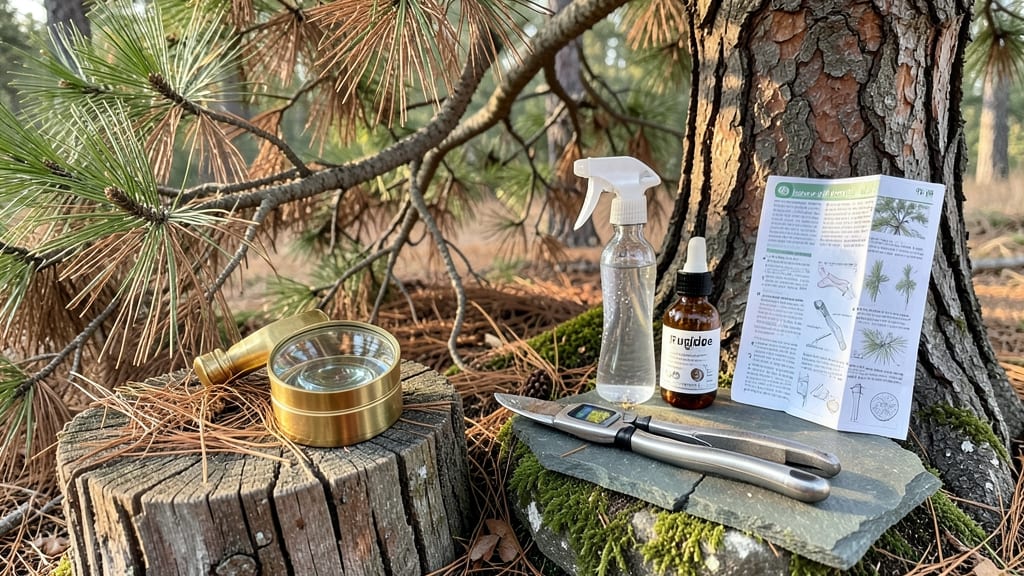
Once you’ve pinpointed the problem, solutions range from pruning dead branches (using clean, sharp tools) to applying organic fungicides or insecticidal soap. For nutrient deficiencies, a slow-release fertilizer can work wonders—just avoid overdoing it, as pines prefer lean soil.
With the right care, you’ll see fresh green needles pushing through in just a few months.
If the damage is severe or you’re unsure what’s wrong, don’t hesitate to call an arborist. Some issues, like advanced disease or pest infestations, need professional intervention.
But in most cases, a little attention and the right techniques will bring your pine back to its lush, healthy self faster than you’d expect.
Underlying Causes Of Branch Decline
When your pine tree’s branches start looking sad—drooping, brown, or brittle—it’s rarely a mystery. The issue almost always stems from one (or more) of these common culprits.
Understanding the root cause is the first step to reviving your tree’s health. Let’s break down the science behind why pine branches wither and die.
Pine trees are hardy, but they’re not immune to temperature swings. Frost damage (especially in late spring or early fall) can kill new growth, while heat stress during droughts causes needles to dry out and drop.
Evergreens like pines rely on a waxy cuticle to retain moisture—when temperatures spike above 90°F (32°C) for prolonged periods, this protective layer breaks down.
🔍 How to spot it: Needles turn yellow or brown from the tips inward, and branches feel crispy to the touch. Actionable fix: Mulch the base to regulate soil temperature, water deeply during heatwaves, and avoid pruning during extreme cold snaps.
Pines are drought-tolerant, but overwatering or poor drainage can suffocate roots, leading to branch dieback. Too little water causes desiccation, while too much triggers root rot (often from Phytophthora fungi). Even a single soggy season can weaken a pine’s vascular system, cutting off nutrients to upper branches.
📊 Signs to watch for:
- Yellowing needles (chlorosis) from overwatering.
- Wilting or blackened branches (root rot).
- Needles clumping at branch tips (drought stress).
Pine trees are a buffet for pests and pathogens. Bark beetles (like the Ips species) bore into phloem, disrupting nutrient flow and causing pitch tubes (sap oozing from holes). White pine weevils target leader shoots, while fungal infections (e.g., Lophodermium) cause needle cast, leaving branches bare and brittle.
🐞 Red flags:
- Sawdust-like frass near branch tips (beetles).
- Yellowing needles that fall in patches (weevils).
- Black or purple needles (fungal disease).
Pines thrive in acidic, well-draining soil with low nitrogen—too much fertilizer burns roots, while deficiencies stunt growth. Magnesium (for chlorophyll) and iron (for needle color) are critical. Without them, branches produce weak, yellowing needles that die prematurely.
📉 Deficiency symptoms:
Nutrient
Symptom
Fix
Nitrogen (N)
Pale yellow needles, stunted growth
Apply sulfur-based fertilizer (avoid synthetic N)
Magnesium (Mg)
Yellow bands between needle veins
Spread Epsom salt (1 tbsp/gal water) in spring
Iron (Fe)
Bright yellow needles (chlorosis)
Use chelated iron or apply iron sulfate granules
Pines heal slowly—improper pruning (cutting too close to the trunk or removing more than 25% of foliage at once) exposes wounds to disease. Mechanical injury (lawnmowers, string trimmers, or hail) can also sever branches, leaving them vulnerable to Botryosphaeria canker.
⚠️ Mistakes to avoid:
- Topping the tree (removing the leader shoot).
- Using dirty tools (spreading disease).
- Pruning during wet weather (slows healing).
🔥 Key takeaway: Most branch dieback is reversible if you act fast. Start by diagnosing the primary stressor—then address it with targeted care. Next up: Step-by-step revival strategies to bring your pine back to life.
Reviving Your Pine’s Canopy
When your pine tree’s branches start looking more like a skeleton than a lush green umbrella, it’s time to roll up your sleeves and take action. The good news?
Most issues are fixable with the right approach. Below, we’ve mapped out practical solutions for each common cause of dying pine branches—plus tips to keep your tree thriving long-term.
Problem: Yellowing needles, dry or brittle branches, or soggy soil at the base all signal water woes.
How to Revive:
- 🔥 Stop Watering Immediately – If the soil is waterlogged, let it dry out for 2–3 days before checking again. Overwatering suffocates roots and invites rot.
- 🍳 Drainage First – Amend heavy clay soil with compost or sand (50/50 mix) to improve aeration. For container-grown pines, ensure pots have drainage holes and a layer of gravel at the bottom.
- 👨🍳 Deep Watering, Not Frequent Shallow Soaks – Water slowly and deeply (1–2 inches per week) to encourage deep root growth. Use a soaker hose or drip irrigation for even moisture.
- ⏰ Monitor Soil Moisture – Stick your finger 2–3 inches into the soil; if it’s dry, water. If it’s damp, wait. Pines hate "wet feet."
Prevention Tips:
- 💡 Mulch Properly – Apply 2–3 inches of organic mulch (pine straw or wood chips) around the base, but keep it 6 inches away from the trunk to prevent rot.
- 🌡️ Water in Early Morning – This reduces evaporation and fungal risks.
- 🎯 Avoid Compacted Soil – Aerate the root zone annually with a manual aerator or by gently fork-tilling around the drip line.
Problem: Brown, crispy needles (especially on south- or west-facing branches) mean your pine is getting too much sun.
How to Revive:
- 🔥 Prune Damaged Branches – Use clean, sharp pruners to remove only the dead or severely burned branches. Cut back to healthy green tissue (about ¼ inch above the damage).
- 🍳 Provide Temporary Shade – If possible, install a lightweight shade cloth (30–50%) over the tree for 2–4 weeks to help it recover.
- 👨🍳 Water Deeply During Heatwaves – Increase watering frequency slightly (but don’t overdo it) to help the tree cope with stress.
Prevention Tips:
- ✨ Choose the Right Location – Pines need full sun (6+ hours/day), but some varieties (like Pinus strobus – Eastern White Pine) tolerate partial shade better.
- 💡 Use Reflective Mulch – White or silver mulch can deflect excess heat from the roots.
- 🌡️ Avoid Pruning in Peak Sun – If you must prune, do it early morning or late afternoon to reduce stress.
Problem: Needles turning brown, sticky residue, or tiny holes in foliage? Pests like pine bark beetles, spider mites, or fungal infections could be to blame.
How to Revive:
- 🔥 Identify the Culprit First – Check for:
- Bark beetles (tiny holes, sawdust-like frass, or D-shaped exit holes).
- Spider mites (fine webbing, stippled needles).
- Fungal issues (orange-brown needles, tar-like sap).
- 🍳 Treat Infestations Immediately
- For Beetles: Apply neem oil or permethrin spray (follow label instructions). Severe cases? Call a certified arborist for insecticide injections.
- For Mites: Spray with soapy water (1 tsp mild soap per gallon) or horticultural oil.
- For Fungal Issues: Prune infected branches 6+ inches below the damage and apply copper fungicide.
- 👨🍳 Strengthen the Tree’s Defense – After treatment, fertilize with a slow-release, balanced fertilizer (10-10-10) to boost recovery.
Prevention Tips:
- 💡 Inspect Regularly – Check for pests every 2 weeks during growing season (spring–fall).
- 🌡️ Keep the Tree Healthy – Stressed trees attract pests! Ensure proper watering, mulching, and annual fertilization.
- 🎯 Remove Debris – Clear fallen needles and branches from the base to reduce hiding spots for pests.
Problem: Yellowing needles (especially older needles turning brown first) or stunted growth? Your pine might be hungry.
How to Revive:
- 🔥 Test Your Soil – Grab a DIY soil test kit (or send a sample to a local extension office) to check pH and nutrient levels. Pines prefer slightly acidic soil (pH 5.0–6.5).
- 🍳 Fertilize Correctly
- For Acid-Loving Pines: Use an acid-forming fertilizer (like cottonseed meal or sulfur-coated urea).
- For General Health: Apply a slow-release, balanced fertilizer (e.g., 10-10-10 or 12-4-8) in early spring.
- 👨🍳 Micro-Nutrients Matter – If needles look purple or red, it could be a magnesium (Epsom salt) or iron deficiency. Mix 1 tbsp Epsom salt per gallon of water and spray foliage.
- ⏰ Timing is Key – Fertilize once in early spring and again in mid-summer (avoid fall applications).
Prevention Tips:
- 💡 Top-Dress with Compost – Spread 1–2 inches of compost around the drip line annually to improve soil health.
- 🌡️ Avoid Over-Fertilizing – Too much nitrogen can burn roots and attract pests.
- 🎯 Mulch with Pine Needles – Pine straw mulch slowly releases nutrients and acidifies the soil naturally.
Problem: Over-pruning, wrong cuts, or poor timing can stress a pine and lead to branch dieback.
How to Revive:
- 🔥 Prune Only When Necessary – Pines don’t need annual pruning unless:
- Branches are dead, diseased, or crossing.
- The tree is overgrown and blocking sunlight/structures.
- 🍳 Make Clean Cuts
- Use sharp, sterilized pruners (clean with rubbing alcohol between cuts).
- Cut just outside the branch collar (the swollen area where the branch meets the trunk).
- Avoid "topping" (cutting back to a stub)—this encourages fungal growth.
- 👨🍳 Best Time to Prune – Late winter to early spring (before new growth starts) is ideal.
Prevention Tips:
- 💡 Thinning > Heading Back – Remove entire branches rather than cutting back to a lateral branch (this weakens the tree).
- 🌡️ Avoid Pruning in Wet Conditions – Wet wood is more prone to disease.
- 🎯 Never Prune More Than 25% – Removing too much foliage stresses the tree and reduces its ability to photosynthesize.
Final Pro Tip: 🌟 Patience is key! Some pines take 1–2 years to fully recover from stress. Monitor progress, adjust care as needed, and soon, your pine will be back to its full, vibrant glory. 🌲✨
Frequently asked questions
Why are my pine tree branches dying from the tips inward?
This is often a sign of heat stress or drought. Pine needles absorb water through their entire surface, so when temperatures exceed 90°F (32°C) or soil dries out, the tips dry first. Check if branches feel crispy to touch—this confirms moisture loss. Water deeply in the morning and mulch with 2-3 inches of pine straw to retain moisture.
How do I tell if my pine tree has bark beetles or just natural needle drop?
Look for D-shaped exit holes in the bark or sawdust-like frass (insect droppings) near branch tips—these are clear beetle signs. Natural needle drop happens gradually over 2-3 years and affects older needles first. Beetle damage appears suddenly, often on one side of the tree, with pitch tubes (sap oozing from holes).
Can I prune dead branches now, or should I wait?
Prune dead branches anytime, but avoid heavy pruning during active growth seasons (spring-fall) to prevent stress. For large branches, cut just outside the branch collar and sterilize tools with rubbing alcohol to avoid spreading disease. Remove no more than 25% of foliage at once—pines heal slowly.
What's the fastest way to fix overwatered pine roots?
Stop watering immediately and let the soil dry 2-3 inches deep before checking again. Improve drainage by amending soil with compost or sand (50/50 mix) and consider raising the tree slightly with gravel or landscape fabric if planted in low spots. Avoid compacting soil around the trunk—use a manual aerator if needed.
Will my pine tree recover if half the branches are dead?
Yes, but recovery depends on the cause. If the damage is from pests or disease, treat immediately and prune 12+ inches below affected areas. For environmental stress (drought/heat), focus on deep watering and shade relief. Healthy pines are resilient—you may see new growth within 6-12 months if roots are intact. Severe cases may need an arborist.