
Pruning
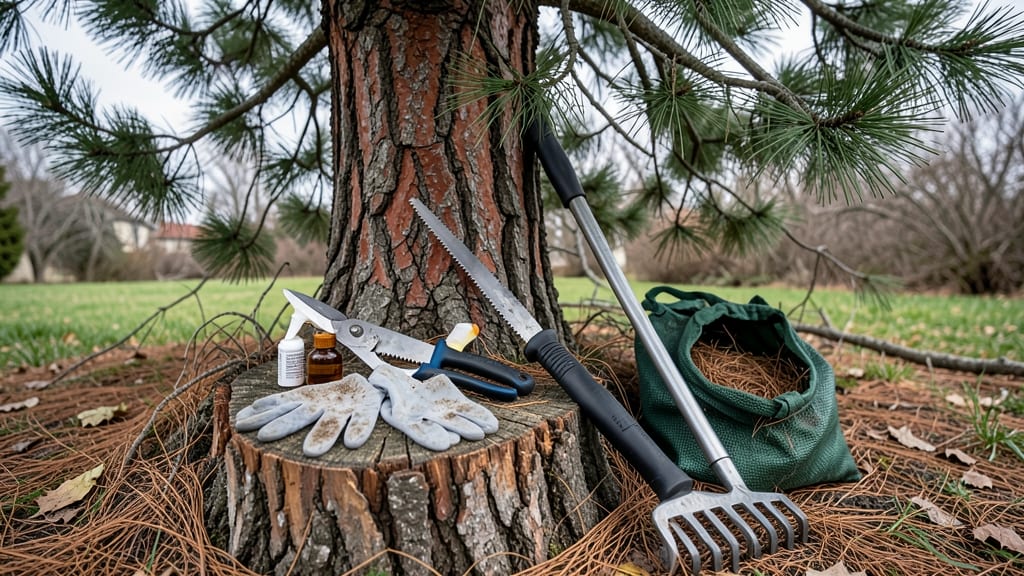
Your pine tree’s lower branches are telling you something—it’s time to listen. 🌲 Dead lower branches on pines usually mean one of three things: natural aging, pest damage, or stress from water or sunlight. The good news? You can diagnose and fix it with the right tools and timing.
Start by checking for brown needles, sawdust-like frass (insect droppings), or fungal growth. If branches are dry and brittle, they’re likely dead and need removal. But if you see signs of pests or disease, pruning alone won’t save them—you’ll need targeted treatments like horticultural oil or fungicide.
The spot-and-cut method is simple: remove only the dead branches (never more than 25% of the tree’s foliage at once). Use sharp pruners or a handsaw, and cut just outside the branch collar. This keeps the tree healthy while giving it room to grow stronger.
Do this in late winter or early spring when the tree is dormant, and avoid pruning in extreme heat or cold. With proper care, your pine will bounce back—and those lower branches will stay alive for years.
Root Causes Of Branch Death
Understanding why your pine tree’s lower branches are dying starts with identifying the underlying stressors. Pines are hardy, but they’re not invincible—environmental factors, biological threats, or even human error can trigger decline. Below, we break down the most common culprits and why they target the lower canopy first.
---
Pine trees rely on circulation to stay healthy.
When lower branches are shaded by denser upper growth or surrounded by overgrown shrubs, they struggle to: - Photosynthesize efficiently (less sunlight = less energy production). - Dry properly after rain (excess moisture invites fungal infections like Phytophthora or Armillaria). - Receive fresh air, leading to stagnant, humid microclimates—perfect breeding grounds for pests.
Actionable sign: Look for yellowing needles that stay clumped together (a classic sign of poor airflow). If the tree is surrounded by dense mulch, bushes, or even a fence, it’s likely suffocating its own lower limbs.
---
Pine trees are a buffet for sap-sucking insects and pathogenic fungi, and lower branches are often the first to show damage because: - Sawflies, aphids, and spider mites target stressed branches, injecting toxins that cause needle drop and brown tips. - Fungal infections (like Diplodia tip blight or white pine blister rust) thrive in damp, shaded conditions, creating blackened, resinous lesions on needles and twigs. - Bark beetles may not kill the whole tree at first but can girdle lower branches, cutting off nutrient flow.
Red flag: Sticky resin, sawdust-like frass (insect waste), or mushrooms at the base of the tree are clear warnings.
---
Pines are drought-tolerant, but waterlogged soil or prolonged dry spells can strangle lower branches: - Overwatering leads to root rot (Fusarium or Pythium), where roots can’t absorb oxygen, causing wilting and dieback from the bottom up. - Underwatering (especially in sandy soils) forces the tree to prioritize upper branches for survival, leaving lower limbs desiccated and brittle.
Test it: Stick your finger 2–3 inches into the soil—if it’s soggy, you’re overdoing it; if it’s bone-dry, the tree is thirsty.
--- Sometimes, the cause is external trauma: - Lawnmower or weed whacker wounds can sever bark, creating entry points for disease. - Heavy snow or ice can snap lower branches, leaving them vulnerable to decay. - Construction or compacted soil (from foot traffic or heavy equipment) restricts root growth, starving the lower canopy.
Visual clue: Look for jagged breaks, peeling bark, or unusual patterns of dieback (e.g., one side dead while the other thrives).
--- Not all dead lower branches are a crisis—some are part of the tree’s life cycle: - Pines self-prune as they mature, shedding older, inner branches to focus energy on new growth. - Shade cast by the tree itself can cause lower limbs to yellow and drop naturally over time.
How to tell the difference: If the dead branches are scattered, small, and the tree looks otherwise healthy, it’s likely natural. But if large sections are dying suddenly, intervention is needed.
--- Pines need specific nutrients to thrive, and deficiencies often show up in the older, lower branches first: - Nitrogen (N) deficiency → Pale yellow needles (like grass). - Magnesium (Mg) deficiency → Reddish-brown bands between needle bases. - Iron (Fe) deficiency → Yellowing between veins (common in alkaline soils).
Soil test tip: A simple soil test kit (available at garden centers) can reveal imbalances before they cause irreversible damage.
Reviving Your Pine Tree: Step-by-Step Fixes
Now that you’ve identified why your pine tree’s lower branches are dying—whether from disease, pests, overcrowding, or environmental stress—it’s time to take action. The good news? Most issues can be resolved with proper care, pruning, and prevention.
Below, we’ll break down practical solutions tailored to the most common causes, along with tips to keep your pine tree thriving for years to come.
---
If your pine tree’s lower branches are browning, oozing sap, or covered in mold, a fungal or bacterial infection is likely the culprit.
#### 🔥 Step 1: Remove Infected Branches - 🍳 Use sterilized pruning tools (rubbing alcohol or a bleach solution) to avoid spreading spores. - 👨🍳 Cut 6–12 inches below the infected area to ensure you remove all contaminated wood. - ⏰ Do this in dry weather—wet conditions can worsen fungal spread.
#### 🌡️ Step 2: Apply Fungicide - 🎯 Use a copper-based fungicide (like Copper Soap or Neem Oil) for organic control. - ✨ Spray the remaining branches and soil around the base to prevent reinfection. - 💡 Reapply every 2–4 weeks until new growth appears.
#### 🌿 Prevention Tips - 🌧️ Improve drainage—pine trees hate soggy roots.
Add compost or mulch to aerate the soil. - 🌬️ Space trees properly (at least 10–15 feet apart) to reduce humidity and airflow issues. - 🚫 Avoid overhead watering—water at the base instead to keep foliage dry.
---
If you spot sawdust-like frass, tiny holes, or crawling insects (like bark beetles or pine needle scale), pests are likely the problem.
#### 🔪 Step 1: Prune Heavily Infested Branches - 🍳 Remove and destroy (burn or bag) severely damaged branches to stop the spread. - 👨🍳 Focus on lower branches first—these are often the worst-hit.
#### 🐞 Step 2: Use Natural or Chemical Pest Control | Pest | Solution | |-------------------|-----------------------------------------------------------------------------| | Bark Beetles | Apply diatomaceous earth or permethrin spray to the trunk and branches. | | Pine Needle Scale | Spray with horticultural oil or insecticidal soap in early spring. | | Sawflies | Use Bt (Bacillus thuringiensis)—a natural bacterial pesticide. |
#### 🌡️ Step 3: Strengthen Tree Health - 🎯 Water deeply but infrequently—pine trees prefer dry soil but need moisture during drought. - 💡 Fertilize with slow-release, acidic fertilizer (like pine-specific 10-10-10) in early spring. - 🌿 Mulch with pine needles or wood chips to retain moisture and acidity.
#### 🛡️ Prevention Tips - 🌲 Inspect trees regularly—catch infestations early before they spread. - 🐝 Encourage natural predators—birds, ladybugs, and predatory mites help control pests. - 🚫 Avoid stressing the tree—over-fertilizing or compacting soil weakens its defenses.
---
If lower branches are dying due to lack of sunlight or blocked airflow, thinning is key.
#### ✂️ Step 1: Thin the Canopy - 🍳 Remove branches from the inside out—focus on crossing or rubbing branches first. - 👨🍳 Aim for an "open vase" shape—this allows sunlight and air to reach lower limbs. - ⏰ Prune in late winter or early spring (when the tree is dormant).
#### ☀️ Step 2: Improve Light Exposure - 🎯 Trim nearby trees/shrubs that may be shading your pine. - 💡 If possible, transplant severely overcrowded trees to a sunnier location.
#### 🌿 Prevention Tips - 🌲 Plant pines with space—follow spacing guidelines for your specific species. - 🌬️ Avoid dense mulching—keep mulch 3–4 inches away from the trunk for airflow. - 🚫 Don’t over-prune—remove no more than 25% of the canopy in one season.
---
Drought, frost, or salt buildup can kill lower branches by damaging roots or needles.
#### 💧 Step 1: Adjust Watering Practices - 🍳 Deep watering (1–2 inches per week) is better than frequent shallow watering. - 👨🍳 Use drip irrigation or soaker hoses to deliver water directly to the root zone. - ⏰ Water in the morning to reduce evaporation and fungal risks.
#### ❄️ Step 2: Protect Against Frost & Salt - 🎯 For frost damage: Wrap the trunk with burlap in late fall for young trees. - 💡 For salt damage (near roads): Rinse the soil with water to flush out excess salt, then mulch heavily.
#### 🌡️ Step 3: Boost Soil Health - 🌿 Test soil pH—pine trees thrive in acidic soil (pH 4.5–6.0). Amend with sulfur or peat moss if needed. - 🚫 Avoid alkaline fertilizers—they can worsen stress.
#### 🌱 Prevention Tips - 🌲 Choose drought-tolerant pine species (like Ponderosa or Jack Pine) if you live in dry climates. - 🌡️ Monitor weather extremes—cover young trees during unexpected frosts or heatwaves. - 🚫 Avoid compacting soil—heavy foot traffic or machinery can suffocate roots.
--- If your pine tree is large, severely infected, or structurally compromised, hiring an ISA-certified arborist is the safest bet.
They can: - Perform proper structural pruning without harming the tree. - Diagnose hidden diseases or pests you might miss. - Recommend tree-saving treatments (like soil injections for nutrient deficiencies).
Frequently asked questions
Why do pine trees lose their lower branches first?
Lower branches often die because they receive less sunlight and airflow, making them more vulnerable to stress. Pines prioritize upper growth for energy, leaving lower limbs prone to fungal infections, pest attacks, or nutrient deficiencies. Think of it like a tree's "self-pruning" process—older branches naturally decline when they can't compete for resources.
How can I tell if a branch is truly dead?
Scratch the bark—if it's dry and crumbly underneath, the branch is dead. You can also bend it: dead branches snap easily, while live ones bend slightly. Avoid cutting branches that still have some green needles, as they may recover with proper care.
Is it safe to remove dead branches myself?
Yes, but use sharp, clean tools and cut just outside the branch collar (the swollen area where the branch meets the trunk). For large trees or branches over 3 inches thick, consider hiring a professional to avoid damaging the tree or risking injury. Always wear gloves and eye protection when pruning.
Will pruning dead branches help my pine tree grow better?
Removing dead branches reduces stress on the tree and improves airflow and sunlight penetration. Just avoid over-pruning—never remove more than 25% of the tree's canopy in one season. This helps the tree redirect energy to healthy growth while preventing shock.
What’s the best time of year to prune pine trees?
Late winter or early spring (just before new growth starts) is ideal. This timing minimizes stress and allows the tree to heal before summer heat. Avoid pruning during extreme weather—never prune during drought or frost, as this can further weaken the tree.