
Watering
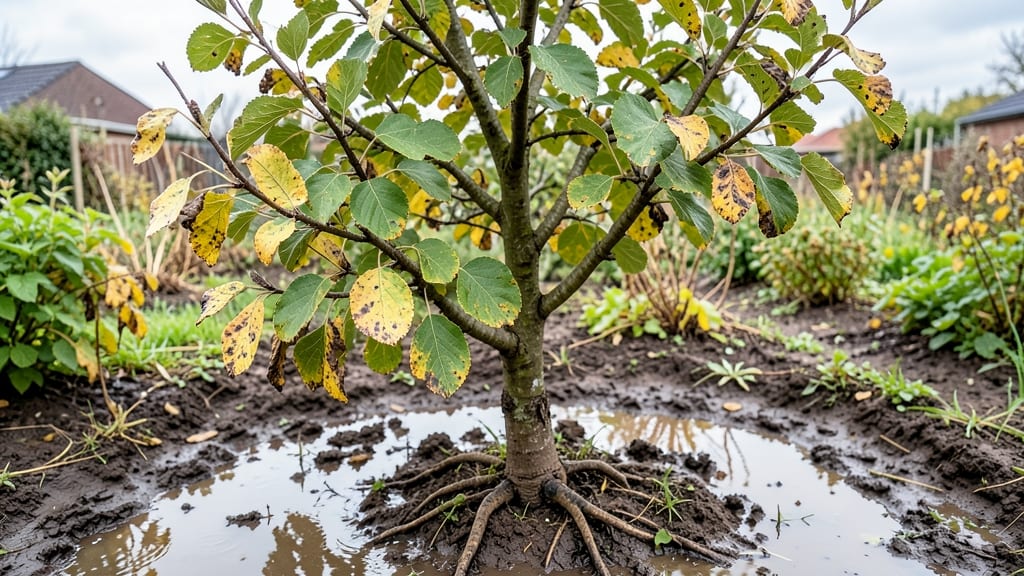
Your apple tree’s yellow leaves and mushy roots aren’t a death sentence—just a cry for help. 🌱 Overwatering smothers roots, suffocates soil, and invites root rot, but fixing it starts with understanding how much (or how little) water your tree actually needs.
The good news? Once you adjust, your tree can bounce back stronger than ever.
Most gardeners overdo it because we assume "more water = better fruit," but apple trees hate soggy roots. Check soil moisture by sticking your finger 2-3 inches deep—if it’s damp, wait. Drainage is key: raised beds or amended soil with compost and sand can save a struggling tree.
I’ve seen trees recover in as little as 4-6 weeks once the watering routine changes.
Start by cutting back on watering—deep but infrequent is the goal. Let the top 6 inches of soil dry out between waterings, and avoid shallow sprinkling that only wets the surface.
You’ll notice new green leaves within 2-3 weeks, and the tree’s overall vigor will improve as roots get the air they need.
Prevention is easier than repair: mulch properly, avoid compacted soil, and always water at the base, not the leaves. A healthy apple tree thrives on balance—not drowns. With these adjustments, you’ll be back to harvesting crisp, juicy fruit in no time.
Root Causes of Overwatered Apple Trees
Overwatering your apple tree might seem like a harmless mistake—after all, who wouldn’t want to give their fruit-bearing beauty plenty of hydration? 🌧️ But too much water can suffocate roots, disrupt nutrient uptake, and even invite fungal infections.
Let’s break down the real reasons this happens, so you can avoid turning your orchard into a soggy swamp.
Apple trees thrive in well-draining soil, but if your garden’s soil is clay-heavy, compacted, or lacks organic matter, water pools around roots instead of draining away. This creates an anaerobic (oxygen-deprived) zone, where roots can’t breathe—and that’s a recipe for disaster.
- 🔍 Signs: Waterlogging after rain or irrigation, puddles lingering for hours, or a "mushy" soil feel when squeezed.
- 💡 Fix: Amend soil with compost, sand, or perlite to improve aeration. For heavy clay, consider raised beds or mounding soil around the trunk to encourage runoff.
- ⚠️ Pro Tip: The "squeeze test" works—if soil stays clumped in your hand after pressing, drainage is poor.
Automatic sprinklers, drip systems, or even well-meaning gardeners can overestimate how much water an apple tree needs. Frequent shallow watering (e.g., daily light sprinkles) encourages roots to stay near the surface, where they’re more prone to drowning.
- 📊 Common Culprits:
- Running sprinklers for longer than 30–45 minutes at a time.
- Watering on a schedule without checking soil moisture (e.g., every day, rain or shine).
- Using sprinklers that mist leaves (encourages fungal diseases like apple scab).
- 💧 Better Approach: Deep watering 2–3 times per week (or less in rainy seasons) to encourage roots to grow deeper. Use soaker hoses or drip irrigation to deliver water directly to the root zone.
- 🌡️ Science Note: Apple trees need 1–1.5 inches of water per week (including rainfall). More in extreme heat, less in winter.
Potted apple trees (like dwarf varieties) are especially vulnerable to overwatering because their root systems are confined. Without proper drainage, excess water sits in the pot, leading to root rot (a fungal infection caused by Phytophthora or Pythium).
- 🚨 Red Flags:
- Yellowing leaves with blackened roots when inspected.
- Water draining slowly or not at all after 10–15 minutes.
- Pot feels unusually heavy when lifted (sign of waterlogged soil).
- 🏺 Container Fixes:
- Use pots with drainage holes and a cache pot (outer tray to catch runoff).
- Repot with well-draining potting mix (e.g., 60% soil, 30% perlite, 10% compost).
- Water only when the top 1–2 inches of soil are dry (stick your finger in to check!).
- ✨ Pro Tip: Elevate containers on feet or bricks to prevent water from pooling below.
Heavy rainfall, high humidity, or poor air circulation around your apple tree can amplify overwatering risks. If your tree is planted in a low-lying area or surrounded by dense foliage, water has nowhere to go but into the roots.
- 🌧️ Weather-Related Risks:
- Flash floods or monsoon seasons can drown roots overnight.
- No windbreaks (like fences or other trees) trap moisture near the trunk.
- Shady spots slow soil evaporation, keeping roots wet longer.
- 🌿 Environmental Fixes:
- Plant trees on a slight slope to encourage runoff.
- Prune nearby plants to improve airflow around the trunk.
- Use mulch (2–4 inches of wood chips or straw) to regulate soil moisture—but keep it 3–4 inches away from the trunk to prevent rot.
- 🔍 Test Your Spot: After rain, check if water pools around the base. If it does, consider regrading the soil or installing a French drain.
Now that you know the why, the next step is fixing the damage—stay tuned for signs of overwatering and how to revive your apple tree! 🍏💦
Fixing Your Overwatered Apple Tree
Overwatering can turn your thriving apple tree into a sad, soggy mess—but don’t worry! With the right steps, you can nurse it back to health and keep future watering disasters at bay. Below, we’ll break down cause-specific fixes and prevention tips to get your tree back on track.
---
If your apple tree’s roots are drowning in water, poor drainage is the culprit. Here’s how to fix it:
#### 🔥 Step 1: Stop Watering Immediately - Cut off all water for at least 3–5 days to let the soil dry out. - If the ground is muddy or puddled, wait until it’s firm before watering again.
#### 🍳 Step 2: Improve Soil Drainage - Test your soil: Dig a 6-inch hole near the tree.
If water pools after 10 minutes, drainage is the issue. - Amend the soil with: - Sand or perlite (for sandy soil) - Compost or coconut coir (for clay-heavy soil) - Gravel or crushed stone (for severe drainage problems) - Avoid compacting soil—keep it loose around the root zone.
#### 👨🍳 Step 3: Raise the Tree’s Base (If Needed) - If your tree sits in a low spot, mound well-draining soil (50% topsoil, 50% sand) around the base to elevate it slightly. - Slope the soil away from the trunk to prevent water pooling.
#### ⏰ Step 4: Monitor & Adjust Watering - Water deeply but infrequently: Once a week (or less in rain) is better than daily shallow drinks. - Check soil moisture with your finger—top 2 inches should dry out before watering again.
--- Yellowing leaves often mean root suffocation from too much water. Here’s how to revive them:
#### 🔪 Step 1: Prune Damaged Foliage - Trim yellow or wilted leaves to redirect energy to healthy growth. - Avoid pruning in wet conditions—wait for dry weather.
#### 🌡️ Step 2: Boost Airflow & Light - Thin out dense branches to improve airflow. - Ensure 6+ hours of sunlight daily—shady spots worsen moisture retention.
#### 💡 Pro Tip: Use Mulch (But Not Too Much!) - Apply 2–4 inches of organic mulch (wood chips, straw) away from the trunk to regulate moisture. - Never pile mulch against the bark—this traps moisture and invites rot.
--- If your tree shows blackened roots, foul smells, or fungal growth, it’s in critical condition. Try these emergency measures:
#### ✨ Step 1: Prune Affected Roots (If Possible) - Gently remove any mushy, dark roots with sterilized shears. - Do not over-prune—focus on the worst areas.
#### 🧴 Step 2: Apply Fungicide (If Fungal Rot is Present) - Use a copper-based fungicide or hydrogen peroxide spray (3%) to kill pathogens. - Reapply every 2–3 weeks until new growth appears.
#### 🎯 Step 3: Repot or Relocate (Last Resort) - If the tree is too far gone, consider transplanting to a well-draining spot with amended soil. - Smaller trees may recover better than mature ones—assess carefully.
--- Once your tree is stable, keep these habits to avoid overwatering again:
| Problem | Solution | Prevention Tip | |---------------------------|---------------------------------------|--------------------------------------------| | Heavy clay soil | Mix in sand/compost before planting | Test soil before buying a tree! | | Poor drainage | Plant on a slight slope | Avoid planting in valleys or low spots | | Overzealous watering | Use a moisture meter | Water in the morning (less evaporation) | | Thick mulch buildup | Refresh mulch annually | Keep mulch 3–4 inches deep, not deeper |
--- Signs of improvement: ✅ New green leaves (within 2–4 weeks) ✅ Firmer soil (not soggy to the touch) ✅ No more foul odors from the roots
If your tree still struggles after 4–6 weeks, consult a local arborist—some cases need professional help.
--- Remember: Apple trees are hardy but not water-loving—they’d rather be slightly dry than soggy. With these fixes, your tree will be back to bearing fruit in no time! 🍎🌿
Frequently asked questions
How do I know if my apple tree is getting too much water?
Check for these red flags: yellowing leaves (especially lower ones), mushy or blackened roots, and soil that stays soggy for days. If the ground feels squishy when pressed or water pools around the base, your tree is likely overwatered. Also watch for wilting leaves despite wet soil—this is a classic sign of root suffocation.
Can I save an apple tree with root rot from overwatering?
Yes, but act fast! First, stop watering completely for 3-5 days to dry the roots. Prune any blackened roots and improve drainage by amending soil with sand or compost. For severe cases, repotting or transplanting to a well-draining location may be necessary. Apply copper-based fungicide if fungal growth appears.
What's the best way to water an apple tree to avoid overwatering?
Use the deep-and-infrequent method: water once every 7-10 days (less in rainy weather) for 10-15 minutes at the base. Always water early morning to reduce evaporation. Avoid sprinklers that wet leaves—use soaker hoses or drip irrigation instead. The top 2-3 inches of soil should dry out between waterings.
How long does it take for an overwatered apple tree to recover?
With proper care, you'll see improvement in 2-4 weeks—new green leaves will sprout as roots recover. Full recovery may take 4-6 weeks, depending on how severe the damage was. Monitor soil moisture daily and adjust watering as needed. If no progress after 6 weeks, consult an arborist for advanced treatment options.
Is it better to underwater than overwater apple trees?
Yes! Apple trees are more resilient to drought than to excess water. While they need consistent moisture, they can handle brief dry spells better than soggy roots. The key is balance: let the top 6 inches of soil dry out between waterings. Yellow leaves from underwatering will be crispy at the edges, while overwatered leaves are soft and yellow all over.