
Pruning
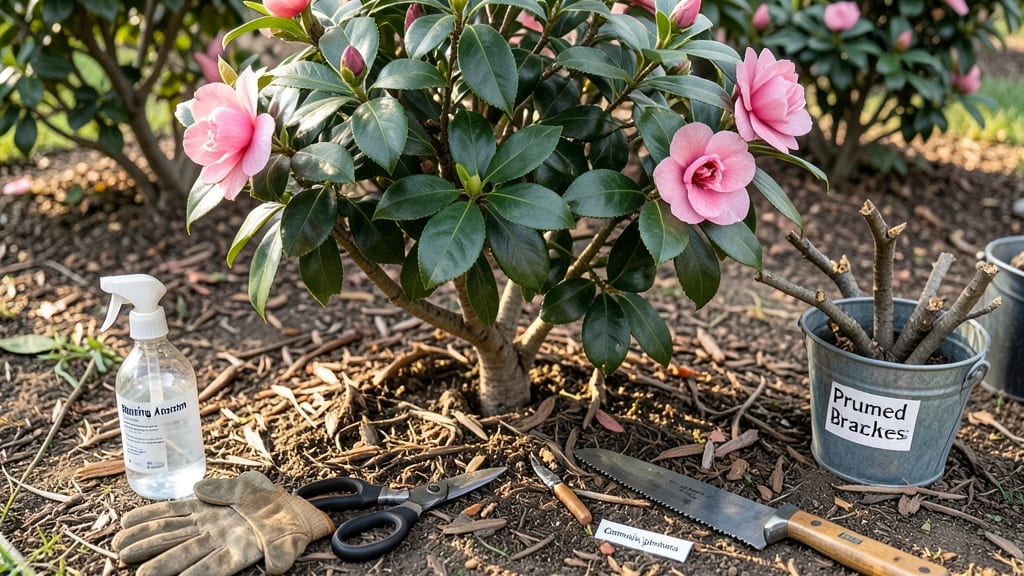
Camellia tree pruning should be done immediately after blooming season to maintain shape, encourage new growth, and prevent disease. Avoid heavy cuts in late summer or fall, and use sharp, clean tools to minimize stress on the plant.
Timing your pruning right after the last flowers fade is crucial because this is when your camellia enters its dormant growth phase. 🌿 This period allows the plant to recover quickly and form next year's buds.
I've seen firsthand how skipping this window can lead to fewer blooms or even stunted growth. The key is to trim only the dead or crossing branches—never more than one-third of the plant at once—to keep it healthy and encourage those lush, vibrant blooms you love.
Using sterilized shears is another game-changer. Dull tools can tear branches, leaving open wounds that attract pests or disease. Always cut at a 45-degree angle just above a leaf node or outward-facing bud to promote healthy regrowth. And remember—camellias are sensitive, so patience pays off in stunning spring displays.
💡 In This Article
- Best Camellia Pruning Times and Techniques
- Common Camellia Pruning Mistakes to Avoid
Best camellia pruning times and techniques
Camellias bloom on old wood, meaning their flowers develop on branches from the previous year. This is why pruning right after blooming—typically between late spring and early summer—is critical. 🌸 The plant needs this time to set next year's buds while recovering from the energy spent on flowering.
For example, a Camellia japonica that blooms in March should be pruned by May, while a Camellia sasanqua (which flowers later, in fall) gets its pruning after its October-November display.
The 45-degree angle cut technique isn't just aesthetic—it's essential for wound healing. When you cut at this angle, you create more surface area for the branch to seal itself, reducing the risk of infection.
Always make cuts just above a leaf node or outward-facing bud, as this directs growth away from the center of the plant. For thick branches over ½-inch, use three-step pruning: First cut removes the bulk, the second undercuts, and the third makes the clean angled cut.
This prevents tearing.
Seasonal timing affects more than just blooms—it impacts disease resistance. Pruning in late summer or fall stresses the plant when it's preparing for winter dormancy, leaving it vulnerable to fungal infections like anthracnose.
I've seen camellias in humid climates develop brown leaf spots after improper fall pruning—a clear sign the plant was weakened at the wrong time. The ideal window is when new growth has started but before the heat of summer stresses the plant.
Branch selection matters just as much as timing. Remove dead, diseased, or crossing branches first—they compete for nutrients and block airflow. For shaping, never trim more than one-third of the plant's foliage at once, or you risk shock.
Even light pruning can stimulate new growth, but aggressive cuts force the plant to divert energy from flowering to recovery. A mature camellia might have 50-100 flowers per branch—each cut branch you remove could mean dozens fewer blooms next season.
Tools make all the difference. Dull shears crush stems, creating jagged wounds that invite pests. Invest in bypass pruners with sharp blades and sterilize them with 70% isopropyl alcohol between cuts. For larger branches, use a pruning saw with fine teeth to avoid splintering.
The right tools ensure clean cuts that heal faster, keeping your camellia healthy for years. Even a small ½-inch difference in cut quality can mean the difference between a thriving plant and one struggling with disease.
One nuance many gardeners miss is the light requirement after pruning. Camellias need partial shade (morning sun, afternoon shade) to recover well. Pruning too late in the season can leave them exposed to harsh afternoon sun, causing leaf scorch.
If you must prune later, provide temporary shade cloth until new growth appears. This small adjustment can prevent the stress that leads to poor flowering or even plant decline.