
Plants
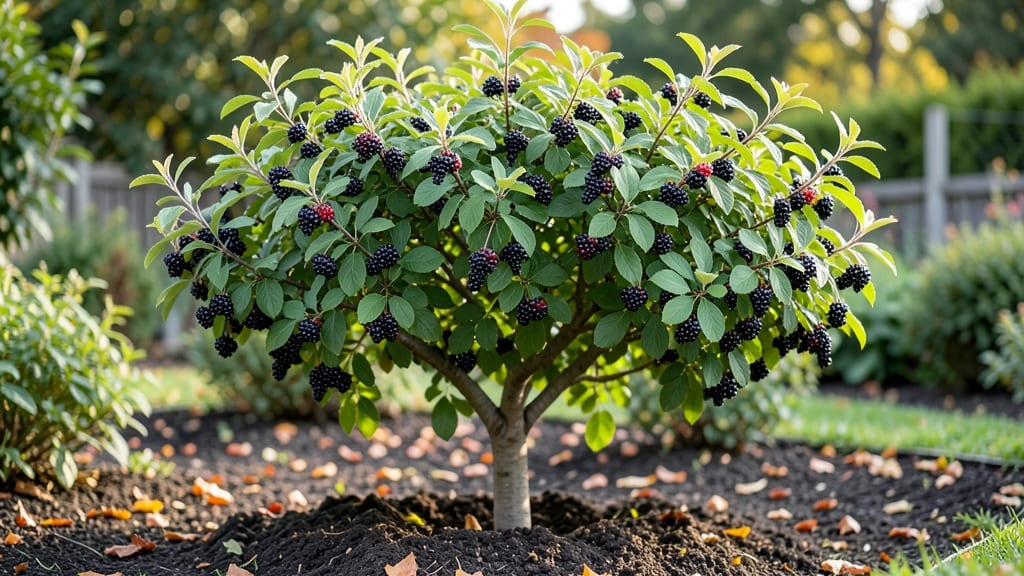
A chokeberry tree looks like a small, dense shrub or tree with dark green, oval leaves and clusters of white flowers in spring. Its bark is smooth and grayish-brown, while its berries turn glossy black when ripe, resembling tiny grapes but with a tart flavor.
A chokeberry tree typically grows between 6 to 12 feet tall, with a rounded, bushy shape that makes it easy to spot in landscapes. 🌿 The leaves are a deep green, slightly serrated, and oval-shaped, while the spring blooms appear as delicate white clusters that give way to those signature black berries by late summer.
Unlike many fruit-bearing trees, chokeberries stay on the branches well into winter, providing visual interest year-round.
One key identifier is the berry clusters—they grow in tight, grape-like bunches but lack the sweetness of traditional grapes. The bark remains smooth even as the tree matures, which helps distinguish it from rougher-barked shrubs.
If you're comparing it to similar plants like elderberry, chokeberries have a more upright growth habit and a distinct tartness that's unmistakable when tasted.
💡 In This Article
- Identifying Chokeberry Tree Characteristics by Season
- How to Distinguish Chokeberry Trees from Other Berries
Identifying chokeberry tree characteristics by season
Spring is when chokeberry trees reveal their most delicate features. The flowers emerge in late April to early May as small, 5-petaled white blossoms clustered in groups of 3-5, creating a frothy appearance that contrasts beautifully with the deep green leaves.
These flowers are slightly fragrant, though not overpowering, and attract pollinators like bees and butterflies. The tree's growth habit during this season is rapid, with new shoots emerging at a 45-degree angle from the main branches, giving it a distinctly layered look.
By summer, the foliage becomes the star of the show. The leaves are 2-4 inches long, oval-shaped with a slightly pointed tip, and have a leathery texture that feels firm to the touch. The edges are finely serrated, almost like tiny teeth, which helps distinguish them from smoother-leaved shrubs.
What's fascinating is how the leaves develop a reddish tint along the veins when exposed to cooler temperatures, a trait that becomes more pronounced in autumn.
As summer transitions to autumn, chokeberries undergo one of their most dramatic transformations. The glossy black berries—technically called aronia berries—begin to ripen in late August to September, starting as green and turning to deep purple before reaching their final black hue.
These berries grow in dense, grape-like clusters that can weigh up to 1.5 ounces per bunch, making them heavier than they appear. The tart flavor develops fully at this stage, with a pH level of 2.8-3.2, similar to cranberries but with a more complex, almost wine-like depth.
Winter reveals the chokeberry's unique bark texture, which remains smooth and grayish-brown even as the tree matures. Unlike many shrubs that develop rough, peeling bark, chokeberries maintain their sleek appearance, though you might notice subtle horizontal lenticels (porous spots) that allow gas exchange.
The berries often persist on the branches through winter, providing a stark contrast against the snow. This persistence is a key identifier—most berry-producing plants drop their fruit by late fall.
What sets chokeberries apart visually is their upright, multi-stemmed growth habit, often forming dense thickets. When comparing to similar shrubs like elderberry, chokeberries lack the pinnate leaf structure of elderberry and have a more compact, rounded shape.
Dogwood trees, another common lookalike, have 4-petaled flowers and a single-trunk growth pattern, making chokeberries instantly recognizable by their clustered white blooms and bushy form.
For a hands-on identification tip, try the "berry crush test." Chokeberries release a distinctive tart, almost astringent juice when crushed, unlike elderberries, which have a milder, slightly sweet flavor. This sensory clue, combined with the seasonal changes, makes chokeberries one of the most visually dynamic shrubs in the landscape.