
Pruning
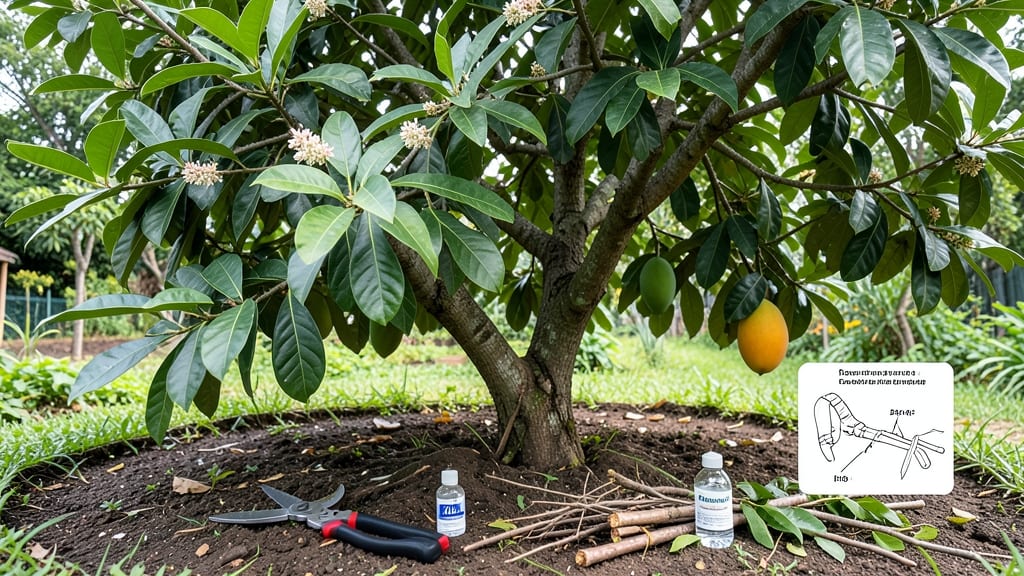
Pruning a mango tree for fruit isn't just about shaping—it’s the secret to doubling your harvest next season. 🌱 I’ve seen trees with dense, tangled branches produce almost nothing, while the same tree after strategic cuts becomes a fruit-loaded powerhouse.
The key is timing, technique, and knowing which branches to prioritize.
You’ll need sharp pruners, a saw for thicker branches, and a clear day to assess the tree. Start by removing dead or crossing branches first—they’re stealing energy from potential fruit.
Then, thin the canopy to let sunlight reach the center, where most fruit develops. Think of it like giving your tree a spa day: less clutter, more focus on growth.
After pruning, your tree will reward you with larger, sweeter fruit and easier access for harvesting. The cuts you make now determine how many mangoes you’ll pick in six months. Just avoid cutting too late in the season—wait until after the main harvest but before new growth starts.
Common mistakes? Over-pruning (which stresses the tree) or cutting at the wrong angle (which invites disease). With the right approach, you’ll see new shoots forming within weeks, each one a future home for more fruit. Ready to transform that tangled mess into a productive tree?
📚 In This Guide
- What you need
- Instructions
- Tips and common mistakes
- Wrapping up and next steps
What you need
- ● Pruning shears – Bypass pruners (sharp, 6-8 inch blades) for clean cuts on small branches.
- ● Loppers – 8-10 inch for thicker branches (up to 2 inches in diameter).
- ● Pruning saw – Curved-tooth for branches thicker than 2 inches (avoid jagged cuts!).
- ● Garden gloves – Heavy-duty, cut-resistant (thorns are no joke!).
- ● Disinfectant (70% isopropyl alcohol or bleach solution) – To sterilize tools between cuts and prevent disease.
- ○ Rope or extension pole – For reaching high branches safely (optional but helpful!).
- ● Bucket or trash bag – For collecting pruned branches and debris.
- ● Tree wound dressing – Pruning sealant (controversial, but some swear by it for large cuts).
- ● Ladder or step stool – If your tree is tall (safety first!).
- ● Marking spray or tape – To label branches for future reference.
- ● First-aid kit – Just in case (mango thorns are sneaky!).
Step-by-Step instructions for pruning a mango tree for fruit
Here’s the method I’ve used to transform wild, unproductive mango branches into heavy-fruiting trees.
✂️ Step 1: Remove Dead, Diseased, or Crossing Branches First
Start by inspecting the tree for any branches that are dead, diseased, or rubbing against each other. These are your first targets—they’re stealing energy from fruit production. Use clean, sharp pruning shears to cut these branches back to their point of origin, making the cut at a 45-degree angle just above a bud or outward-facing branch.
I always work from the bottom up, so I don’t accidentally drop debris on healthy branches below. If a branch is larger than 2 inches in diameter, use a pruning saw instead. The goal here is to open up the tree’s canopy so light and air can reach the center, which is where most fruit develops.
☀️ Step 2: Thin Out Overcrowded Branches for Better Airflow
Mango trees produce fruit on new growth, so you want to encourage strong, well-spaced branches. Look for areas where branches are growing too close together—these compete for sunlight and nutrients. Remove about 20-30% of the branches in these crowded spots, prioritizing thinner or weaker stems.
Here’s the thing—you’re not just cutting branches, you’re sculpting the tree. Aim to leave 6-8 main scaffold branches
Mango trees fruit on new growth, so you’ll want to stimulate fresh shoots by cutting back last year’s growth. Focus on the outer third of the tree, where sunlight penetrates best. Make cuts just above a leaf node or bud, leaving a small stub—this encourages faster healing and new growth. I like to prune in stages: first, the structural cuts to open the canopy, then the lighter cuts to encourage fruiting. If your tree is young (3-5 years old), you can be more aggressive with pruning to shape it. Older trees need gentler cuts to avoid stress. Watch for new shoots emerging within 2-4 weeks—that’s your sign the tree is responding well. Timing matters more than you might think. For most mango varieties, prune in late winter or early spring, just as new growth begins. This gives the tree time to recover before the flowering season. Avoid heavy pruning in summer—it stresses the tree when it’s already working hard to produce fruit. If your tree is already flowering, hold off on major pruning until after harvest. You can still do light maintenance (removing dead branches or crossing growth) but avoid heavy cuts. The key is balance—you want to encourage growth without overwhelming the tree before its natural cycle. After pruning, give your mango tree a boost with a balanced fertilizer (like 10-10-10) to support new growth. Water deeply at the base, keeping the soil moist but not soggy for the first 2-3 weeks. Avoid wetting the leaves to prevent fungal diseases. Keep an eye out for pests or signs of stress, like yellowing leaves or stunted growth. If you see new shoots forming, that’s a great sign—it means the tree is focusing its energy on producing fruit. Within a year, you should see a noticeable difference in fruit production, with heavier clusters and larger mangoes.🌱 Step 3: Encourage Fruit Production With Selective Cuts
⏰ Step 4: Time Your Pruning for Maximum Fruit Set
🌿 Step 5: Post-Pruning Care for a Strong Recovery
Tips & tricks for perfect mango tree pruning
Transforming a wild mango tree into a fruit-bearing powerhouse takes more than just cutting branches—it's about strategic timing and technique. Here's what I've learned after years of pruning my own trees.
Clean Tools Are Non-Negotiable: Before you even touch your tree, sterilize your pruning shears with rubbing alcohol or a 10% bleach solution. I learned this the hard way when my tree developed bacterial infections from dirty tools. Clean cuts heal faster and reduce disease risk, which is especially important for tropical trees like mangoes that thrive in warm, humid conditions.
The 45-Degree Angle Matters: When making cuts in Step 1, that 45-degree angle isn't just for show—it's about directing water away from the cut surface. Make the cut just above a bud or outward-facing branch to prevent water from pooling and causing rot. I always visualize an arrow pointing away from the trunk when positioning my cut. For branches over 2 inches thick, make the cut just outside the branch collar where it meets the trunk.
Watch for Water Spouts: These are the vertical branches growing straight up that look like they're reaching for the sky. They might seem harmless, but they're actually energy vampires—stealing nutrients that could be going toward fruit production. In Step 2, when you're thinning crowded branches, make sure to remove any water spouts you find. These branches rarely produce fruit and can create weak points in your tree's structure.
Timing Is Everything: The late winter/early spring window mentioned in Step 4 is crucial because it gives your tree time to recover before flowering. I've seen trees stressed by summer pruning produce half the fruit they normally would. If you must prune during flowering season, limit yourself to light maintenance only—no major structural cuts. And remember, young trees (under 5 years) can handle more aggressive pruning than mature ones.
Pro Tips for Prune A Mango Tree For Fruit
- Transforming a wild mango tree into a fruit-bearing powerhouse takes more than just cutting branches—it's about strat...
- Clean Tools Are Non-Negotiable: Before you even touch your tree, sterilize your pruning shears with rubbing alcohol o...
- The 45-Degree Angle Matters: When making cuts in Step 1, that 45-degree angle isn't just for show—it's about directin...
Frequently asked questions
about pruning a mango tree for fruit—because even experts have doubts! Here are answers to the most common queries to help you prune like a pro.When is the best time to prune a mango tree for fruit?
The ideal time to prune is during the dormant season (late winter to early spring) before new growth begins. Light pruning can also happen after harvest to remove dead or overcrowded branches. Avoid heavy pruning during fruiting season—it can stress the tree and reduce yields.
Can I prune a mango tree too much?
Over-pruning weakens the tree, reduces flowering, and can even kill it. Never remove more than 20-30% of the canopy in one session. Focus on selective cuts to open the center and improve air circulation—think "less is more" for mango trees!
Will pruning my mango tree increase fruit production?
Yes, but only if done correctly! Strategic pruning improves sunlight penetration, air flow, and nutrient distribution, all of which boost flowering and fruiting. However, young trees (<3 years) may need minimal pruning—they prioritize growth over fruit. Patience pays off!
What if my mango tree isn’t flowering after pruning?
Lack of flowers could mean several things: pruning too late (missed dormant season), nutrient deficiency (fertilize with potassium-rich soil), or stress (over-pruning or pests). Try a light pruning in spring and monitor for pests/diseases. Mango trees often need 2–3 years to mature enough for consistent fruiting.
Do I need to sterilize my pruning tools for a mango tree?
Yes! Sterilizing tools with 70% rubbing alcohol or a 10% bleach solution between cuts prevents bacterial/fungal infections (like anthracnose). Mango trees are prone to diseases, so clean tools are a game-changer. Wipe blades before and after pruning to keep your tree healthy.
What’s the deal with "thinning" mango fruit after pruning?
Thinning isn’t pruning, but it’s a pro tip! After flowers bloom, remove some fruit clusters (leave 1–2 per branch) to reduce competition for nutrients. This ensures larger, sweeter mangoes. Use sharp scissors to avoid tearing branches—gentle hands, big rewards!
Wrapping up and next steps
Pruning your mango tree isn’t just about shaping—it’s about unlocking its full fruiting potential! 🌱 By following these strategic cuts, you’ll encourage healthier growth, better airflow, and a bountiful harvest year after year. Start small, stay consistent, and watch your tree thrive.
Ready to take the next step? Grab your pruners, mark your calendar, and schedule your first pruning session this season. Your future mango feast starts with just a few well-placed cuts! 🍈