
Trees
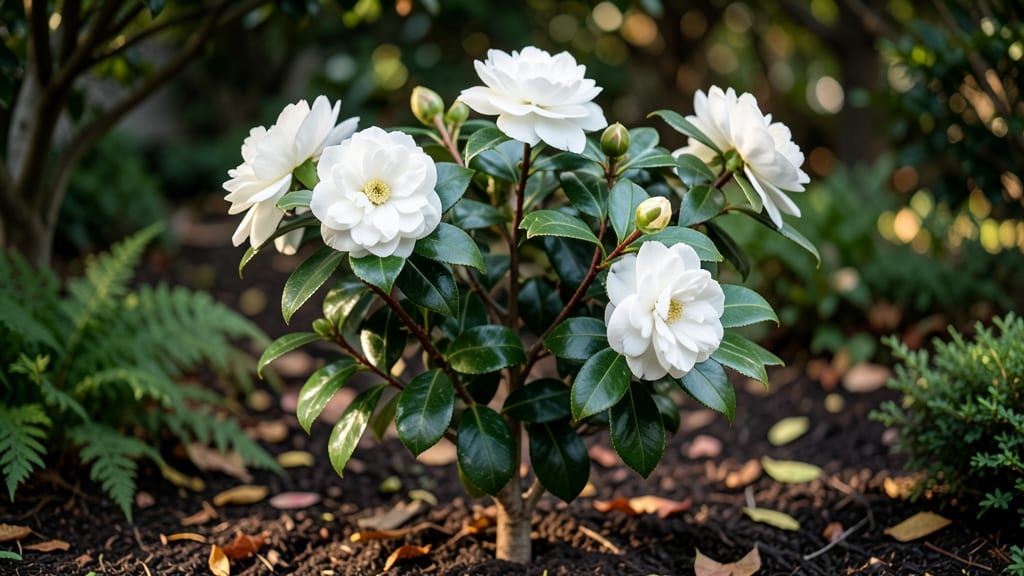
The white camellia tree blooms like winter's secret promise. 🌸 Their glossy leaves and delicate flowers transform any yard into a serene retreat, but growing them right means understanding their exact needs—from soil pH to pruning timing.
I've learned the hard way that skipping these details leads to sparse blooms or leggy branches.
Start with acidic soil (pH 5.0-6.0) and partial shade—morning sun with afternoon relief—especially in hot climates. Plant in early spring or fall, giving roots time to establish before stress.
Water deeply but infrequently, and fertilize lightly in early spring with an acid-loving plant formula. The key to those showstopping blooms? Pruning after flowering, never in summer heat.
📚 In This Guide
- What you need
- Instructions
- Tips and common mistakes
- Wrapping up and next steps
What you need
- ● Camellia tree white (bare-root or potted, Camellia japonica or Camellia sasanqua varieties).
- ● High-quality, acidic soil (pH 5.0–6.5). Mix with peat moss or pine bark fines (50% soil, 50% organic matter).
- ● Organic mulch (pine needles, bark chips, or shredded leaves, 2–3 inches).
- ● Slow-release fertilizer (acid-loving plant formula, 10-10-10 or 8-3-9, 1–2 lbs per tree).
- ● Pruning tools: Bypass pruners (sharp, clean, for small branches).
- ● Loppers (for thicker branches, 1.5–2 inches).
- ● Pruning saw (for branches >2 inches).
- ● Disinfectant (rubbing alcohol or 10% bleach solution for sterilizing tools).
- ○ Staking supplies (optional for young trees: 3 stakes + soft ties).
- ● Garden gloves (to protect hands from thorns and soil).
- ● Watering can or hose with soaker hose attachment (for deep watering).
- ● pH testing kit (to monitor soil acidity).
- ● Compost or worm castings (for nutrient boost, 1–2 cups per tree).
- ● Fungicide (copper-based, preventative measure for fungal diseases).
- ● Tree collar sprayer (for targeted fertilizer/fungicide application).
- ● Shade cloth (30–50% coverage, for young trees in hot climates).
How to cultivate a stunning white camellia tree
This is the method I’ve refined over years to coax those velvety white blooms into thriving year-round beauty.
🌱 Step 1: Select the Right Location and Plant with Precision
White camellias thrive in partial shade—think morning sun with afternoon shade—to prevent leaf scorch. The ideal spot gets 4-6 hours of filtered light daily while avoiding harsh afternoon rays. I always plant mine 3-5 feet away from buildings or fences to allow for mature spread without crowding.
Dig a hole twice as wide but no deeper than the root ball. The top of the root flare should sit 1-2 inches above ground level—this prevents water pooling and root rot. Amend the native soil with 3-4 inches of organic compost mixed into the bottom of the hole. Camellias prefer acidic soil (pH 5.0-6.5), so test your soil first and adjust with sulfur if needed.
☀️ Step 2: Water Deeply and Maintain Consistent Moisture
After planting, water deeply to settle the soil—you’ll know it’s right when water drains freely from the bottom of the hole. For the first 2-3 weeks, keep the soil evenly moist but not soggy. I check moisture by sticking my finger 2 inches deep—if it feels dry, it’s time to water. Overwatering is the fastest way to kill a camellia, so never let it sit in standing water.
Once established, camellias tolerate short dry spells but bloom best with 1-1.5 inches of water weekly. Mulch with 3 inches of pine bark or wood chips to retain moisture and suppress weeds. Keep mulch 6 inches away from the trunk to prevent rot.
✂️ Step 3: Prune for Shape and Encourage Abundant Blooms
Prune right after flowering (late spring) to shape the tree and remove dead or crossing branches. Use clean, sharp pruners to make cuts at a 45-degree angle just above a bud or leaf node. Never prune more than one-third of the tree’s foliage in a single season—this stresses the plant and reduces blooms.
For a bushier shape, cut back overly long branches to an outward-facing bud. Avoid "heading back" (cutting into old wood) unless you’re rejuvenating a neglected tree. After pruning, apply a balanced fertilizer (10-10-10) in early summer to support new growth.
🌿 Step 4: Protect and Nurture Through Seasons
In winter, camellias need shelter from cold winds—I wrap young trees in burlap if temperatures drop below 15°F. Mature trees handle colder zones (7-9) but still benefit from mulch protection. Avoid fertilizing in late summer or fall, as this encourages tender new growth that won’t survive winter.
Watch for aphids or scale insects on new growth—spray with neem oil at the first sign of pests. Yellowing leaves often signal iron deficiency (common in alkaline soils), so switch to an acid-loving plant fertilizer if this happens. With consistent care, your white camellia will reward you with months of fragrant blooms from late fall through winter.
Tips & tricks for perfect white camellia cultivation
These refined strategies will help you avoid common pitfalls and maximize your white camellia's potential for lush, fragrant blooms.
Location Precision: When evaluating morning sun spots, observe the area between 10 AM and 2 PM to identify true partial shade conditions. I've found that east-facing locations with afternoon shade from nearby trees work best, as they provide that critical 4-6 hours of filtered light without the harsh afternoon sun that causes leaf scorch. Consider installing temporary shade cloth if your only options are full sun spots.
Soil Preparation Strategy: The 3-4 inches of organic compost we mix into the planting hole shouldn't just be garden compost—opt for a specialized acidic compost blend (pH 5.5-6.5) to match camellias' natural preferences. I recommend mixing in 1-2 cups of peat moss per hole to further acidify the soil. This creates an ideal environment for root development right from planting day.
Watering Technique: That 2-inch deep moisture check is your best friend during the critical first 2-3 weeks. For a more precise method, use a soil moisture meter in the root zone—aim for readings between 30-40% moisture. Remember that camellias hate soggy roots, so always allow the top inch of soil to dry slightly between waterings, even after the initial settling period.
Seasonal Care Calendar: Mark your calendar for late spring (right after flowering) for pruning and early summer for that 10-10-10 fertilizer application. In winter, if you're in zone 7 or colder, consider wrapping young trees in burlap when nighttime temperatures consistently drop below 25°F—this extra protection prevents winter burn that can stress the plant and reduce next year's blooms.
Pro Tips for Camellia Tree White
- These refined strategies will help you avoid common pitfalls and maximize your white camellia's potential for lush, fragrant blooms.
- Location Precision: When evaluating morning sun spots, observe the area between 10 AM and 2 PM to identify true partial shade conditions.
- Soil Preparation Strategy: The 3-4 inches of organic compost we mix into the planting hole shouldn't just be garden compost—opt for a specialized acidic compost blend (pH 5.5-6.5) to match camellias' natural preferences.
Frequently asked questions
Got questions about your white camellia tree? You’re not alone! Here are answers to the most common queries—from pruning to pests and beyond.
When is the best time to prune a white camellia tree?
Prune your white camellia immediately after flowering (late spring to early summer) to avoid cutting off next year’s blooms. Light shaping can also be done in late summer, but avoid heavy pruning in fall or winter, as it stresses the tree. Pro tip: Use clean, sharp tools to prevent disease!
Why are my white camellia leaves turning yellow or dropping?
Yellowing leaves or premature drop are often caused by overwatering, poor drainage, or nutrient deficiencies. Check the soil—it should stay slightly moist but never soggy. If yellowing starts at the edges, it may be iron deficiency (common in alkaline soils). Test your soil and amend with chelated iron if needed.
Can white camellias survive winter frost?
Most white camellias (like Camellia japonica) are hardy to USDA Zones 7-9 and tolerate light frost, but heavy freezes can damage blooms or foliage. For extra protection, mulch the base with 2–3 inches of organic matter (like pine straw) and avoid pruning in late fall. Young trees may need winter wraps in colder zones.
What’s the fastest way to grow a white camellia from a cutting?
Rooting cuttings takes patience! Take 4–6 inch semi-hardwood cuttings in late summer, dip the base in rooting hormone, and plant in a mix of perlite and peat moss. Keep the soil moist (not wet) and place in bright, indirect light. Roots typically form in 4–8 weeks. Pro tip: Use a clear plastic bag to retain humidity!
Are there any non-toxic alternatives to chemical fertilizers for camellias?
Try organic options like fish emulsion, composted manure, or worm castings for a gentle nutrient boost. Epsom salt (magnesium sulfate) can also help with leaf health—mix 1 tbsp per gallon of water and apply monthly during growing season. Mulch with pine needles to slowly release nutrients.
Why aren’t my white camellias blooming?
Blooms may be sparse due to insufficient sunlight (they need 4+ hours of shade), over-fertilizing (too much nitrogen = more leaves, fewer flowers), or stress from transplant shock. Ensure your tree gets partial shade and prune lightly to encourage airflow. If recently planted, wait 1–2 years for established blooms.
Wrapping up and next steps
Growing a white camellia tree is a rewarding journey that brings year-round beauty to your landscape—from delicate winter blooms to lush evergreen foliage. With the right pruning techniques, soil care, and patience, you’ll cultivate a stunning centerpiece that thrives for decades.
Whether you’re a seasoned gardener or just starting, every trim and tender touch brings you closer to that perfect, elegant specimen.
Ready to elevate your garden? Start small—pick a sunny spot, gather your tools, and take that first confident prune! 🌿 For extra inspiration, explore local nurseries or join gardening forums to connect with fellow camellia enthusiasts. Your white camellia’s masterpiece is just a branch away!