
Pruning
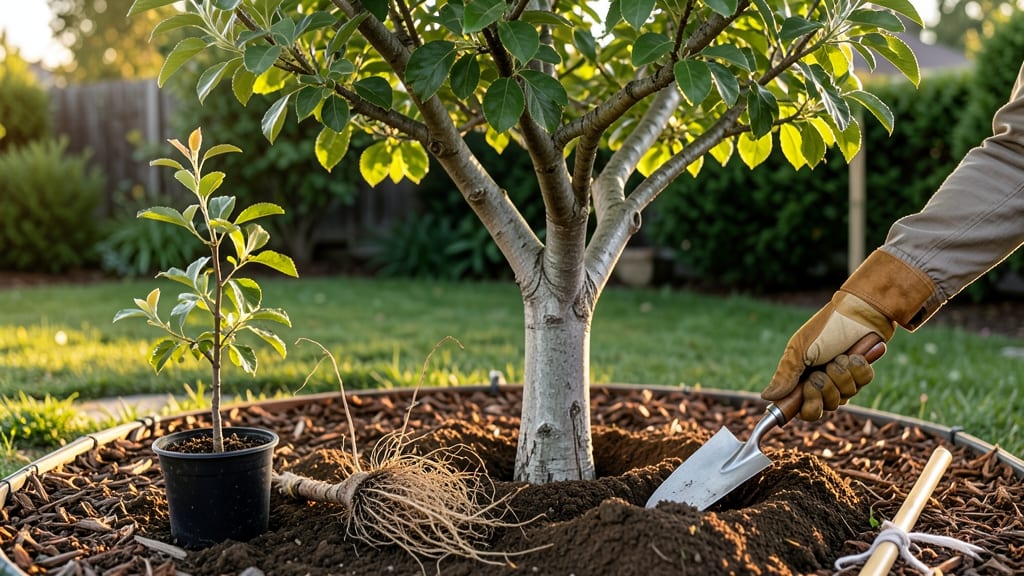
Planting a crab apple tree isn’t just about a pretty yard—it’s about creating a pollinator paradise that thrives year-round. 🌿 These trees bring early spring blossoms, summer shade, and winter interest, plus their fruit feeds birds and bees.
I’ve planted three myself, and the one in full sun now hosts hummingbirds every May. The secret starts with site selection: pick a spot with 6+ hours of sun and room to grow (20–30 feet wide).
Dig a hole twice as wide as the root ball but no deeper—crab apples hate soggy roots. Amend heavy clay with compost, but avoid over-fertilizing at planting (too much nitrogen = weak roots).
After planting, water deeply to settle the soil, then mulch with 2–3 inches of wood chips (keep it away from the trunk). Prune only to remove broken branches—wait until spring to shape it. The first winter, protect young bark from rodents with tree guards if needed.
This tree rewards patience: by year three, you’ll have a layered canopy that outshines any ornamental. The best time to plant? Fall or early spring—when roots can establish before summer heat. Now, let’s get that hole dug!
📚 In This Guide
- What you need
- Instructions
- Tips and common mistakes
- Wrapping up and next steps
What you need
- ● Crab apple tree: Choose a healthy, disease-resistant variety (e.g., Malus sylvestris or Malus 'Evereste') from a reputable nursery. Opt for a 1-3 gallon container-grown tree or a bare-root sapling (plant in early spring or fall).
- ● Shovel: A round-point shovel (18-24 inches) for digging the planting hole.
- ● Garden trowel: For finer adjustments around roots.
- ● Pruning shears or loppers: Bypass pruners (for clean cuts) or loppers (for thicker branches). Sterilize with rubbing alcohol.
- ● Compost or well-aged manure: 5-10 lbs to enrich the soil.
- ● Native soil or topsoil: 2-3 cubic feet (avoid amended soil if planting in a natural area).
- ● Mulch: 2-3 inches of organic mulch (e.g., wood chips or straw) to retain moisture.
- ○ Tree stake (optional but recommended for young trees): 1-2 stakes (if needed for support) and soft tree tie.
- ● Watering can or hose with nozzle: For gentle, deep watering.
- ● Gloves: Heavy-duty gardening gloves to protect your hands.
- ● Soil test kit: To check pH and nutrient levels (ideal pH: 6.0-7.0).
- ● Slow-release fertilizer: Balanced 10-10-10 (1-2 lbs) for initial growth.
- ● Tree guard or protective barrier: To deter animals from chewing bark.
- ● Post-hole digger: If staking is needed in hard soil.
- ● Planting hole liner (e.g., burlap): For large-scale plantings to prevent soil erosion.
Step-by-step guide to planting a crab apple tree
Here's how to plant your crab apple tree for a thriving, pollinator-friendly canopy that delivers beauty year-round.
🪴 Step 1: Choose and Prepare the Planting Site
Select a location with full sun exposure (6-8 hours daily) and well-draining soil. Crab apples thrive in slightly acidic to neutral soil (pH 6.0-7.0). If your soil is heavy clay or compacted, amend it with 3-4 inches of compost mixed into the top 12 inches of soil.
Dig a hole that's twice as wide as the tree's root ball but only as deep. The top of the root ball should sit 2-3 inches above ground level—this prevents water from pooling around the trunk. Loosen the soil at the bottom of the hole with a shovel to encourage root spread.
🌱 Step 2: Position and Backfill the Tree
Place the tree in the center of the hole so the root flare (where roots spread from the trunk) is visible above the soil line. Gently separate any circling roots with your fingers to encourage outward growth. Fill the hole with native soil, tamping it lightly every 3 inches to remove air pockets.
Don't compact the soil too firmly—you want roots to grow into loose soil. Create a 4-inch-high berm of soil around the outer edge of the hole to help direct water toward the roots. Water deeply until the soil 6 inches down feels moist, then let it drain completely before mulching.
💧 Step 3: Mulch and Water for Establishment
Spread 2-3 inches of organic mulch (like wood chips or shredded bark) in a 3-foot-wide circle around the tree, keeping it 6 inches away from the trunk. This protects roots from temperature swings and retains moisture. Avoid thick mulch layers—too much can suffocate roots and attract pests.
Water the tree twice weekly for the first 3 months, providing 1-2 gallons per watering. You'll know it's enough when water drains 6 inches down into the soil. After establishment, reduce watering to once weekly during dry spells, checking that the top 2 inches of soil remain slightly moist.
☀️ Step 4: Stake and Protect Young Trees
Use 2-3 stakes positioned 6-12 inches from the trunk and tied loosely with soft fabric strips (like old T-shirts) to prevent trunk damage. The goal is to stabilize the tree without restricting movement—you want it to develop strong roots that anchor naturally over time.
Remove stakes after 1 year unless your tree is in a windy location. Install a protective tree guard (like a wire cage) to deter deer and rabbits, especially in the first 2 growing seasons. Crab apples are vulnerable to browsing, and young bark is tender.
⏰ Step 5: Prune for Structure and Health
Wait until late winter or early spring before dormancy breaks to make your first pruning cuts. Remove any dead, crossing, or diseased branches first, cutting back to the branch collar (the swollen area where the branch meets the trunk). Then shape the tree by thinning out 20-30% of the canopy** to improve air circulation.
Make clean cuts at a 45-degree angle just outside the branch collar. Avoid "topping" (cutting the top flat)—this creates weak regrowth. Prune annually in late winter to maintain an open, layered canopy that lets sunlight reach lower branches for berry production.
Tips & tricks for planting a thriving crab apple tree
A few simple insights will help your crab apple tree grow strong and healthy from day one. These tricks make all the difference between a struggling sapling and a vibrant pollinator magnet.
Soil Prep Matters: Before planting, test your soil's pH using a simple test kit from your local garden center. Crab apples prefer slightly acidic to neutral soil (pH 6.0-7.0), and adjusting this now prevents future stress. If your soil is heavy clay, mix in 3-4 inches of compost into the top 12 inches of soil—this improves drainage and gives roots room to spread. I've seen trees planted in unamended clay struggle for years, while amended soil produces lush growth within months.
Root Handling Technique: When removing your tree from its container, gently squeeze the sides to loosen the root ball. This prevents roots from circling around the trunk, which can strangle growth. In Step 2, gently separate any circling roots with your fingers—this encourages outward growth. I learned this the hard way after seeing a tree's roots wrap tightly around its trunk, stunting its development for years.
Watering Wisdom: The first 3 months are critical for root establishment, so stick to the twice-weekly watering schedule with 1-2 gallons per session. To check if you're watering enough, insert a screwdriver 6 inches down—if it goes in easily, you've watered sufficiently. Overwatering can be just as harmful as underwatering, so let the soil drain completely between waterings. This prevents root rot while ensuring deep hydration.
Mulching Magic: Spread 2-3 inches of organic mulch in a 3-foot-wide circle, keeping it 6 inches away from the trunk. This thickness balances moisture retention and temperature regulation. I've noticed trees with thicker mulch layers often develop fungal issues, while properly mulched trees stay healthier through temperature swings. Replenish mulch annually to maintain this protective layer.
Pro Tips for Crab Apple Tree Planting
- A few simple insights will help your crab apple tree grow strong and healthy from day one.
- Soil Prep Matters: Before planting, test your soil's pH using a simple test kit from your local garden center.
- Root Handling Technique: When removing your tree from its container, gently squeeze the sides to loosen the root ball.
Frequently asked questions
Got questions about planting a crab apple tree? You’re not alone! Here are some of the most common queries—and their straightforward answers—to help you get started with confidence.
What’s the best time of year to plant a crab apple tree?
Plant your crab apple tree in early spring (March–April) or fall (October–November) for ideal results. These windows give roots time to establish before extreme temperatures. Avoid planting in summer heat or freezing winter months—roots need consistent moisture and moderate soil temps!
How far apart should I space multiple crab apple trees?
Space standard crab apple trees 20–30 feet apart to allow for mature canopy spread (15–25 feet wide). Dwarf varieties can be planted 12–15 feet apart. Proper spacing ensures airflow, reduces disease risk, and lets each tree thrive without competing for sunlight or nutrients.
Are crab apple trees good for pollinators like bees and butterflies?
Crab apple trees are pollinator powerhouses—their early spring blooms provide nectar for bees, while their fruit attracts birds and butterflies. Plus, their layered canopies create microhabitats for beneficial insects. Choose native varieties (like Malus ioensis) for maximum local ecosystem support!
Why did my newly planted crab apple tree’s leaves turn yellow?
Yellowing leaves often signal overwatering, underwatering, or transplant shock. Check soil moisture (it should be damp but not soggy) and ensure the tree’s roots aren’t sitting in standing water. If stress persists, test soil pH (ideal: 6.0–7.0) and fertilize lightly with compost or a balanced 10-10-10 blend.
Can I plant a crab apple tree in a container or small yard?
While crab apple trees thrive in open spaces, dwarf varieties (like ‘Centennial’ or ‘Sargent’) work well in containers or tight yards. Use a 50-gallon pot with drainage, repot every 2–3 years, and prune regularly to manage size. Just know: They’ll still need 6+ hours of sunlight daily and occasional winter protection.
Still unsure? Drop your question in the comments—we’re happy to help!
Wrapping up and next steps
Planting a crab apple tree isn’t just about adding beauty to your landscape—it’s a gift to pollinators, wildlife, and future generations. With the right location, soil prep, and care, your tree will thrive, offering year-round interest from blossoms to fruit. 🌿
Ready to take the next step? Mark your calendar for the ideal planting season (fall or early spring) and gather your tools. Whether you’re a seasoned gardener or a beginner, every small effort grows into a lush, vibrant canopy. Happy planting! 🌱