
Pruning
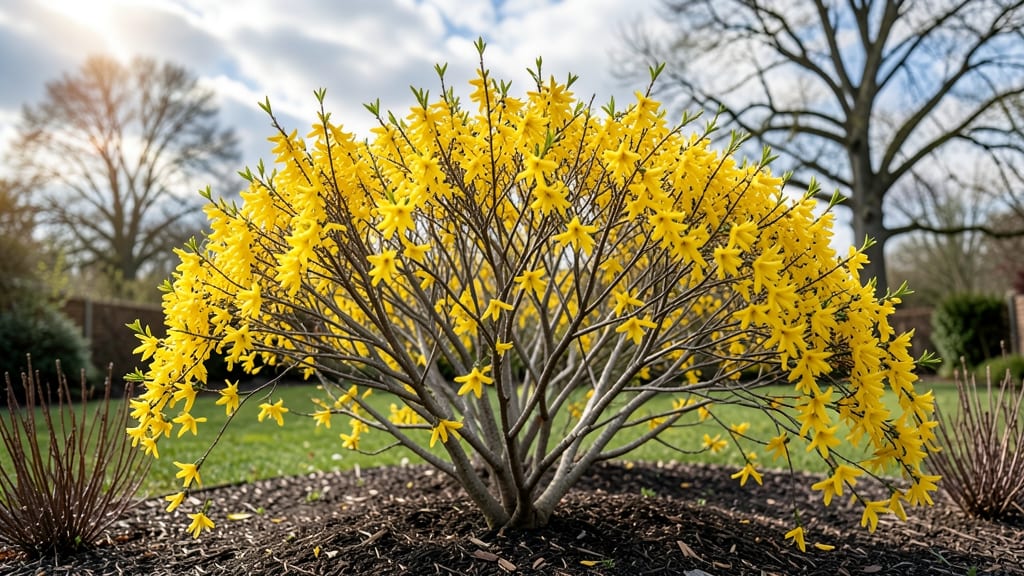
That first burst of golden yellow in late winter tells you forsythia is one of the most dramatic early-season bloomers—but its tree form can make or break your garden design. 🌿 I’ve pruned mine for years, and the difference between a wild, sprawling shrub and a structured, showstopping tree comes down to timing, cuts, and knowing which variety you’re working with.
Standard forsythia grows as a multi-stemmed shrub, but tree forms like Forsythia × intermedia ‘Spectabilis’ or F. suspensa (weeping forsythia) let you create bold vertical accents. Prune right after flowering to shape branches while keeping next year’s blooms intact.
For weeping types, focus on thinning inner growth to let light reach lower limbs—otherwise, you’ll end up with a dense, unruly mess. The payoff? A tree that frames entryways, anchors perennial beds, or even doubles as a privacy screen when planted in a row.
Mine stands as the first “wow” moment when guests arrive in spring, and it stays striking through winter with its clean, skeletal branches. The key is balancing structure and flow—never let it get too rigid or too wild. Works for small yards (single stems) or large landscapes (multi-trunk specimens).
Here’s how to coax the exact shape you want—without sacrificing those showy blooms.
📚 In This Guide
- What you need
- Instructions
- Tips and common mistakes
- Wrapping up and next steps
What you need
- ● Pruning shears: Sharp, bypass-style shears (for clean cuts on smaller branches). Size: 6–8 inches for precision.
- ● Loppers: For thicker branches (½–1½ inches). Quantity: 1 pair (extendable handles help with taller trees).
- ● Pruning saw: Bow or folding saw for branches over 1½ inches thick.
- ● Gloves: Heavy-duty, cut-resistant gloves (protect against thorns and scrapes).
- ● Disinfectant: 70% isopropyl alcohol or pruning sealant (to prevent disease spread).
- ● Ladder or step stool: Sturdy, non-slip (height depends on tree size—8+ feet for mature forsythias).
- ○ Pruning paint/sealant: Optional but recommended for sealing large cuts (prevents decay).
- ● Trash bags or bucket: For clippings (forsythia branches can be heavy when wet!).
- ● Timing: Prune right after flowering (late spring) or dormant season (late winter). Avoid pruning in fall—it encourages late blooms that may frost!
- ● Weather: Choose a dry, overcast day to reduce stress on the tree.
- ● Safety first: Wear eye protection (thorns!) and check for pests/nesting birds before pruning.
- ● Tools check: Sharpen blades beforehand—dull tools crush branches, inviting disease. 💡
How to shape a forsythia tree for year-round beauty
Here’s how I keep my forsythia looking naturally elegant—no extreme pruning, just strategic cuts for vibrant blooms and graceful form.
🌿 Step 1: Prune Immediately After Flowering
Forsythias bloom on last year’s growth, so timing is everything. Wait until 2-3 weeks after flowering (usually late April or early May) before cutting. This ensures you don’t remove next year’s flower buds hidden in the stems.
Start by removing dead, crossing, or rubbing branches—these compete for energy and create weak spots. Use clean, sharp pruners to make cuts just above a bud or outward-facing branch. I always step back after each cut to check the overall shape—this prevents over-pruning.
✂️ Step 2: Thin Out Overcrowded Branches
Forsythias naturally grow bushy, but too many branches lead to weak growth and fewer flowers. Look for thick clusters of stems and select one or two of the strongest, healthiest branches to keep. Remove the rest at the base—this opens up the center for better airflow and sunlight.
If your forsythia has become too dense, don’t be afraid to cut back one-third of the oldest stems to the ground. This rejuvenates the plant and encourages fresh, vigorous growth. Just remember: never remove more than 25% of the plant’s foliage in one season—this stresses the tree.
☀️ Step 3: Shape for Balance and Light Penetration
Forsythias thrive with open, airy forms, so focus on creating a natural, rounded silhouette. Start at the outer edges and trim back any branches that spoil the shape—cut just above a bud facing outward to encourage fuller growth there.
Pay special attention to the top of the tree. If it’s getting too tall or lopsided, select one or two strong branches near the top and prune the rest back to a lower bud. This keeps the tree proportionate and prevents it from becoming top-heavy. A well-shaped forsythia should look like a loose, rounded cloud rather than a dense ball.
🪴 Step 4: Light Summer Pruning for Maintenance
After the main spring pruning, do a light check in mid-summer to remove any suckers (shoots growing from the base) or water sprouts (thin, vertical growth). These steal energy from the main structure. Just snip them off at the base—they won’t grow back.
If your forsythia has long, leggy branches, you can trim them back by one-third to encourage bushier growth. Avoid heavy pruning in summer, though—this can stimulate tender new growth that won’t harden off before winter. A little maintenance now keeps the tree looking tidy without sacrificing next year’s blooms.
⏰ Step 5: Winter Pruning for Structure
Dormant season (late winter, before buds swell) is the time to refine the tree’s structure. Remove any dead, diseased, or weak branches first—these are easy to spot when the tree is bare. Then, look for branches growing inward and cut them back to a stronger, outward-facing branch.
This is also when I thin out the oldest stems to encourage new growth. If a branch is thicker than a pencil, it’s likely past its prime—cut it back to a younger, thinner branch. The goal is to keep the tree youthful and full of energy for another round of brilliant yellow blooms next spring.
Tips & tricks for perfect forsythia tree form
Mastering the art of shaping forsythias transforms them from wild shrubs into stunning garden stars. These practical tips will help you create that effortless, natural beauty without over-pruning.
Timing is Everything: The 2-3 week window after flowering is non-negotiable for forsythias. I learned this the hard way—cutting too early removes next year's flower buds, and waiting too long risks overgrown branches. Mark your calendar for late April or early May, when blooms have faded but leaves are still fresh. This timing ensures your tree stays vibrant while maintaining its natural form.
Visual Pruning Technique: Step back frequently to assess your work—this is how I avoid over-pruning. Imagine your tree as a loose, rounded cloud rather than a dense ball. In Step 3, when shaping for balance, focus on creating negative space between branches. This open structure allows sunlight to penetrate and air to circulate, which prevents disease and encourages more blooms.
Branch Selection Strategy: When thinning overcrowded branches in Step 2, prioritize branches that grow outward and away from the center. Look for stems with a slight upward angle—these will create the most elegant, natural shape. I always keep at least one strong branch near the top to maintain height while preventing top-heaviness. This creates that signature graceful arch that makes forsythias so charming.
Seasonal Maintenance Insight: Summer pruning is all about prevention. Those suckers and water sprouts might seem harmless, but they sap energy from your tree's main structure. Remove them immediately in mid-summer to keep your forsythia looking its best without compromising next year's blooms. Think of it as giving your tree a spa day—keeping it tidy and energized for its spring performance.
Pro Tips for Forsythia Tree Form
- Mastering the art of shaping forsythias transforms them from wild shrubs into stunning garden stars.
- Timing is Everything: The 2-3 week window after flowering is non-negotiable for forsythias.
- Visual Pruning Technique: Step back frequently to assess your work—this is how I avoid over-pruning.
Frequently asked questions
Got questions about shaping your forsythia tree? You’re not alone!
Here are answers to the most common concerns about maintaining its forsythia tree form—from pruning timing to troubleshooting wonky growth.
When is the best time to prune forsythia for optimal branching?
Prune forsythia right after flowering (late April to early May) to encourage dense, bushy growth. Avoid heavy pruning in late summer or fall—it can stimulate tender new growth that won’t survive winter. For shaping, light trims in early spring (before buds swell) also work!
Can I prune forsythia into a tree form, or is it better as a shrub?
Forsythia can be trained as a small tree (6–10 ft tall) by selecting 1–3 strong central leaders and removing competing branches. Use open-center pruning to maintain an airy canopy. Just avoid topping—it encourages weak, leggy growth. Patience is key!
Why does my forsythia have sparse or leggy branches?
Leggy growth often happens from over-pruning in fall/winter or insufficient sunlight. To fix it:
- Cut back one-third of the oldest stems to the ground in early spring.
- Thin out crowded branches to improve airflow.
- Ensure it gets 6+ hours of sun daily.
Will pruning now affect next year’s flowers?
Pruning after flowering (May–June) has zero impact on next year’s blooms—forsythia flowers on old wood. However, heavy pruning in late summer can reduce next year’s flowers since new growth may not harden off. Always prioritize post-bloom trims!
Are there dwarf forsythia varieties for smaller spaces?
Yes! Consider these compact options:
Variety
Mature Size
Notes
Forsythia ‘Little Bee’
3–4 ft tall
Dense, rounded habit; great for containers.
Forsythia ‘Spring Glory’
4–5 ft tall
Upright growth; tolerates partial shade.
Forsythia ‘Dwarf’ (e.g., ‘Wendy’)
2–3 ft tall
Slow-growing; ideal for borders.
Wrapping up and next steps
Mastering the forsythia tree form is all about patience, precision, and a little seasonal TLC! 🌿 Whether you’re shaping a sprawling shrub or a compact tree, consistent pruning keeps those vibrant yellow blooms coming—and your landscape looking polished year-round.
With the right tools, timing, and techniques, you’ll transform your forsythia into a standout feature that brightens every season.
Ready to take the next step? Grab your pruners and start small—even a single branch trimmed now will make a difference by spring! For extra inspiration, sketch a rough outline of your ideal shape before diving in. Happy pruning!