
Pruning
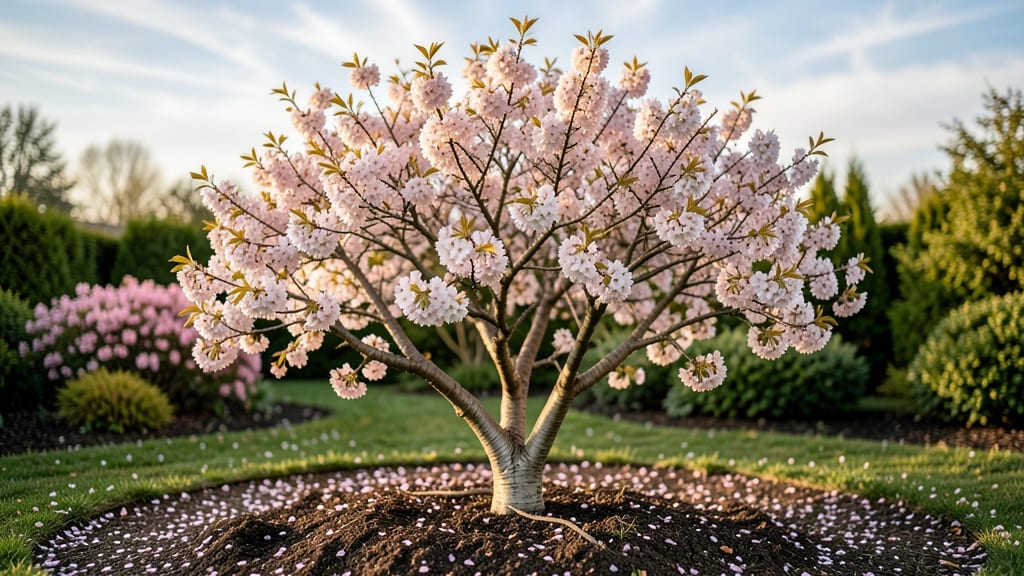
Snow Fountain cherry tree size by variety: mature heights and spread
The Snow Fountain cherry tree (Prunus serrulata) is a showstopper with its cascading white spring blooms, but its mature size can vary dramatically depending on the cultivar and growing conditions. While some varieties reach towering heights, others stay compact enough for small yards or containers.
Understanding these differences helps you choose the perfect tree for your space while ensuring stunning seasonal displays.
Most standard Snow Fountain varieties grow between 15–25 feet tall with a spread of 15–25 feet, creating a dramatic focal point. However, dwarf and semi-dwarf types offer scaled-down options, making them ideal for urban landscapes or patios.
The key to managing size lies in rootstock selection and pruning practices, which we’ll explore in detail below.
| Variety | Mature Height (ft) | Mature Spread (ft) | Growth Habit | Best For |
|---|---|---|---|---|
| ‘Kanzan’ | 20–25 ft | 15–20 ft | Upright, rounded canopy | Large yards, focal points |
| ‘Shirotae’ | 15–20 ft | 15–20 ft | Weeping branches, graceful arch | Medium yards, containers (dwarf graft) |
| ‘Royal Burgundy’ | 20–25 ft | 15–20 ft | Upright, dense foliage | Large landscapes, privacy screens |
| ‘Snow Fountain’ (dwarf graft) | 8–12 ft | 8–10 ft | Compact, multi-stemmed | Small yards, patios, containers |
| ‘Snowgoose’ | 10–15 ft | 10–12 ft | Weeping, cascading branches | Urban gardens, small spaces |
The ‘Kanzan’ variety is the most popular standard type, reaching heights of 20–25 feet with a rounded, dense canopy. Its double pink blooms create a stunning visual impact, but its size requires ample space—ideal for backyard focal points.
If you prefer a softer look, ‘Shirotae’ offers a weeping growth habit with white single flowers, making it perfect for garden borders or containers when grafted on dwarf rootstock.
For those with limited space, the ‘Snow Fountain’ dwarf graft is a game-changer. Growing only 8–12 feet tall, it maintains the iconic white spring blooms while fitting neatly into small yards or large pots.
This variety is often grafted onto Prunus incisa rootstock, which naturally restricts its growth. Pair it with regular pruning to keep it even smaller, making it ideal for balconies or courtyard gardens.
If you’re drawn to deep purple foliage, ‘Royal Burgundy’ delivers dramatic burgundy leaves that contrast beautifully with its white spring flowers. This variety grows just as tall as ‘Kanzan’ but adds year-round interest with its striking foliage.
For a weeping alternative, ‘Snowgoose’ mimics the classic Snow Fountain shape but stays 10–15 feet tall, perfect for urban landscapes or small gardens.
When planning your Snow Fountain cherry tree, consider not just the mature height but also the spread. A tree with a 20-foot spread will cast a wide shadow and require space for its branches to arch naturally.
Always plant at least 10–15 feet away from structures to avoid root damage or branch interference. In containers, choose dwarf varieties and upgrade the pot size every 2–3 years to accommodate root growth.
One common mistake is assuming all Snow Fountain cherries are the same size. The rootstock used during grafting plays a critical role in determining maturity. For example, a ‘Kanzan’ on vigor rootstock will grow much larger than one grafted onto dwarfing rootstock.
Always check the nursery label or ask the grower about the rootstock type before purchasing to avoid surprises.
For fastest growth, plant your cherry tree in full sun (6+ hours daily) with well-draining soil. Amend heavy clay soil with compost or sand to prevent root rot, which can stunt growth.
Mulch around the base with wood chips to retain moisture and regulate soil temperature, especially during hot summers. With proper care, your tree will reach its mature size in 5–7 years, delivering decades of
How pruning affects Snow Fountain cherry tree size and shape
The Snow Fountain cherry tree (Prunus serrulata) is prized for its cascading white blossoms and elegant form, but its mature size depends heavily on your pruning approach. Without proper pruning techniques, this variety can reach 15–25 feet tall with a spread of 15–25 feet, dwarfing smaller landscapes.
The key to controlling its dimensions lies in understanding heading cuts vs. thinning cuts and when to prune for optimal growth.
Pruning at the right time is critical. Dormant-season pruning (late winter/early spring) helps shape the tree without disrupting flower production, while summer pruning can encourage denser foliage but may reduce blooms. Using the wrong pruning tools—like dull shears—can also stress the tree, leading to stunted growth or disease.
Let’s break down the best methods to keep your Snow Fountain cherry at your desired height and shape.
⚠️ WARNING: Over-Pruning Risks Pruning too aggressively—especially during bloom season—can severely reduce next year’s flower production. The Snow Fountain relies on last year’s growth to bloom, so removing more than 25% of the canopy in a single season can leave you with sparse blossoms.
Additionally, improper cuts near the branch collar can invite disease or weaken the tree’s structure.
Always prioritize thinning cuts over heavy heading cuts to maintain airflow and health. ✂️ Key Risks: - Bloom loss: Pruning after buds form (late winter) can cut off next year’s flowers. - Structural weakness: Poor cuts lead to sucker growth or dead branches. - Disease entry: Damaged bark invites fungal infections like canker. 🌿
Start by selecting the right pruning tools for the job. For smaller branches (under ½ inch), use bypass pruners to make clean cuts. Larger branches (½–2 inches) require loppers, while anything thicker needs a pruning saw.
Always disinfect tools with rubbing alcohol between cuts to prevent pathogen spread. Begin by removing dead or crossing branches first—these compete for resources and distort the tree’s shape.
For height control, focus on heading cuts just above a bud or lateral branch. Aim to reduce growth by no more than 1/3 of the branch length per year to avoid shocking the tree.
To encourage a fuller shape, make thinning cuts that remove entire branches back to the trunk or a larger branch. This opens the canopy to sunlight and improves air circulation, reducing disease risk.
Timing matters most for flower production. Prune dormant trees (late winter, before buds swell) to shape without harming blooms. Avoid pruning during full bloom (late spring), as this can remove next year’s flower buds.
If you must prune in summer, do so after flowering to minimize impact. Always step back and assess the tree’s balance—uneven pruning can lead to leaning growth or uneven bloom distribution.
To maintain your Snow Fountain cherry long-term, schedule light pruning every 1–2 years during dormancy. Remove sucker growth (vigorous shoots at the base) immediately, as these divert energy from the main canopy.
Mulch around the base with organic matter to support root health, and water deeply once a week during dry spells. With consistent care, you can enjoy its spectacular blooms while keeping it at a manageable height and shape for your space. ✂️🌸