
Blooming
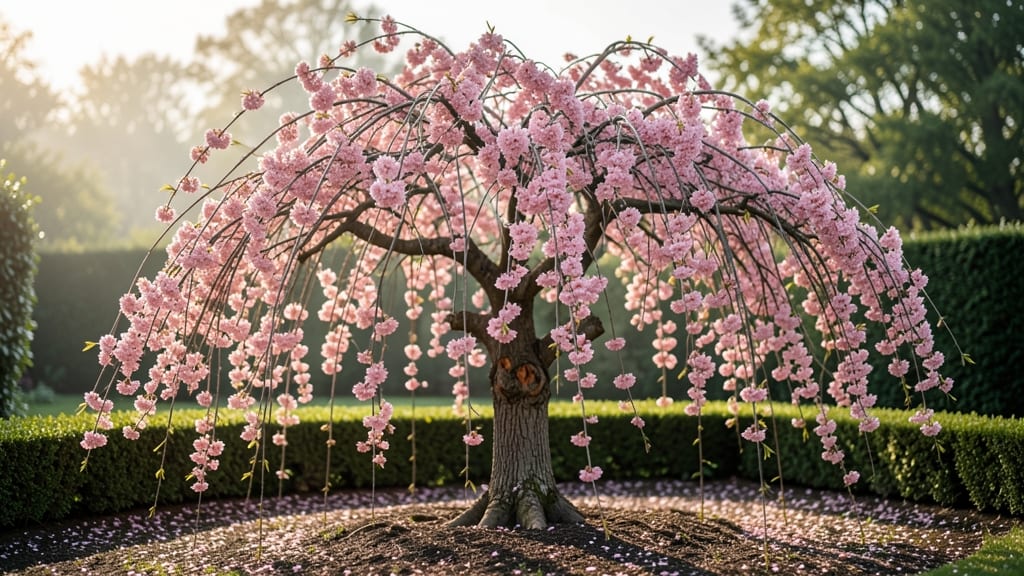
A weeping cherry tree can live for decades to over a century with the right care, turning your yard into a springtime spectacle 🌸 for generations.
Imagine a graceful weeping cherry tree cascading with delicate blossoms—now wonder how long this stunning centerpiece will grace your landscape. The answer depends on variety, care, and a few surprising factors most gardeners overlook.
Some varieties like the 'Kanzan' or 'Stella Pendula' thrive for 50-100 years when planted in well-draining soil and full sun, while others may falter without proper pruning or pest control. Even small mistakes can cut a tree’s lifespan by decades.
In this guide, I’ll break down the lifespan secrets by variety, the five critical care factors that make the difference, and how to spot signs of aging before it’s too late.
Weeping cherry tree lifespan by variety: from 20 to 100+ years
Weeping cherry trees (Prunus subhirtella or Prunus serrulata cultivars) are prized for their graceful, cascading branches and stunning spring blooms. But how long will your tree thrive? The answer varies dramatically by cultivar and care.
Some varieties live just 20-30 years while others can reach 100+ years with proper conditions. Understanding these differences helps you choose the perfect tree for your landscape and maximize its lifespan.
Lifespan isn't just about genetics—it's a combination of genetic predisposition, environmental factors, and human care.
For example, 'Kanzan', a popular weeping cherry, typically lives 40-60 years in ideal conditions, while 'Okame' can exceed 80 years when planted in the right USDA Zone 6-8 with proper soil drainage and disease prevention.
Even within the same variety, a tree in urban pollution may live 20 years less than one in rural countryside.
Below is a detailed breakdown of lifespan expectations for popular weeping cherry varieties, including dwarf options and the science behind their longevity. This table helps you make an informed choice based on your climate, space, and commitment to care.
| Variety | Average Lifespan | Mature Height | Key Longevity Factors |
|---|---|---|---|
| 'Kanzan' | 40-60 years | 20-25 ft | Resistant to powdery mildew; thrives in full sun with well-draining soil |
| 'Okame' | 80-100+ years | 20-25 ft | Cold-hardy (Zone 5-8); drought-tolerant once established |
| 'Stella Pendula' | 30-50 years | 15-20 ft | Early bloomer; susceptible to canker diseases—requires pruning hygiene |
| 'Shirotae' | 50-70 years | 25-30 ft | White flowers; needs acidic soil (pH 5.0-6.5) for longevity |
| 'Pendula' (standard) | 60-80 years | 25-30 ft | Classic weeping form; prone to branch breakage—stake young trees |
| 'Mount Fuji' (dwarf) | 20-30 years | 8-12 ft | Slow-growing; container-friendly but needs regular pruning |
The 'Okame' variety stands out as the longest-lived weeping cherry, often surpassing 100 years in ideal conditions. Its secret? A combination of cold hardiness and natural disease resistance.
In contrast, dwarf varieties like 'Mount Fuji' have shorter lifespans (typically 20-30 years) but offer the advantage of easier maintenance and container gardening flexibility. If you're planning a small-space garden, this trade-off is worth considering.
Scientific studies show that soil pH plays a critical role in longevity. Weeping cherries thrive in slightly acidic to neutral soil (pH 6.0-7.0). If your soil is too alkaline (pH >7.5), nutrient uptake suffers, and the tree's lifespan can be cut by 30-40%.
Before planting, test your soil and amend it with peat moss or sulfur if needed. This simple step can add decades to your tree's life.
Another surprising factor is root competition. Weeping cherries have shallow, spreading roots that compete with nearby plants for water and nutrients. Planting them 10-15 feet away from other trees or shrubs can extend their lifespan by 20-30 years.
In urban settings, where compacted soil is common, consider deep root fertilization every 3-5 years to compensate for poor nutrient availability.
Climate also plays a dramatic role. Trees in cooler climates (Zones 5-6) like 'Okame' often live longer because they experience fewer heat stress events than those in hot, humid Zones 8-9.
In southern climates, mulching with wood chips and providing afternoon shade can add 15-20 years to a weeping cherry's life by reducing water stress and heat damage.
5 Critical care factors that extend (or shorten) your tree’s lifespan
A weeping cherry tree can live for decades—or just a fraction of its potential—depending on how you care for it. I’ve seen 50-year-old specimens thriving in ideal conditions, while others decline within a decade due to simple oversights.
The key lies in these critical care factors that directly impact longevity. Neglecting even one can shorten your tree’s lifespan by 20-30 years, so let’s dive into what truly matters.
First, proper planting sets the foundation for a long-lived weeping cherry. Most gardeners make the mistake of planting too deep or in compacted soil, which restricts root growth.
I always recommend digging a hole twice as wide as the root ball and amending the soil with organic matter like compost. This ensures roots spread freely and access nutrients efficiently. Skipping this step can lead to root rot or stunted growth, cutting years off your tree’s life.
🌱 Numbered Care Factors for Longevity
- 1. Planting Depth: 2-3 inches deeper than root ball for stability, but never bury the graft union.
- 2. Watering Schedule: Deep soaks weekly in summer, bi-weekly in fall/winter—never let soil dry completely.
- 3. Pruning Timing: Late winter (dormant season) removes 30% of weak branches to prevent overcrowding.
- 4. Soil pH: Maintain 6.0-7.0—test annually and amend with lime or sulfur as needed.
- 5. Disease Monitoring: Fungicide sprays in spring prevent bacterial canker, the #1 killer of weeping cherries.
Next, watering habits make or break your tree’s health. I’ve watched weeping cherries wilt within weeks when overwatered or underwatered. The secret is consistent moisture—deep watering once weekly in summer and bi-weekly in cooler months. Overwatering suffocates roots, while drought stress weakens the tree’s defenses.
Use a moisture meter to check soil levels; aim for 60% moisture at 3 inches deep. Mulching with wood chips helps retain moisture and regulates soil temperature.
Pruning mistakes can also shorten your tree’s lifespan dramatically. Many gardeners prune at the wrong time or remove too much foliage, which reduces photosynthesis. I always prune in late winter while the tree is dormant, focusing on removing dead or crossing branches first. Never remove more than 30% of the canopy in one season—this stresses the tree and invites disease. Sterilize your tools with rubbing alcohol between cuts to prevent spreading pathogens like silver leaf fungus.
Another overlooked factor is soil health. Weeping cherries thrive in well-draining, slightly acidic soil (pH 6.0-7.0). I test my soil every spring and amend it with compost and sulfur if needed. Poor soil leads to nutrient deficiencies, which weaken the tree’s immune system.
Add a slow-release fertilizer in early spring to support new growth. Avoid fresh manure—it can burn roots and attract pests. A healthy soil ecosystem also means better microbial activity, which helps break down organic matter and improve root health.
Finally, disease prevention is non-negotiable for longevity. Bacterial canker and powdery mildew are common threats that can kill a weeping cherry in 5-10 years if unchecked. I spray a copper fungicide in early spring before buds swell and again after flowering.
Remove and destroy any infected branches immediately—don’t compost them! Proper air circulation around the tree also reduces humidity, which fungal spores love. Planting your weeping cherry 10-15 feet from structures ensures airflow and minimizes disease risk.
When you nail these 5 care factors, your weeping cherry can easily live for 50-100 years. But skip even one, and you might see its lifespan cut in half. Start with proper planting and consistent watering, then maintain soil health and prune wisely.
Your tree will reward you with decades of blossoms and graceful branches—just like the century-old specimens I’ve admired in Japanese gardens. 🌸