
How To
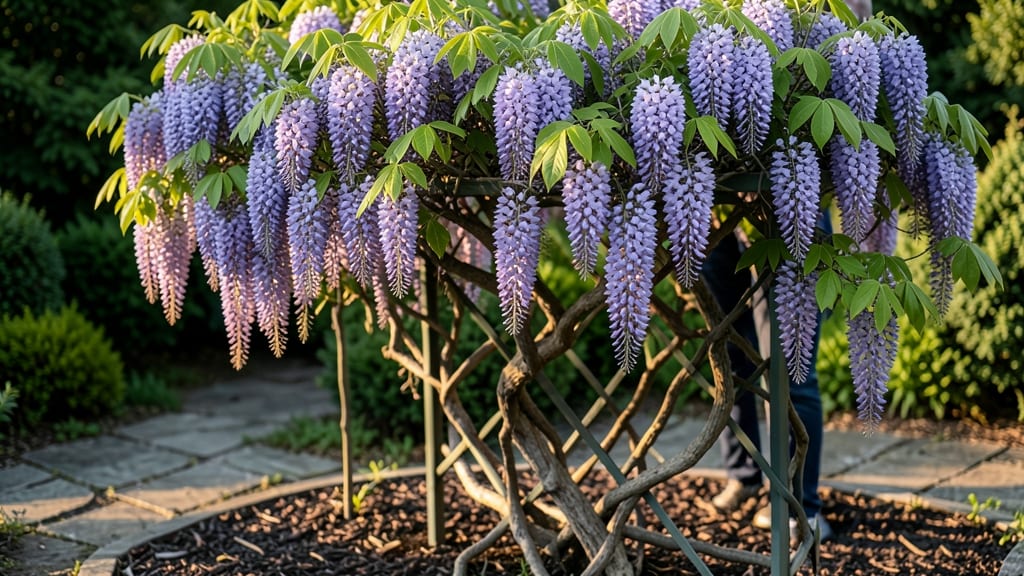
Wisteria growth height by variety: which reach 30+ feet fastest?
Wisteria’s vertical growth is legendary, but not all varieties grow at the same pace. Some Chinese wisteria types like 'Amethyst Falls' can reach 30+ feet in just 5 years, while others like American wisteria grow slower but still impressive.
Understanding these differences helps you plan your garden layout and pruning strategy before planting.
If you’re dreaming of a dramatic trellis or arbor covered in cascading blooms, the right variety makes all the difference. Japanese wisteria, for example, typically matures between 15-25 feet, while aggressive climbers like 'Black Dragon' can exceed 40 feet with proper support.
Let’s break down the fastest-growing varieties and how to manage their height.
Chinese wisteria varieties like 'Amethyst Falls' are the fastest growers, often reaching 30 feet in just 4-5 years with ideal conditions. These aggressive climbers need strong trellises or tree supports to handle their weight. Without proper support, they can snap branches or even damage structures.
Japanese wisteria, such as 'Black Dragon', may take slightly longer—5-6 years to hit 30 feet—but can surpass 40 feet if left unchecked. Their longer flower racemes make them popular for dramatic displays, but they require heavy pruning to control height.
Always prune after flowering to encourage new growth while maintaining blooms.
American wisteria grows more slowly, typically maturing between 15-25 feet over 8-10 years. This makes it a better choice for smaller gardens or areas where aggressive growth is a concern. However, it still needs regular pruning to shape its woody vines and prevent overgrowth.
Pruning plays a critical role in managing wisteria’s height. Tip pruning in late winter encourages longer, stronger vines, while crown reduction in early spring can shorten mature plants by up to 30%.
For varieties like 'Amethyst Falls', I recommend pruning twice a year—once after flowering and again in late winter—to keep growth in check.
If you’re planting near a building or fence, choose a less aggressive variety like 'Longissima' or American wisteria. These grow more slowly and are easier to manage. For dramatic vertical impact, Chinese wisteria varieties are unbeatable—but
How to control wisteria’s vertical growth without sacrificing flowers
Wisteria’s dramatic vertical growth is one of its most breathtaking features—but it can quickly become unmanageable if left unchecked. Without proper pruning techniques and structural support, your 30-foot dream vine could turn into a tangled mess.
The key is balancing height control with flower production, ensuring your wisteria stays lush and fragrant while respecting your garden’s boundaries.
Most wisteria varieties grow 12–24 inches per year, with some aggressive types like ‘Amethyst Falls’ reaching 30 feet in just 5 years. To keep it in check, you’ll need a mix of seasonal pruning, strong support systems, and targeted training.
The good news? With the right approach, you can enjoy abundant blooms without sacrificing control—here’s how.
Install a strong trellis, arbor, or fence before planting. Wisteria needs horizontal support to climb safely—avoid weak structures like chain-link fences, which can’t handle the weight.
Cut back old wood to 2–3 buds from the base. This encourages new growth while reducing vertical height. Use clean, sharp pruners to avoid disease.
Trim new growth tips in June–July to redirect energy toward horizontal branches (where flowers bloom). This prevents excessive height while boosting flower production.
If your wisteria exceeds 20 feet, perform a crown reduction—cut the main stem 1–2 feet above a strong lateral branch. This forces bushier growth and prevents further vertical sprawl.
Gently weave branches through trellis wires and tie them down with soft plant ties. This encourages horizontal growth and reduces upward pressure on the main stem.
Timing is everything when pruning wisteria. Late winter is ideal for structural pruning, while summer tip pruning keeps growth in check. Avoid heavy pruning in fall or spring, as this can stress the plant and reduce flowering.
For aggressive varieties, combine crown reduction with regular tip pruning to maintain both height control and flower abundance.
Don’t forget to fertilize lightly in early spring with a balanced 10-10-10 formula to support new growth. Over-fertilizing can lead to excessive foliage at the expense of flowers—stick to moderate feeding for the best results.
With these techniques, your wisteria will stay manageable, healthy, and bursting with fragrant blooms for years to come.
Pro tip: If your wisteria starts to outgrow its support, consider root pruning—digging around the base to reduce root vigor and slow vertical growth. Just be cautious, as this should only be done every 2–3 years to avoid shocking the plant.