
Pruning
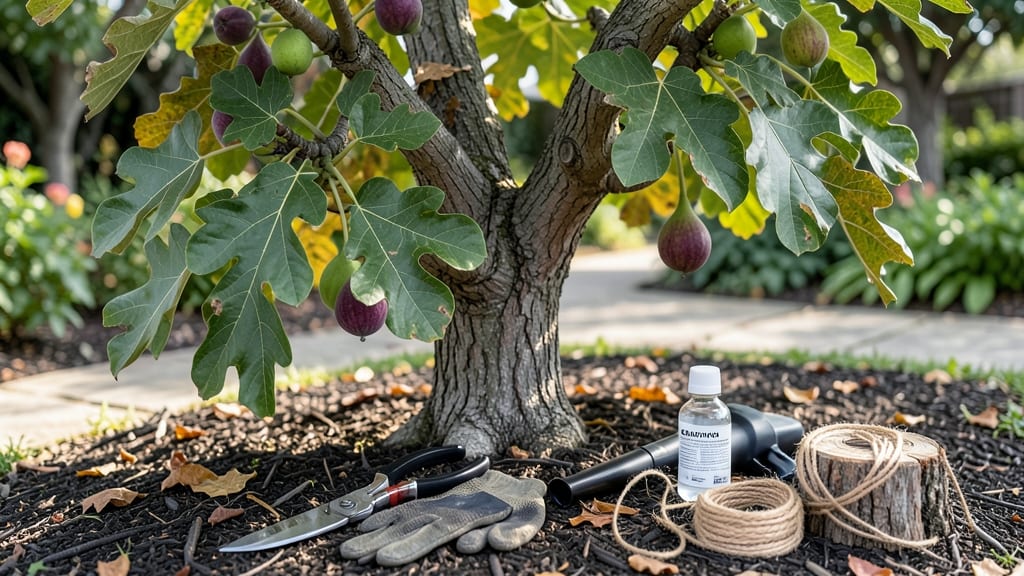
Fall is the perfect time to trim a fig tree—just after the leaves drop but before hard frost sets in. ✂️ I’ve learned the hard way that skipping this step leaves your tree vulnerable to winter damage, weak growth, and even disease.
The right cuts now mean stronger branches, better fruit production next year, and a cleaner shape that’s easier to manage.
You’ll need sharp pruning shears, rubbing alcohol to sterilize them, and a clear day when the weather’s dry. The goal isn’t to hack away at random—it’s about removing dead or crossing branches, thinning out crowded spots, and shaping the tree to let sunlight reach all the fruit.
Most fig trees only need a light trim, but if yours looks leggy or overgrown, we’ll fix that too.
After pruning, your fig tree will bounce back faster in spring with fewer surprises. The cuts you make now encourage new growth in the right places, and the open structure makes it easier to spot pests or issues early.
Plus, a well-trimmed tree looks neater and produces fruit more efficiently—no more struggling to reach hidden figs buried in thick foliage.
Works for both container figs and in-ground trees, whether you’re dealing with a young sapling or a mature, established plant. Let’s get those branches looking sharp for winter.
📚 In This Guide
- What you need
- Instructions
- Tips and common mistakes
- Wrapping up and next steps
What you need
- ● Pruning shears or loppers: Sharp, bypass-style shears (for small branches) or loppers (for thicker branches up to 1.5 inches in diameter).
- ● Hand pruners: For delicate cuts on smaller branches (1/4 to 3/4 inch thick).
- ● Saw (pruning or handsaw): For branches thicker than 2 inches—opt for a curved blade for cleaner cuts.
- ● Gloves: Heavy-duty, cut-resistant gloves to protect your hands from thorns and rough bark.
- ● Disinfectant (rubbing alcohol or bleach solution): Clean tools between cuts to prevent disease spread (1 part bleach to 9 parts water).
- ● Rag or paper towels: For wiping tools before and after disinfecting.
- ● Ladder or step stool: If your fig tree is tall (6+ feet), use a stable ladder or stool to reach higher branches safely.
- ● Trash bags or bucket: For collecting pruned branches and debris.
- ○ Sharpie or marker: Optional but helpful for marking branches to remove (if planning ahead).
- ● Pruning sealant: For larger cuts (over 1 inch in diameter) to prevent disease entry (use sparingly—figs heal well on their own!).
- ● Safety glasses: To protect your eyes from debris, especially when sawing.
- ● Long sleeves/pants: For extra protection against thorns and scratches.
- ● Garden hose or spray bottle: To rinse tools or clean sap off hands post-pruning.
- ● Notebook or camera: To sketch or photograph the tree’s structure before trimming (great for reference!).
Step-by-step guide for late-season fig tree pruning
Fall trimming sets your fig tree up for a stronger spring—here’s how to do it right without stressing the plant.
✂️ Step 1: Wait Until After Leaf Drop
Hold off pruning until all leaves have fallen and the tree is fully dormant, usually after the first hard frost when temperatures consistently drop below 35°F. Pruning too early leaves cuts vulnerable to disease, while waiting too long risks winter dieback. I always check for brown, brittle leaves—when they crunch underfoot, it’s time.
If your fig tree has any remaining green leaves, it’s still actively growing and needs to toughen up. A few stubborn leaves won’t hurt, but prune only the branches that are completely bare. This ensures you’re working with wood that’s already hardened for winter.
✂️ Step 2: Remove Dead, Diseased, or Weak Branches First
Start by cutting out any branches that are dead (no green bark when scratched), diseased (black spots, oozing sap), or crossing (rubbing against others). Use clean, sharp pruners to make 45-degree cuts just above a bud or lateral branch. I like to sterilize my tools with rubbing alcohol between cuts—fig trees are prone to fungal issues if you’re not careful.
Look for branches with thin, weak growth or those growing straight upward without any fruit production. These are energy drains and should go first. Cut them back to a strong lateral branch or the main trunk. This opens the canopy for better air circulation and sunlight penetration.
✂️ Step 3: Thin Out Overcrowded Branches
Next, focus on thinning the tree’s structure by removing 10-20% of the smallest, inner branches to improve airflow and light. Start from the inside and work outward, cutting branches that are growing toward the center of the tree. This prevents a dense, shaded interior where fruit won’t ripen properly.
I aim to leave a V-shaped opening in the center of the tree, about 12-18 inches wide, depending on the tree’s size. This creates a natural funnel for sunlight and rain to reach the ground, reducing fungal risks. Avoid removing more than a third of the tree’s foliage in one season—figs are sensitive to heavy pruning.
✂️ Step 4: Shape the Tree for Next Year’s Growth
Now it’s time to shape the tree by cutting back last year’s growth by about one-third. Look for branches that grew too long or leggy, and trim them back to a strong lateral branch or bud. This encourages bushier growth and more fruit production in spring. I always step back to visualize the tree’s shape—aim for a balanced, open structure.
For fig trees with multiple trunks, focus on keeping the strongest, most vigorous stems. If one trunk is clearly weaker, you can remove it entirely at the base. Avoid leaving stubs—always cut back to a bud or branch collar to prevent decay. Seal larger cuts with pruning sealant if they’re over ½ inch in diameter.
✂️ Step 5: Clean Up and Protect the Tree
After pruning, rake up all fallen leaves and debris from under the tree to reduce fungal spores and pests. Dispose of diseased branches in the trash, not the compost pile. I also apply a 2-3 inch layer of mulch around the base, keeping it 6 inches away from the trunk to prevent rot.
If your fig tree is in a cold climate, consider wrapping the trunk with burlap or tree guard for extra protection against winter winds. Water the tree deeply before the ground freezes to help it establish roots for spring. Avoid fertilizing in fall—figs need to rest, not grow, during dormancy.
Tips & tricks for late-season fig tree pruning
Fall pruning is your fig tree's secret weapon for a bountiful spring—here's how to avoid common pitfalls and get it right the first time.
Timing is Everything: The 35°F threshold isn't arbitrary—it's when fig trees enter true dormancy. I've learned this the hard way: pruning too early when leaves are still green stresses the tree, while waiting until after the first hard frost ensures clean cuts that heal properly. Check for crispy, brown leaves that crumble easily—they're nature's signal it's time.
Tool Prep Matters: Sterilizing your pruners with rubbing alcohol between cuts is non-negotiable for fig trees. I keep a small spray bottle of 70% isopropyl alcohol handy—figs are particularly susceptible to fungal infections like anthracnose through open wounds. Also, make sure your blades are sharp; dull tools crush wood instead of making clean cuts, inviting disease.
Visualizing the Structure: Before making any cuts, step back and visualize your tree's natural shape. I find it helpful to sketch a rough outline on paper first. The goal is to create an open, vase-like shape that allows sunlight to penetrate all the way to the center. This prevents the classic "shady interior" problem where fruit fails to ripen properly.
Winter Protection Hacks: For cold climates, I've found that wrapping the trunk with burlap isn't just about insulation—it's about preventing sunscald. The stark temperature swings between day and night in winter can actually burn the bark. Apply the wrap loosely (like a sleeve) and secure it with twine, leaving the top open to allow for some air circulation.
Pro Tips for Trim A Fig Tree In The Fall
- Fall pruning is your fig tree's secret weapon for a bountiful spring—here's how to avoid common pitfalls and get it right the first time.
- Timing is Everything: The 35°F threshold isn't arbitrary—it's when fig trees enter true dormancy.
- Tool Prep Matters: Sterilizing your pruners with rubbing alcohol between cuts is non-negotiable for fig trees.
Frequently asked questions
Got questions about trimming your fig tree in the fall?
You’re not alone! Here are answers to the most common concerns—helping you prune with confidence and keep your tree thriving.
When is the exact best time to trim a fig tree in fall?
The ideal window is after the first hard frost (when leaves drop) but before winter dormancy (late November–early December in most climates). For Mediterranean figs, prune after harvest (late fall) to avoid stimulating new growth before cold snaps. Pro tip: Check your local frost dates—trim too early, and you risk encouraging tender shoots that won’t survive frost!
Do I need to sterilize my pruning tools before trimming?
Absolutely!
Disinfect shears and saws with a 10% bleach solution (1 part bleach to 9 parts water) or rubbing alcohol to prevent spreading fungal diseases (like fig rust) or bacterial infections. Why? Figs are susceptible to pathogens, and contaminated tools can turn a simple trim into a costly problem. Pro tip: Wipe tools with a clean cloth between cuts for extra hygiene.
What if my fig tree doesn’t have many branches to trim?
If your tree is young, sparse, or naturally low-branching (like Ficus carica ‘Celeste’), focus on light shaping instead of aggressive cuts. Remove only:
- Dead, crossing, or rubbing branches
- Suckers at the base (they drain energy)
- Weak growth near the trunk
Can I trim a fig tree in winter if I missed fall?
Yes, but wait until late winter or early spring (just before buds swell). Avoid heavy pruning in deep winter—figs are dormant and vulnerable to cold damage. If you must trim now, stick to light maintenance (removing dead wood only). Warning: Pruning too late can stimulate early growth, which may get nipped by unexpected frosts.
Will trimming in fall reduce my fig harvest next year?
Not if done correctly! Proper fall pruning boosts next year’s crop by:
- Removing weak branches that compete for energy
- Opening the canopy for better sunlight and airflow
- Encouraging stronger, fruit-bearing wood
What if my fig tree starts bleeding sap after trimming?
Sap bleeding (latex) is normal for figs—it’s their way of sealing wounds. To minimize it:
- Make cuts on dry days (not after rain)
- Avoid trimming in extreme heat or cold
- Seal larger cuts (>1 inch) with pruning sealant (optional)
Wrapping up and next steps
Trimming your fig tree in the fall isn’t just about shaping—it’s about setting it up for a stronger, healthier winter and a bountiful harvest next season.
By removing dead wood, thinning crowded branches, and encouraging airflow, you’re giving your tree the best chance to thrive. Don’t let the task feel overwhelming—start small, take your time, and soon, you’ll be rewarded with a well-maintained tree that’s ready to face the cold.
Now that you’re equipped with the know-how, grab your pruners and get to work! 🌿 With a little effort, your fig tree will thank you—literally—with lush growth and delicious fruit for years to come. Happy pruning!