
Pruning
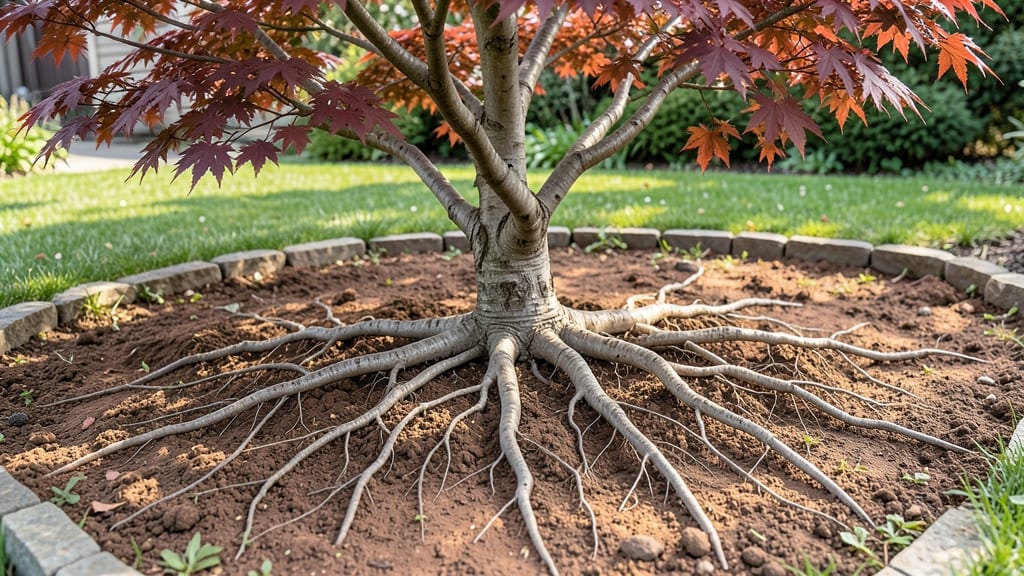
The Japanese Maple Tree 🌳 root system spreads wider and shallower than most trees, with delicate roots that demand careful planting and ongoing care.
Struggling to choose the perfect spot for your Japanese maple? Its root system is far more complex—and delicate—than most gardeners realize, directly impacting growth, stability, and even longevity.
Unlike deep-rooted trees, Japanese maples develop a shallow, fibrous network that spreads 3 to 5 times wider than the canopy. This means planting too close to sidewalks or structures can lead to root damage, while poor soil drainage turns into a recipe for rot.
In this guide, you’ll learn how to assess your soil, space your tree correctly, and protect its roots from common pitfalls—so your Japanese maple thrives for decades.
How deep and wide Japanese maple roots spread: what you need to know before planting
Japanese maples are prized for their stunning foliage and graceful form, but their root system often gets overlooked—yet it determines your tree's health and lifespan. Unlike fast-growing species, these trees develop shallow yet expansive roots that demand careful planning.
Understanding their spread prevents common mistakes like root damage or poor growth.
Most Japanese maples establish their primary roots within 12-24 inches deep, with lateral roots extending 3-5 times wider than the tree's canopy. This means a 10-foot mature tree could spread roots up to 30 feet outward, making spacing critical.
Soil type further influences how aggressively roots expand—clay soils restrict growth, while loose, acidic loam encourages rapid spread.
| Root Feature | Depth (Inches) | Lateral Spread | Soil Impact |
|---|---|---|---|
| Primary Roots | 12-24 | 3-5x canopy width | Loose soil = deeper roots |
| Lateral Roots | 6-12 | Mature: 20-30 ft | Clay = shallow, wide spread |
| Root Zone | 18-36 | Young: 1-2x canopy | Sandy = faster expansion |
| Critical Spacing | N/A | Small: 8-10 ft apart | Compact soil = slower growth |
For young Japanese maples (under 5 years), plant them 8-10 feet apart to allow roots to establish without competing. Mature trees need 15-20 feet of clearance from structures, sidewalks, or other plants. This spacing prevents root girdling—a silent killer where roots circle and strangle the trunk as the tree grows.
Soil type dramatically affects root behavior. In well-draining, acidic loam (pH 5.0-6.0), roots grow deeper and stronger, supporting upright growth. Heavy clay soils force roots to spread shallowly, increasing vulnerability to drought or frost heave. Always amend compacted soil with organic matter like compost or pine bark to improve aeration.
One common misconception is that Japanese maples have "aggressive" roots like willows. In reality, their roots are delicate and sensitive to disturbance. Avoid planting near driveways or patios where roots might be damaged by machinery or foot traffic.
Instead, create a root protection zone with mulch (2-3 inches thick) to shield roots from temperature swings and erosion.
Container-grown Japanese maples develop root-bound systems that need careful transplanting. When moving them, prune circling roots and loosen the root ball to encourage outward growth. Bury the root flare (where roots meet the trunk) at ground level—never deeper—to prevent suffocation and stem rot.
Monitor your tree’s root health by checking for mushroom growth (indicating excess moisture) or yellowing leaves (often a sign of root stress). If roots emerge above soil, gently cover them with mulch but avoid piling it against the trunk.
Proper root care ensures your Japanese maple thrives for decades with vibrant foliage and sturdy growth.
Remember: The key to a healthy Japanese maple lies beneath the soil. By respecting its root system’s natural spread and providing ideal growing conditions, you’ll enjoy a tree that’s both beautiful and resilient for years to come. 🌳
Common mistakes that damage Japanese maple roots (and how to avoid them)
Japanese maple trees are stunning additions to any landscape, but their delicate root systems are often misunderstood. Many gardeners unknowingly harm these roots by making planting mistakes that stunt growth or even kill the tree.
The most critical errors revolve around overcrowding, poor drainage, and improper spacing near structures. Let’s break down these common pitfalls and how to avoid them.
One of the biggest mistakes is planting a Japanese maple too close to buildings, sidewalks, or other trees. Their roots spread 3-5 times wider than the canopy, meaning a mature tree’s roots can extend 15-25 feet from the trunk.
Placing it too near structures risks root damage from construction or compaction, which restricts oxygen flow to the roots.
Another frequent error is ignoring soil drainage requirements. Japanese maples hate soggy roots, yet many gardeners plant them in heavy clay or low-lying areas where water pools.
This leads to root rot, a silent killer that chokes the tree from the ground up. Even well-draining soil can become problematic if amended incorrectly.
⚠️ Japanese Maple Root System Warning
Japanese maples have a shallow but extensive root system that spreads horizontally. Their roots are sensitive to compaction, waterlogging, and competition. Planting too close to structures (within 10 feet) or in impermeable soil can suffocate roots, leading to stunted growth or death.
✅ Solution: Amend soil with organic matter, avoid heavy clay, and keep roots 10+ feet from buildings.
Overcrowding is another silent threat. Many gardeners plant Japanese maples too close to other trees or shrubs, assuming they’ll thrive in tight spaces. However, their roots compete for water and nutrients, weakening both plants.
If you must plant near other species, choose shallow-rooted companions like ferns or hostas that won’t steal resources.
Improper mulching is a subtle but damaging mistake. While mulch is essential for moisture retention, piling it too high against the trunk can smother roots and create a rot-prone environment.
Keep mulch 2-3 inches deep and 3 inches away from the trunk to prevent moisture buildup. Use organic mulch like shredded bark or pine needles for the best results.
Finally, many gardeners forget that Japanese maples benefit from occasional root pruning. If you’re transplanting a mature tree or dealing with overgrown roots, prune them carefully with a sharp spade or root saw.
Focus on circular cuts around the root ball to encourage new growth. Always water thoroughly after pruning to help the tree recover.
By avoiding these common mistakes—proper spacing, well-draining soil, and mindful mulching—your Japanese maple will thrive for decades. Pay attention to its root health, and it’ll reward you with vibrant foliage and stunning form year after year. 🌳