
Pruning
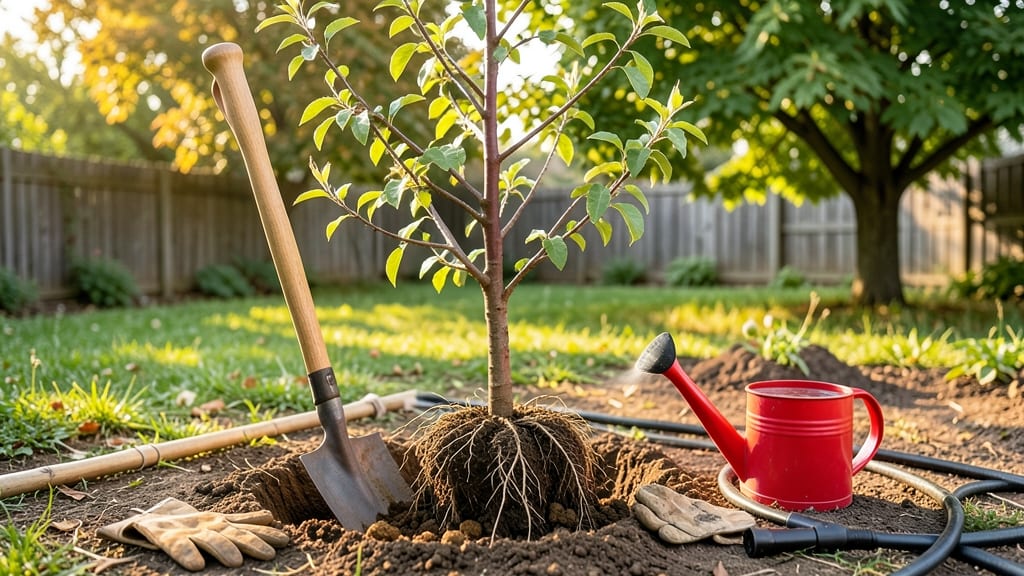
Planting a peach tree right means five years of sweet harvests instead of struggling saplings. 🌳 I learned the hard way—my first tree nearly died from poor soil and shallow roots, but these peach tree planting tips prevent that.
The secret starts with soil that drains like a well-tested recipe, not compacted clay.
Peaches thrive in full sun where they’ll get 6-8 hours daily, and the soil needs a pH between 6.0 and 6.5—test it before digging. Dig a hole twice as wide as the root ball but no deeper, then mix in compost for that first critical boost.
Planting too deep suffocates roots, while shallow holes invite drought stress.
After planting, water deeply until the soil is 6 inches moist, then mulch to lock in moisture. The first year is about patience—your tree won’t fruit yet, but strong roots mean bigger harvests in years to come. Prune only to shape, never to force growth.
Works for zones 5-9, but adjust watering in drought-prone areas. Here’s how to set it up for success from day one.
📚 In This Guide
- What you need
- Instructions
- Tips and common mistakes
- Wrapping up and next steps
What you need
- ● Peach tree sapling: Choose a dwarf, semi-dwarf, or standard variety based on your space (e.g., Elberta, Redhaven, or Reliance).
- ● Ensure it’s bare-root or container-grown (bare-root is best for spring planting).
- ● Shovel or trowel: A round-point shovel for digging holes (12–18" wide and deep).
- ● Garden fork or cultivator: For loosening soil (especially if compacted).
- ● Well-draining soil mix: Native soil amended with compost (50/50 ratio).
- ○ Optional but ideal: Add 1–2 cups of bone meal or 10-10-10 fertilizer to the planting hole.
- ● Mulch: Wood chips or straw (2–3 inches thick, keep 6" away from the trunk).
- ● Staking supplies (if needed): 2–3 wooden stakes (2–3 ft tall).
- ● Soft garden twine or tree ties.
- ● Watering can or hose with a gentle spray nozzle.
- ● Right timing: Plant in early spring (dormant season) or late fall (avoid extreme heat or frost).
- ● Sunlight: Choose a spot with 6–8+ hours of full sun daily.
- ● Spacing: Dwarf trees: 8–10 ft apart.
- ● Standard trees: 20–25 ft apart.
- ● Soil pH: Aim for 6.0–7.0 (test with a soil kit if unsure).
- ○ Frost protection (optional): Burlap wraps or frost cloth for young trees in cold climates.
- ● 🔥 Test your soil—peach trees hate soggy roots! Amend clay soil with sand or peat moss.
- ● ✨ Water deeply after planting to eliminate air pockets and encourage root growth.
- ● 🌡️ Avoid over-fertilizing—too much nitrogen early on can harm young trees.
Step-by-Step guide to planting peach trees for long-term health
Here's how I plant peach trees to ensure strong roots, proper spacing, and soil conditions that keep them thriving for decades.
🪴 Step 1: Choose the Right Location and Dig the Planting Hole
Select a site with full sun exposure (6-8 hours daily) and well-draining soil. Peach trees hate soggy roots, so avoid low spots where water pools. I dig the hole twice as wide as the root ball but only 12-18 inches deep—deeper holes trap excess moisture around the roots.
Loosen the soil at the bottom of the hole with a shovel or garden fork. This prevents root restriction as the tree establishes. If your soil is heavy clay, mix in 2-3 inches of compost at the bottom to improve drainage. The hole should be ready 1-2 days before planting to let the soil settle.
🌱 Step 2: Prepare the Tree and Position for Optimal Growth
Remove the tree from its container and gently loosen the roots if they're circling. Straighten any bent roots without cutting them—peach trees establish best when their root structure remains intact. I always check the graft union (the bump near the base) to ensure it sits 2-3 inches above soil level after planting.
Position the tree so the strongest side faces south for maximum sun exposure. This prevents future shading issues as the tree matures. Place it in the hole and backfill with the native soil, tamping lightly every 6 inches to remove air pockets. Never use amended soil for backfilling—it disrupts the natural root-soil interface.
☀️ Step 3: Water Thoroughly and Mulch for Moisture Retention
Water the newly planted tree with 10-15 gallons of water immediately after backfilling. This settles the soil and eliminates air gaps around the roots. I use a garden hose on a slow setting to avoid eroding the soil surface. The goal is to saturate the root zone without creating runoff.
Apply 3-4 inches of organic mulch (wood chips or straw) around the base, keeping it 6 inches away from the trunk to prevent rot. Mulch conserves moisture and regulates soil temperature, which is critical during peach trees' first two years. Replenish mulch annually as it decomposes.
✂️ Step 4: Prune for Structure and Disease Prevention
Prune the tree immediately after planting to remove any broken branches and shape the canopy. I cut back 25-30% of the foliage to reduce water stress while the roots establish. Focus on removing suckers (shoots growing below the graft union)—these divert energy from fruit production.
Use clean, sharp pruners to make cuts at a 45-degree angle just above an outward-facing bud. Sterilize your tools with rubbing alcohol between cuts to prevent bacterial spread. Avoid heavy pruning in the first year—peach trees need their leaves for photosynthesis as roots grow.
⏰ Step 5: Establish a Watering and Fertilizing Schedule
Water deeply twice weekly for the first month, then taper to once weekly once the tree shows new growth. Peach trees need 1-1.5 inches of water per week, but deep soakings encourage root growth. I check soil moisture by sticking my finger 2 inches down—if it's dry, it's time to water.
Apply a balanced 10-10-10 fertilizer at ½ the recommended rate in early spring and again after harvest. Over-fertilizing young trees leads to excessive leaf growth at the expense of root development. Monitor for signs of nutrient deficiency (yellowing leaves) and adjust accordingly.
Tips & tricks for perfect peach tree planting
Took me years of trial and error to perfect these tricks—your peach trees will thank you for following them.
Soil Prep Secret: If your soil tests heavy clay, mix in 2-3 inches of compost at the bottom of the hole as instructed, but also add a handful of sand to improve drainage further. I've seen roots struggle in pure clay even with compost—this combo works like a charm. The key is creating that perfect balance where water drains but nutrients stay.
Root Structure Matters: When loosening circling roots in Step 2, don't just pull them apart—gently spread them outward like a fan. This mimics natural root spread and prevents future girdling. I've planted dozens of trees where this simple step made the difference between a struggling sapling and a thriving specimen. The graft union should sit 2-3 inches above soil level—this isn't optional, it's critical for disease prevention.
Watering Wisdom: That 10-15 gallons of water immediately after planting isn't just about settling soil—it's about creating a moisture reservoir. The roots need this initial hydration to begin their journey. I use a soaker hose for the first few weeks to maintain consistent moisture without surface erosion. The goal is to keep the root zone damp, not soggy, during those critical first months.
Pro Tips for Peach Tree Planting Tips
- Took me years of trial and error to perfect these tricks—your peach trees will thank you for following them.
- Soil Prep Secret: If your soil tests heavy clay, mix in 2-3 inches of compost at the bottom of the hole as instructed, but also add a handful of sand to improve drainage further.
- Root Structure Matters: When loosening circling roots in Step 2, don't just pull them apart—gently spread them outward like a fan.
Frequently asked questions
Got questions about planting your peach tree?
You’re not alone! Here are answers to the most common concerns—from timing to troubleshooting—to help you grow a thriving orchard with confidence.
When is the best time to plant a peach tree?
Plant your peach tree in early spring (just as buds swell) or late fall (6-8 weeks before the first frost). Avoid planting in extreme heat or cold—roots need time to establish without stress. Bare-root trees must be planted while dormant (winter or early spring) for best success.
How far apart should peach trees be planted?
Space standard peach trees 15–20 feet apart in rows spaced 20–25 feet apart. Dwarf varieties can be planted 10–12 feet apart to save space. Proper spacing ensures airflow, reduces disease, and makes harvesting easier. Pro tip: Check your tree’s mature size tag for exact recommendations!
Can I plant a peach tree in a container?
Yes! Dwarf peach trees thrive in large containers (at least 18–24 inches wide and deep) with drainage holes. Use well-draining potting mix and repot every 2–3 years. Place containers in full sun (6+ hours daily) and move them indoors or to a garage in winter if temperatures drop below 10°F (-12°C).
What pests or diseases should I watch for after planting?
Common issues include peach leaf curl (fuzzy buds in spring), aphids, and brown rot. Prevent leaf curl with copper fungicide in late fall/winter. Monitor for aphids and spray with soapy water if needed. Prune out infected fruit/branches immediately to stop brown rot from spreading.
How do I protect my peach tree in winter?
Young trees (especially in USDA Zones 5–7) need winter protection. Wrap the trunk with tree guard or burlap to prevent rodent damage. Mulch the base with 4–6 inches of straw or wood chips to insulate roots. In extreme cold (<10°F), drape a lightweight frost cloth over the canopy if your tree is newly planted.
Wrapping up and next steps
Planting a peach tree is a rewarding journey that combines patience, care, and a little know-how! 🌱 By choosing the right variety, spacing your trees properly, and preparing nutrient-rich soil, you’re setting the stage for a bountiful harvest.
Remember, consistency in watering, pruning, and seasonal maintenance will keep your peach tree thriving for years to come.
Now that you’re armed with these peach tree planting tips, it’s time to roll up your sleeves and get growing! Start by selecting the perfect spot in your yard—your future peaches will thank you. Happy planting! 🍑✨