
Pruning
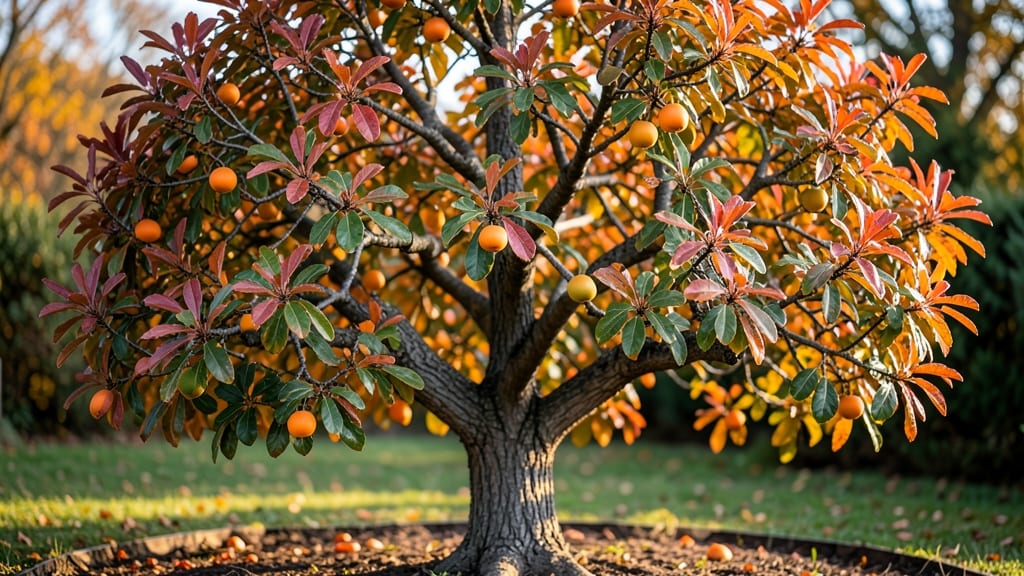
Fall pruning transforms your persimmon tree into a winter warrior. 🌿 The right cuts now mean stronger branches, better fruit next year, and a tree that shrugs off winter's chill—no guesswork, just strategic snips based on what you see in the branches and fruit.
Start by harvesting ripe persimmons—those with deep orange skin that gives slightly when pressed. Then, remove any dead, crossing, or weak branches first. These are the easy wins that open up the tree for better airflow and sunlight, which keeps pests at bay and fruit production steady.
You’ll end up with a tree that looks like it’s been professionally cared for, even if you’re a beginner. The branches will be balanced, the soil will stay healthier through winter, and next fall’s harvest will be even sweeter.
The key is timing: prune after leaf drop but before hard frost sets in. This method works for both American and Asian persimmons, whether you’ve got a young sapling or a mature tree. Here’s how to do it without overcomplicating things—just sharp tools and a clear plan.
📚 In This Guide
- What you need
- Instructions
- Tips and common mistakes
- Wrapping up and next steps
What you need
- ● Pruning shears: Bypass pruners (for cuts under ½ inch thick) – sharp, clean, and well-oiled (e.g., Felco F-2 or Corona Tools).
- ● Loppers: For branches ½ to 2 inches thick (e.g., Felco 221 or Fiskars X27).
- ● Pruning saw: For thicker branches (2+ inches) – hand saw with a fine-toothed blade (e.g., Felco 32 or Bahco).
- ● Gloves: Heavy-duty, cut-resistant (e.g., Mechanix or Cobratex).
- ● Disinfectant (70% isopropyl alcohol or bleach solution): To sterilize tools between cuts and prevent disease spread.
- ○ Pruning sealant (optional): For large cuts (e.g., Tanglefoot Tree Wound Pruning Seal).
- ● Ladder or step stool: Extendable, sturdy, and rated for your height/weight (e.g., Little Giant or Werner).
- ● Tarp or drop cloth: To collect fallen leaves/branches (10’x12’ or larger).
- ● Marking twine or paint: For tagging branches to remove (e.g., bright pink or yellow spray paint).
- ● Weather check: Prune on a dry, overcast day (avoid frost or rain within 24 hours).
- ● Tree health assessment: Inspect for signs of disease (e.g., fungal spots, oozing sap) or pests (e.g., scale insects).
- ● Safety gear: Safety glasses, long sleeves, and closed-toe shoes (persimmons can have thorns!).
- ● Plan your cuts: Sketch a rough map of the tree’s structure or use a pruning guide (e.g., open-grown vs. espalier styles).
- ● Cleanup supplies: Trash bags (heavy-duty, 30-gallon) and a wheelbarrow for debris.
- ● 💡 Sharpen your tools: Dull blades tear bark—ruining the tree’s ability to heal. Use a file or sharpening stone before starting.
- ● 🌡️ Time it right: Late fall (after leaf drop but before hard frost) is ideal for dormant pruning.
- ● 🎯 Sterilize between trees: If you have multiple persimmons, wipe tools with alcohol to avoid cross-contamination.
Step-by-step instructions for pruning a persimmon tree in fall
Fall pruning transforms your persimmon tree into a stronger, fruit-bearing powerhouse for next season.
✂️ Step 1: Remove Dead, Diseased, or Damaged Branches First
Start by scanning the entire tree for branches that are clearly dead, diseased, or physically damaged. These are your top priority—removing them prevents pests and diseases from spreading to healthy wood. Look for branches with no leaves, brown or blackened bark, or any signs of fungal growth like discolored spots or oozing sap.
Use clean, sharp pruning shears to make your cuts just outside the branch collar—the swollen area where the branch meets the trunk. This ensures the tree can heal properly. If a branch is thicker than 2 inches, use a pruning saw instead. I always disinfect my tools with rubbing alcohol between cuts to avoid transferring pathogens.
✂️ Step 2: Thin the Canopy to Improve Airflow and Light Penetration
Persimmon trees need good airflow to prevent fungal diseases and strong light for fruit production. Focus on removing branches that cross each other or rub together—these often create wounds that invite infection. You’ll also want to thin out any branches growing straight upward, as these rarely produce fruit and can make the tree top-heavy.
Make your cuts at a 45-degree angle just above an outward-facing bud. This encourages new growth in the right direction. I aim to remove about 10-15% of the tree’s total canopy during fall pruning—never more than that in one session. If you thin too aggressively, the tree won’t have enough energy to store nutrients for winter.
☀️ Step 3: Prune for Structure and Fruit Production
Persimmon trees benefit from an open, vase-like structure that lets sunlight reach the inner branches. Look for branches that grow inward toward the center of the tree and remove them entirely. These shaded branches rarely produce fruit and can harbor moisture, creating ideal conditions for rot.
Next, focus on the tree’s scaffold branches—the main limbs that form the framework. If any are weak, crossing, or growing at sharp angles, prune them back to a strong, outward-facing branch. For younger trees, you can also lightly shape the canopy by shortening overly vigorous branches by about one-third to encourage bushier growth.
⏰ Step 4: Clean Up and Prepare for Winter
After pruning, rake up all the fallen branches and leaves from under the tree. These can harbor pests and diseases over winter. Dispose of them in the trash—not your compost pile—unless you’re certain they’re completely disease-free. I also like to apply a 2-3 inch layer of mulch around the base of the tree (but keep it a few inches away from the trunk) to insulate the roots.
Finally, give the tree a deep watering to help it recover from the stress of pruning. This is especially important in late fall, when the ground is still warm enough for roots to absorb moisture before the soil freezes. Avoid fertilizing at this time—let the tree focus on hardening off for winter rather than new growth.
Tips & tricks for perfect persimmon tree pruning
Fall pruning isn't just about cutting branches—it's about setting your persimmon tree up for a fruitful spring. Here's what I've learned after years of trial and error in my own orchard.
Timing is Everything: Late fall is ideal because the tree has finished producing fruit and is entering dormancy. Prune between leaf drop and the first hard frost—this gives the tree time to heal before winter sets in. I've found that pruning too early can stimulate unwanted growth, while waiting too late risks winter damage to fresh cuts.
Tool Prep Matters: Your pruning tools should be as sharp as a chef's knife. Dull shears crush branches instead of making clean cuts, which can tear the bark and invite disease. I keep a small file in my toolkit to sharpen blades between sessions. Always disinfect tools with rubbing alcohol between cuts—this prevents spreading pathogens from diseased branches to healthy ones.
Visual Cues for Cuts: When making your 45-degree angle cuts in Step 2, look for the branch collar—the swollen area where the branch meets the trunk. This is your guide for where to cut. If you cut too close, you'll damage the tree's natural healing mechanism. For branches thicker than 2 inches, make a small notch on the underside first to prevent tearing when you complete the cut.
Seasonal Pruning Strategy: Remember that 10-15% canopy reduction guideline? That's your safety net. If your tree looks particularly stressed after pruning, you've gone too far. Persimmon trees store nutrients in their roots over winter, and aggressive pruning can leave them vulnerable. For younger trees, I often do lighter pruning in their first few years to establish strong structure before making more significant cuts.
Pro Tips for Persimmon Tree In Fall
- Fall pruning isn't just about cutting branches—it's about setting your persimmon tree up for a fruitful spring.
- Timing is Everything: Late fall is ideal because the tree has finished producing fruit and is entering dormancy.
- Tool Prep Matters: Your pruning tools should be as sharp as a chef's knife.
Frequently asked questions
Got questions about pruning your persimmon tree this fall?
You’re not alone! Here are some of the most common concerns—and expert answers—to help you prep like a pro.
When is the exact best time to prune a persimmon tree in fall?
The ideal window is late fall, after leaf drop but before hard frost (typically November in most U.S. zones). Avoid pruning too early—new growth could sprout before winter, making it vulnerable to cold damage. If you miss fall, wait until early spring (before buds swell).
Should I remove all the dead branches, or just some?
Remove all dead, diseased, or crossing branches—these compete with healthy growth and invite pests. For dormant (brown but not woody) branches, cut them back to the nearest live bud. Pro tip: Use sterilized pruners to prevent spreading disease between cuts!
Will pruning now affect next year’s fruit harvest?
Not if done correctly! Strategic pruning boosts fruit production by improving airflow and sunlight penetration. Focus on open-center shaping (removing inward-growing branches) and thinning out dense clusters. Just avoid heavy pruning—stick to 20–30% of the canopy per year.
My persimmon tree has aphids or spots on leaves—should I prune now?
If pests/disease are active, wait until spring to prune. Fall pruning can spread spores or attract more insects. Instead, clean up fallen leaves and apply neem oil or copper fungicide before winter. Healthy trees handle pruning better—prioritize that first!
What if I live in a cold climate (Zone 5 or lower)? Any special tips?
Cold-hardy persimmons (like ‘Meader’ or ‘Fuyu’) need extra protection. Prune to reduce wind exposure—cut back branches on the north/south sides to create a windbreak. Wrap young trunks with tree guard and mulch heavily (3–4 inches) to insulate roots. Avoid late-season pruning if frost is forecast!
Wrapping up and next steps
Fall is the perfect time to give your persimmon tree the care it needs to thrive—strategic pruning ensures a healthier, more productive tree for seasons to come. 🌳 By removing dead branches, thinning for airflow, and shaping with precision, you’re setting the stage for vibrant blooms and sweet fruit next year. Don’t wait until winter! Grab your tools, follow the steps, and enjoy the satisfaction of nurturing your tree’s growth.
Ready to take action? Mark your calendar for a crisp fall day, gather your supplies, and get pruning—your persimmon tree (and future harvest) will thank you! 🌟