
Diseases
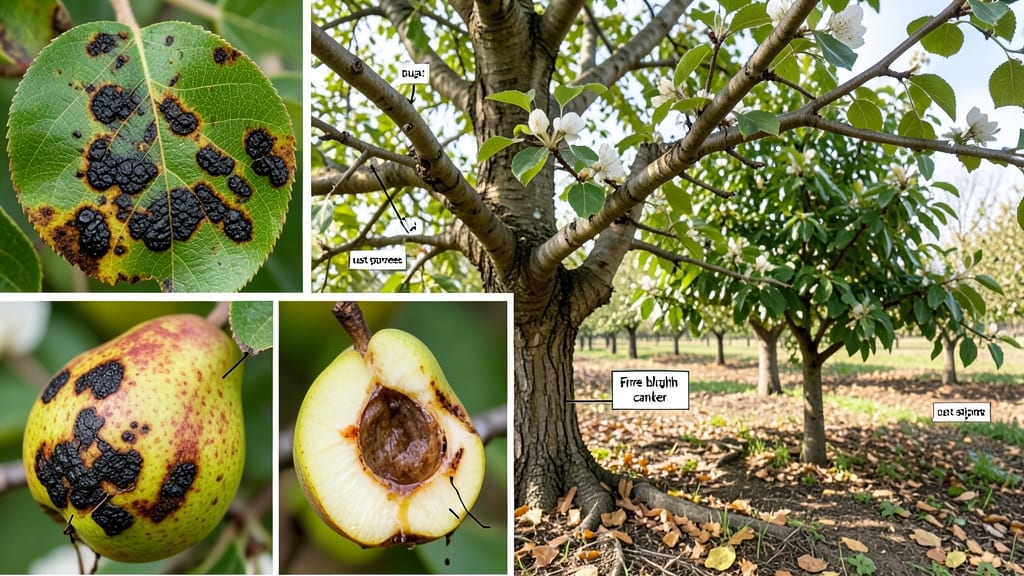
Seeing pictures of pear tree diseases early saves your harvest—and your tree. 🌳 I’ve seen fire blight turn lush branches into blackened skeletons overnight, and powdery mildew smother fruit before it ripens. This visual guide shows you exactly what to look for on leaves, fruit, and bark, so you can act before it’s too late.
The worst part? Many diseases start with subtle signs—tiny black dots, fuzzy white patches, or oddly curled leaves—that homeowners often miss until it’s spread. But once you know what to watch for, you can stop them fast with simple pruning, sprays, or even just better airflow around the tree.
No fancy tools needed.
You’ll learn to recognize the most common fungal spots—like fire blight’s telltale oozing cankers or black spot’s ringed lesions—so you can treat them before they ruin your fruit. The key is catching them early, and these pictures make it impossible to ignore the warning signs.
Whether you’re dealing with a young tree or a mature favorite, this guide gives you the confidence to diagnose and fix problems fast. No more guessing—just clear visuals and straightforward fixes to keep your pears healthy and productive.
Root Causes Of Tree Stress
Pear trees, like all fruit-bearing plants, are susceptible to diseases when their natural defenses weaken. Understanding why these issues arise is the first step to prevention. Below, we break down the key factors that create the perfect storm for fungal infections, bacterial attacks, and other pear tree diseases.
Think of it as diagnosing the "why" behind the "what"—because fixing the root cause often stops the problem before it starts.
Most pear tree diseases are caused by fungal pathogens that thrive in specific conditions. These microbes don’t just appear—they wait for the right moment to strike. Here’s how they get the upper hand:
- High Humidity & Rainfall: Fungi like Venturia nashicola (causing scab disease) and Fabraea maculata (leaf spot) spread via water splashes. Overhead irrigation or prolonged wet leaves create a fungal buffet, allowing spores to germinate and infect tissues in as little as 24 hours. Pro tip: Morning watering (before 10 AM) reduces evening moisture, giving leaves time to dry.
- Poor Air Circulation: Dense foliage or crowded trees trap stagnant, humid air, ideal for fungal growth. Diseases like powdery mildew (caused by Podosphaera leucotricha) thrive in these conditions by forming protective webs over leaves, blocking sunlight and stunting growth.
- Warm Temperatures (But Not Too Hot): Fungi love 60–80°F (15–27°C)—the Goldilocks zone for spore production. Extremes (below 50°F or above 90°F) can slow them down, but consistent warmth with moisture is a recipe for disaster. Example: Fire blight (Erwinia amylovora) spreads faster in spring when temperatures hover around 77°F (25°C) with rain.
While fungi dominate pear tree diseases, bacteria and viruses also exploit weak points. These pathogens often hitchhike on wounds, tools, or insects:
- Physical Damage from Pruning or Hail: Open wounds are like invitation cards for bacteria like Pseudomonas syringae (causing bacterial spot). Always sterilize pruners with 70% isopropyl alcohol or bleach solution (1 part bleach to 9 parts water) to prevent cross-contamination.
- Insect Vectors (e.g., Aphids, Scale): Viruses like Pear decline virus spread when sap-sucking insects feed on infected trees, then move to healthy ones. Actionable fix: Use horticultural oil in dormant season (late winter) to smother overwintering pests.
- Stress from Poor Nutrition: Deficient calcium, boron, or zinc weakens cell walls, making trees vulnerable to bacterial cankers. Test soil pH (ideal: 6.0–7.0) and amend with lime (for acidity) or sulfur (for alkalinity) as needed.
Sometimes, the "disease" isn’t the real villain—your care routine is. Common gardening oversights create the perfect conditions for pathogens:
| Mistake | How It Helps Diseases | Quick Fix |
|---|---|---|
| Overwatering | Waterlogged soil suffocates roots, starving them of oxygen and inviting root rot (e.g., Phytophthora). | Improve drainage with gravel or compost; water deeply but infrequently (1–1.5 inches per week). |
| Compacted Soil | Reduces root access to nutrients and oxygen, weakening immunity. Fungi like Armillaria (shroom root rot) exploit compacted zones. | Add organic matter (compost, leaf mold) and aerate with a fork in spring. |
| Ignoring Leaf Debris | Fallen leaves harbor overwintering spores. For example, Venturia spores survive in leaf litter for years. | Rake and dispose of debris (don’t compost infected leaves); mulch with straw instead. |
💡 Key Takeaway: Most pear tree diseases are opportunistic. By addressing humidity, poor airflow, nutrient gaps, and physical stress, you remove the "invitation" for pathogens. Next up: How to Identify These Diseases Before They Spread.
How to solve it
When your pear tree starts showing signs of disease—whether it’s black spots on leaves, oozing cankers, or mushy fruit—acting fast is key. The good news? Most fungal issues can be tackled with a mix of cultural fixes, organic treatments, and preventive habits.
Below, we’ll map the most common pear tree diseases to their solutions, so you can restore your tree’s health without harsh chemicals. Let’s get to work! 🌱🔧
If your pear tree’s leaves are covered in dark brown or black spots with yellow halos, it’s likely suffering from Alternaria leaf spot or Marssonina blight. These fungi thrive in warm, wet conditions, so your first move should be to improve airflow and remove infected foliage.
- 🔥 Step 1: Clean Up
- Rake and remove all fallen leaves (don’t compost them—burn or trash them to prevent reinfection).
- Prune affected branches back to healthy wood, sterilizing your pruners with rubbing alcohol between cuts.
- 🍳 Step 2: Apply Fungicide
- Spray with a copper-based fungicide (like Copper Soap) or a baking soda solution (1 tbsp baking soda + 1 tsp dish soap + 1 gallon water). Reapply every 7–10 days during wet spells.
- Neem oil (1 tsp per quart of water) also works as a preventative fungicide.
- 🌡️ Step 3: Prevent Future Outbreaks
- Water early in the morning to let foliage dry quickly.
- Avoid overhead irrigation—use drip systems or soaker hoses instead.
- Apply a 2–3 inch layer of mulch around the base (but not touching the trunk) to reduce soil splashing onto leaves.
If your pear tree has blackened, wilted branches that look like they’ve been scorched by fire, fire blight is likely the culprit. This bacterial disease spreads quickly, so aggressive pruning is your best defense.
- 🔪 Step 1: Prune Infected Wood
- Cut out all infected branches at least 6–12 inches below the visible damage (the bacteria can lurk in the tissue).
- Dip pruners in bleach or rubbing alcohol between cuts to avoid spreading the bacteria.
- Burn or do not compost the pruned material.
- 👨🍳 Step 2: Apply Bacterial Spray
- Use a copper-based bactericide (like Copper Funken) or a streptomycin sulfate spray (follow label instructions).
- Spray in the late afternoon to reduce leaf burn.
- ⏰ Step 3: Prevent Recurrence
- Remove all infected fruit from the tree and ground.
- Plant resistant pear varieties like Bartlett or Seckel if fire blight is recurrent.
- Avoid overhead watering and prune for open airflow.
White, powdery patches on leaves? That’s powdery mildew, a fungal disease that weakens your tree by blocking sunlight. Fortunately, it’s one of the easier problems to fix!
- 🧼 Step 1: Clean the Tree
- Hose down the tree with water to dislodge mildew spores (do this in the early morning so leaves dry fast).
- Wipe leaves with a soft cloth dipped in soapy water for severe cases.
- 🌿 Step 2: Use Natural Fungicides
- Spray with a 1:10 ratio of milk to water (milk contains proteins that inhibit fungal growth).
- Or use potassium bicarbonate (1.5 tbsp per gallon of water + a drop of dish soap).
- Reapply every 7–10 days or after rain.
- 🌡️ Step 3: Adjust Growing Conditions
- Ensure the tree gets at least 6–8 hours of sunlight daily—mildew loves shade.
- Space trees 3–4 feet apart for better airflow.
- Water at the base (not the leaves) and avoid late-day watering.
An ounce of prevention is worth a pound of cure! Here’s how to keep your pear tree healthy long-term:
- 🌱 Choose Disease-Resistant Varieties
- Opt for Kieffer, Moonglow, or Seckel pears, which are bred to resist common fungal issues.
- 🌡️ Monitor Weather Conditions
- Fungal spores thrive in humidity—use a tree sprayer with a fungicide before and after rainy seasons.
- 🍂 Fall Cleanup is Critical
- After harvest, remove all debris (leaves, fruit, prunings) from the orchard or yard.
- Consider deep tilling the soil in fall to bury overwintering spores.
- 🔄 Rotate Fungicides
- If you use chemical fungicides, alternate between types (e.g., copper, sulfur, neem) to prevent resistance.
With these steps, your pear tree can bounce back from disease—and even thrive with fewer future problems. 🌟 The key is early action
Frequently asked questions about pear tree diseases
How can I tell if those black spots on my pear leaves are just dirt or a disease?
Black spots from dirt usually wipe off easily with a damp cloth, while fungal diseases like Alternaria leaf spot or black spot leave behind rough, crusty patches that don't disappear. Look for dark rings with yellow halos—this is a classic disease symptom that won't wash away.
Can I still eat fruit from a diseased pear tree?
Only if the disease hasn't affected the fruit directly. For example, fire blight on branches means the fruit is safe, but brown rot (which causes mushy spots) makes fruit inedible. When in doubt, peel and inspect the flesh—if it's firm and healthy-looking, it's usually safe to eat.
Why does my pear tree get diseases every year, even though I treat it?
Diseases often return because spores survive in fallen leaves, soil, or tree bark. Even after treatment, these spores can reinfect next season. The key is fall cleanup—remove all debris, prune for airflow, and apply preventive sprays before symptoms appear in spring.
Is it safe to compost leaves from a diseased pear tree?
Never compost infected leaves—fungal spores can survive and reinfect your garden. Instead, bag them for trash collection or burn them. Healthy leaves (without spots) can be composted, but keep them separate from diseased plant material.
How do I know if my pear tree has a bacterial disease versus a fungal one?
Bacterial diseases like fire blight often cause oozing cankers with a dark, wet appearance, while fungal diseases typically show up as powdery growths or crusty spots. Bacterial issues also spread faster in warm, wet conditions—look for sudden wilting and blackened branches as key clues.