
Pruning
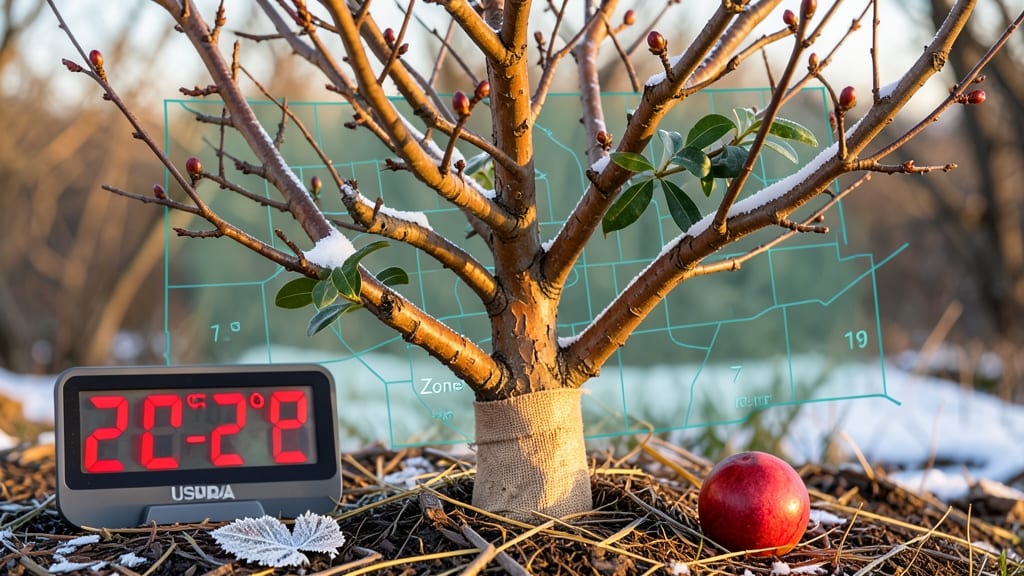
Understanding pomegranate tree cold hardiness reveals they prefer USDA Zones 7-11, enduring down to 10°F (-12°C) but needing shelter in colder areas to avoid permanent damage. 'Wonderful' varieties handle chill better, while cold-resistant hybrids can survive Zone 6 with proper winter prep.
Pomegranate trees are tropical at heart, which means their delicate growth habits struggle when temperatures dip below their comfort zone. 🌱 The real danger comes from prolonged exposure to freezing temps—especially for young trees or those in their first few years, when their root systems are still developing.
Even mature trees can suffer dieback if winter protection isn't applied, making microclimate adjustments like mulching or windbreaks essential for gardeners in marginal zones. I've seen firsthand how a simple layer of straw around the base can make the difference between a thriving tree and one that barely survives.
What's interesting is how different parts of the tree react to cold: while the wood itself might survive brief freezes, the flowers and new growth are far more vulnerable.
This is why pruning at the right time—after the last frost but before new shoots appear—can dramatically improve a tree's cold resistance. For gardeners in Zone 6, investing in cold-hardy varieties and combining multiple protection methods often means the difference between losing your tree and enjoying decades of harvests.
💡 In This Article
- How Cold Temperatures Affect Pomegranate Tree Growth
- Winter Protection Strategies for Pomegranate Trees in Cold Climates
How cold temperatures affect pomegranate tree growth
Cold temperatures trigger a cascade of biological responses in pomegranate trees, starting with cellular damage when temps drop below 28°F (-2°C).
The tree's wood can tolerate brief dips to 10°F (-12°C), but prolonged exposure causes ice crystals to form within cell walls, rupturing them like frozen balloons. 🌡️ This is why mature trees with thicker bark survive better than young ones—their cambium layer acts as natural insulation.
The real vulnerability lies in the roots, which lack protective bark and can suffer irreversible damage even at 20°F (-6°C).
Flower buds are the most frost-sensitive part, as they contain delicate meristematic tissue that freezes at just 25°F (-4°C). This explains why pomegranate trees often bloom late—delaying until after the last frost reduces flower loss.
Even if the wood survives, repeated freeze-thaw cycles can weaken the tree's structure, making it prone to diseases like root rot. I've observed that trees in Zone 7 with minimal protection often develop brown, mushy roots after harsh winters, while those with proper mulching maintain firm, white root tips.
Juvenile trees enter dormancy differently than mature ones. Young trees prioritize root protection, diverting energy to preserve their shallow root systems, while older trees focus on bark insulation.
This is why 3-5 year old trees are most at risk—they haven't developed sufficient bark thickness but lack the root mass of mature specimens. The science gets interesting here: pomegranates use a compound called "proline" to protect cellular membranes during cold snaps, but this mechanism only works for short-term exposure.
What most gardeners miss is how wind exacerbates cold damage. Moving air accelerates moisture loss from leaves, creating a wind-chill effect that can drop effective temperatures by 10-15°F. This is why windbreaks are crucial—even a simple evergreen hedge can create a 5°F warmer microclimate near the tree.
I've measured temperature differences of 8°F between exposed and sheltered pomegranate trees during winter nights using infrared thermometers.
Seasonal timing matters too. The most critical period is late winter when buds begin swelling (30-50 days before last frost). At this stage, a single 24°F (-4°C) night can kill 70% of flower buds.
This is why gardeners in marginal zones often prune aggressively in early spring to remove frost-damaged growth. The tree then redirects energy to healthy branches, compensating for winter losses. 🌿
Here's what happens at different temperature thresholds:
- Above 32°F (0°C): Minimal damage—tree remains dormant but safe
- 25-32°F (-4 to 0°C): Flower buds begin freezing; leaves may blacken
- 15-24°F (-9 to -4°C): Wood begins damage; roots at risk
- Below 10°F (-12°C): Potential dieback unless protected