
Pruning
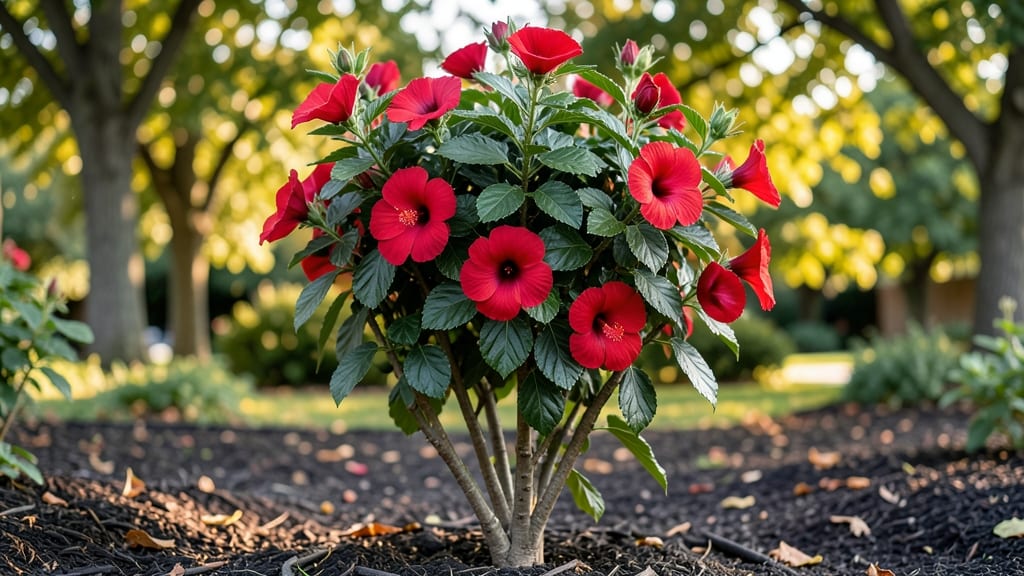
Your red tree Rose of Sharon could bloom nonstop—if you prune it right. ✂️ I’ve shaped mine into a showstopping focal point that flowers from summer through fall, and the secret isn’t complicated: timing, technique, and a little annual maintenance.
Most gardeners either prune too late (and lose blooms) or too hard (and sacrifice next year’s flowers).
The best time to prune is late winter or early spring, before new growth starts. You’ll remove dead wood, shape the plant, and encourage strong branches that produce more flowers.
For year-round blooms, I cut back one-third of the oldest stems each year—this keeps the plant compact and forces fresh growth where the flowers appear.
After pruning, your Rose of Sharon will reward you with bold red blooms that last for weeks and a tidy, tree-like shape. The key is patience: it takes 2-3 seasons to perfect the look, but once you get the rhythm, the blooms never stop.
Even in hot summers, this shrub thrives with minimal fuss.
Works in full sun or partial shade, and handles most soil types—just avoid soggy roots. Whether you’re shaping a hedge or a standalone specimen, this method keeps it healthy, blooming, and beautiful for decades. Let’s get those shears ready!
📚 In This Guide
- What you need
- Instructions
- Tips and common mistakes
- Wrapping up and next steps
What you need
- ● Pruning shears: Bypass pruners (sharp, clean, and not too large for delicate branches). Pro tip: A bypass type is gentler on stems than anvil shears!
- ● Loppers: For thicker branches (½"–1.5" diameter). Look for bypass-style loppers for precision cuts.
- ○ Hand saw: Optional but handy for branches thicker than 1.5". A curved-tooth pruning saw prevents tear-out.
- ● Gloves: Heavy-duty gardening gloves to protect from thorns and rough bark.
- ● Disinfectant: 70% rubbing alcohol or a pruner disinfectant spray to sterilize tools between cuts (prevents disease!).
- ○ Pruning sealant (optional): For large cuts (1" or thicker) to prevent sap loss or pests. Use a tree wound dressing or pruning paste.
- ● Trash bags or bucket: For collecting pruned branches and debris. A 5-gallon bucket works great!
- ○ Marking twine or flags (optional): If you’re doing structural pruning, mark branches to remove later.
- ● Ladder (if needed): A sturdy, extendable step ladder (4–6 ft) for taller shrubs.
- ● Knowledge of your shrub’s age: Mature Red Tree Roses (5+ years) need rejuvenation pruning every 3–5 years.
- ● Weather check: Prune on a dry, cloudy day (avoid extreme heat or frost).
- ● Safety first: Wear long sleeves/pants—thorns are serious!
Step-by-step pruning guide for year-round red tree Rose of Sharon blooms
Transform your Rose of Sharon into a lush, flowering powerhouse with these precise pruning techniques.
✂️ Step 1: Prune for Airflow and Light Penetration
Start in late winter or early spring before new growth begins. Remove any dead, diseased, or crossing branches first—these compete with healthy growth and invite pests. I always cut back to the next outward-facing bud, which ensures new shoots grow outward rather than inward. This creates an open center that lets sunlight and air circulate freely.
Look for branches growing toward the center of the plant—these create dense, shaded areas that promote fungal diseases. Thin these out completely. You'll know you're doing it right when you can see light reaching the inner branches and the plant's structure resembles an open vase shape. Aim to remove about 20-30% of the plant's total branches during this first prune.
✂️ Step 2: Shape for Height and Balance
After removing problem branches, focus on shaping. Rose of Sharon responds well to directional pruning—cut back the tallest branches by one-third to encourage bushier growth. I like to make my cuts just above a strong lateral bud that faces outward. This creates a natural, balanced silhouette while maintaining the tree-like form.
For multi-stemmed plants, select 2-3 main stems to dominate the structure and prune others back to encourage new growth from the base. Avoid cutting into old wood—Rose of Sharon blooms on both old and new wood, so preserve last year's stems for summer flowers. You'll see fresh green growth emerging within 2-3 weeks of pruning, signaling successful shaping.
✂️ Step 3: Summer Maintenance Pruning
After the first flush of blooms in early summer, do a light pruning to encourage a second round of flowers. Remove any spent blooms by cutting back to the nearest leaf node. This prevents seed formation and redirects the plant's energy into new growth and additional flowers. I also check for any leggy growth—branches growing taller than wide—and cut them back to maintain compactness.
Watch for suckers growing from the base or along the trunk. These compete with your main structure and should be removed immediately. Use clean, sharp pruners to make 45-degree cuts just above a bud. The key is to prune throughout the growing season—not just once—to maintain continuous blooming. You'll notice new flower buds forming along the stems within 4-6 weeks of summer pruning.
✂️ Step 4: Fall Cleanup for Winter Preparation
In late fall, after the final blooms, do a final light pruning to remove any weak, crossing, or diseased branches. This prevents winter pests from finding shelter in dead wood. I also cut back any overly vigorous growth that might be damaged by winter winds. The goal is to enter dormancy with a clean, open structure that can handle winter conditions.
Apply a 2-3 inch layer of mulch around the base (using the materials you have on hand) to protect roots from freezing temperatures. Avoid piling mulch against the trunk—keep it 3-4 inches away to prevent rot. Your plant should look like a well-groomed tree with an open canopy, ready to burst into bloom next spring. With consistent pruning, you'll enjoy year-round color and a perfectly shaped shrub.
Tips & tricks for perfect Rose of Sharon pruning
Mastering the art of pruning transforms your Rose of Sharon from a wild shrub into a showstopping landscape feature—here's how to avoid common pitfalls and elevate your results.
Timing Secret: Late winter or early spring is your golden window for the first major prune because the plant is still dormant, making it easier to identify dead wood and crossing branches. I always check the last frost date in my area and schedule pruning about 2-3 weeks afterward—this gives new growth time to establish before summer heat arrives. Watch for fresh green buds emerging along the stems; these signal the plant's readiness to respond to pruning.
Cutting Technique: The 45-degree angle cut just above a lateral bud (not at a joint) is everything—this ensures water runs off the cut and new growth emerges in the direction you want. I use sharp bypass pruners to make clean cuts that heal faster. For larger branches, I make a second cut just outside the branch collar to avoid tearing the bark. Remember, the goal is to create an open vase shape that lets sunlight penetrate to the center, where new blooms will form.
Seasonal Strategy: Summer maintenance isn't optional—it's what keeps your plant blooming continuously. After the first flush of flowers, I do a quick check every 4-6 weeks to remove spent blooms and leggy growth. This redirecting of energy is what gives you those stunning second and third flushes of color. Don't forget to remove suckers at the base; these little volunteers can sap energy from your main structure if left unchecked.
Winter Protection: That 2-3 inch layer of mulch around the base isn't just decoration—it's insulation. I use shredded leaves or straw because they break down slowly, providing continuous protection. The key is to keep it 3-4 inches away from the trunk to prevent rot. In colder climates, I also wrap young plants with burlap for extra protection against winter winds, which can dry out tender new growth.
Pro Tips for Red Tree Rose Of Sharon
- Mastering the art of pruning transforms your Rose of Sharon from a wild shrub into a showstopping landscape feature—here's how to avoid common pitfalls and elevate your results.
- Timing Secret: Late winter or early spring is your golden window for the first major prune because the plant is still dormant, making it easier to identify dead wood and crossing branches.
- Cutting Technique: The 45-degree angle cut just above a lateral bud (not at a joint) is everything—this ensures water runs off the cut and new growth emerges in the direction you want.
Frequently asked questions
Got questions about pruning your Red Tree Rose of Sharon (Hibiscus syriacus)?
Here are answers to the most common ones to keep your shrub thriving and blooming beautifully year after year.
When is the best time to prune a Red Tree Rose of Sharon?
The ideal time to prune is late winter or early spring (just before new growth starts) to shape the plant and encourage robust blooms. You can also do a light deadheading after flowering to promote more flowers. Avoid heavy pruning in fall—it can leave the plant vulnerable to winter damage.
How much can I prune back my Red Tree Rose of Sharon?
You can prune up to one-third of the plant’s height if needed, but avoid over-pruning. For shaping, focus on removing dead, crossing, or weak branches. If your shrub is overgrown, prune gradually over 2-3 years to avoid stressing the plant. Never remove more than 30% in a single season.
What if my Red Tree Rose of Sharon isn’t blooming after pruning?
If your shrub skips blooms, check these fixes:
- Prune too late: Spring pruning is key—avoid cutting back after early summer.
- Over-fertilizing with nitrogen: Too much N = leafy growth, fewer flowers. Use a balanced bloom booster instead.
- Poor sunlight: Ensure it gets 6+ hours of sun daily for optimal flowering.
- Old wood: These shrubs bloom on new and old wood, but heavy pruning can reduce next year’s flowers. Prune selectively!
Can I grow a Red Tree Rose of Sharon in a container?
Yes! Just choose a large pot (15+ gallons) with drainage holes and use well-draining soil. Prune regularly to control size, and repot every 2-3 years to refresh nutrients. Containers dry out faster, so water deeply when the top 2 inches of soil feel dry. Note: It may bloom less in pots due to root restrictions.
What should I avoid when pruning a Red Tree Rose of Sharon?
Avoid these common mistakes:
- Pruning in fall: New growth can’t harden off before winter, risking freeze damage.
- Using dull tools: Ragged cuts invite disease. Always use clean, sharp pruners.
- Leaving stubs: Cut branches at a 45-degree angle just above a bud or node.
- Ignoring dead wood: Remove any brown, mushy, or diseased branches immediately.
Pro Tip:
Label your pruned branches! If you’re experimenting with rejuvenation pruning (cutting back hard to revive an old shrub), mark the branches you cut so you can track regrowth. Patience pays off—some shrubs take 1-2 years to bounce back with full blooms.
Wrapping up and next steps
The Red Tree Rose of Sharon is a stunning, low-maintenance shrub that rewards patience with vibrant blooms and lush foliage—when pruned with care. By mastering the art of seasonal trimming, you’ll encourage year-round beauty and keep your plant healthy and well-shaped.
Whether you’re a beginner or a seasoned gardener, these techniques will help you transform your landscape into a floral masterpiece!
🌸 Ready to take the next step? Grab your pruners, mark your calendar for the best trimming times, and start shaping your Red Tree Rose of Sharon today. Your garden will thank you with months of breathtaking color!