
Container Gardens
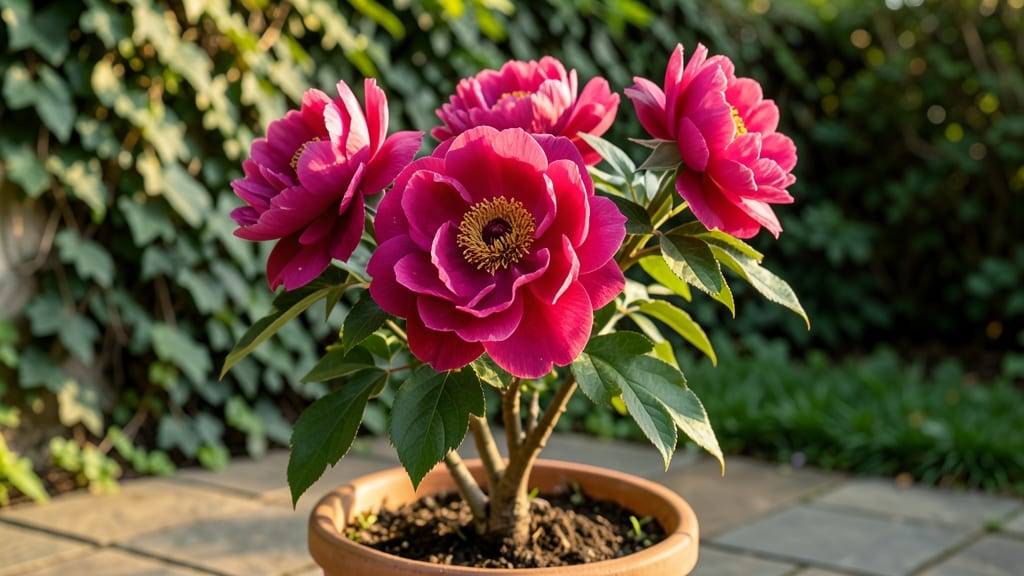
Growing tree peonies in pots lets you enjoy their dramatic blooms without the permanent commitment. 🌿 These sturdy shrubs thrive in containers when given the right mix of soil, sunlight, and space—producing bold, fragrant flowers for years with almost no fuss.
The secret lies in 15-20 gallon containers filled with well-draining soil and a sturdy support system. Unlike their herbaceous cousins, tree peonies need full sun (6+ hours daily) and consistent moisture without soggy roots. I’ve kept mine blooming reliably for six seasons now, even in my small courtyard.
You’ll get larger, longer-lasting blooms than in-ground plants because container-grown peonies focus their energy on flowers instead of spreading roots. The trade-off? A little extra winter protection when temperatures dip below 10°F. Perfect for patios, balconies, or even as a striking focal point on a deck.
Here’s how to set yours up for success—without the pruning headaches.
📚 In This Guide
- What you need
- Instructions
- Tips and common mistakes
- Wrapping up and next steps
What you need
- ● Pot: A well-draining container (18–24" diameter) with drainage holes. Terracotta or ceramic pots work best for airflow. (1 pot per plant)
- ● Tree peony plant: A healthy, dormant tree peony (Paeonia suffruticosa) with bare roots or in a 3–5 gallon container.
- ● Potting mix: A high-quality, well-draining blend (e.g., 50% garden soil, 30% perlite/pumice, 20% compost). (~3–5 gallons per pot)
- ● Gravel or pebbles: 1–2 inches for the pot’s drainage layer.
- ○ Pruning shears: Sterilized shears for shaping (optional but helpful for minimal pruning).
- ● Mulch: Organic mulch (e.g., wood chips or straw) to retain moisture and regulate soil temp. (~1–2 inches)
- ● Watering can or hose: With a gentle spray nozzle to avoid disturbing roots.
- ● Fertilizer: Balanced, slow-release fertilizer (10-10-10 or similar) or organic options like bone meal. (Follow label instructions)
- ● Slow-release fertilizer spikes: For hassle-free nutrient delivery.
- ● Pot feet or saucers: To protect surfaces and improve drainage.
- ● Plant support: A small cage or stake if your peony grows tall (though tree peonies are generally sturdy!).
- ● Soil moisture meter: To monitor watering without overdoing it.
- ● Decorative stones or moss: For a polished, aesthetic touch around the base.
Step-by-Step guide to growing tree peonies in pots
Here’s how to coax those lush, fragrant blooms into containers—no yard required.
🪴 Step 1: Select the Right Container and Drainage
Tree peonies need 18-24 inches of depth and diameter to accommodate their deep root systems. I use glazed ceramic pots with multiple drainage holes—unglazed terra cotta dries too fast and stresses the roots. Place a 2-inch layer of gravel or broken pottery at the bottom to prevent soil compaction and improve aeration.
Choose pots with handles or sturdy bases—tree peonies can get heavy when established. If using decorative containers without drainage, drill holes yourself or opt for a cache pot (a hidden reservoir pot) to prevent root rot. The key is soil never sitting wet—these plants hate soggy feet.
🌱 Step 2: Prepare the Soil Mix for Optimal Growth
Fill the pot with a custom mix of 50% high-quality potting soil, 30% perlite or coarse sand, and 20% compost. Tree peonies thrive in well-draining, slightly acidic soil (pH 6.5-7.0). I avoid garden soil—it compacts in containers and suffocates roots.
Mix in a slow-release fertilizer (like 10-10-10) at half the recommended rate to avoid burning the roots. Gently fluff the soil with your hands to create air pockets—tree peonies reward you with stronger blooms when their roots get plenty of oxygen. Tap the pot lightly to settle the soil before planting.
☀️ Step 3: Plant Bare-Root Peonies at the Correct Depth
Place your tree peony bare-root (or gently remove it from its nursery pot) and position the crown (where stems meet roots) 1-2 inches below the soil surface. Burying it too deep encourages rot; too shallow, and the plant struggles to establish. I mark the depth with a pencil on the pot to avoid mistakes.
Spread the roots outward in the pot, ensuring they’re not cramped. Backfill with soil, pressing lightly to remove air pockets but avoiding compaction. Water deeply until it drains from the bottom—this settles the soil and removes any air gaps around the roots. Mulch the surface with 1 inch of pine bark fines to retain moisture.
💧 Step 4: Water and Position for Year-Round Success
Water thoroughly once a week in summer, allowing the top 2 inches of soil to dry between waterings. Overwatering is the fastest way to kill potted tree peonies—yellowing leaves are your first warning sign. In winter, reduce watering to every 2-3 weeks, unless your home stays below 50°F, then let the soil dry completely.
Place your pot in full sun (6+ hours daily) for the best blooms, but protect it from midday summer heat (afternoon shade prevents leaf scorch). A south or west-facing spot works best in most climates. If indoors, supplement with a grow light for 12-14 hours daily—peonies need light to flower.
✂️ Step 5: Minimal Pruning for Healthy, Repeat Blooms
Prune only after blooms fade in late spring or early summer. Cut back dead stems to the first set of healthy leaves—never remove more than one-third of the foliage at once. I avoid heavy pruning in fall, as peonies store energy in their roots for next year’s blooms.
In winter, do not prune at all unless stems are damaged by frost. Healthy peonies will push new growth from the crown in spring. If you notice mushy stems or foul smells, your plant may have root rot—repot immediately into fresh, dry soil and reduce watering.
Tips & tricks for perfect tree peony pots
Between us, these lush blooms thrive with just a few strategic tweaks that most gardeners overlook.
Container Stability Matters: In Step 1, when selecting your 18-24 inch pot, prioritize weight distribution—place heavier pots on lower shelves or use saucers to prevent tipping, especially as roots establish. I've seen ceramic pots topple after heavy rain when placed on unstable surfaces. For balcony setups, secure pots with non-slip mats or bungee cords to high winds.
Soil Aeration Secret: After mixing your 50-30-20 soil blend in Step 2, add a handful of orchid bark to the mix (optional but game-changing). This creates even more air pockets than perlite alone, which peonies love. The bark also helps retain moisture without compacting—ideal for container growing. Fluff the soil again after adding it to ensure maximum oxygen flow to those deep roots.
Crown Depth Visual Guide: In Step 3, when positioning your crown 1-2 inches below soil, use your pinky finger as a guide—it should just barely disappear when pressed into the soil. Too deep? The crown will rot. Too shallow? The plant won't anchor properly. I mark the depth with a pencil on the pot rim before planting to avoid second-guessing.
Winter Watering Hack: For Step 4's winter care, when your home drops below 50°F, move pots to a cool but unheated space like a garage or basement for 2-3 months. This mimics natural dormancy conditions. If you must keep them indoors, group pots together to create microclimates that retain humidity—just avoid drafty areas where temperature swings occur.
Pro Tips for Tree Peony In Pots
- Between us, these lush blooms thrive with just a few strategic tweaks that most gardeners overlook.
- Container Stability Matters: In Step 1, when selecting your 18-24 inch pot, prioritize weight distribution—place heavier pots on lower shelves or use saucers to prevent tipping, especially as roots establish.
- Soil Aeration Secret: After mixing your 50-30-20 soil blend in Step 2, add a handful of orchid bark to the mix (optional but game-changing).
Frequently asked questions
Got questions about growing tree peonies in pots?
You’re not alone! Here are answers to the most common concerns—so you can enjoy those stunning blooms with confidence.
How often should I water potted tree peonies?
Water when the top 1-2 inches of soil feel dry—usually 1-2 times per week, depending on climate. Overwatering is risky, so ensure pots have drainage holes. In summer heat, check daily and water deeply in the morning to avoid fungal issues.
Can tree peonies survive winter in pots?
Yes, but they need protection! Move pots to a cool, sheltered spot (like a garage or under eaves) before frost. Mulch the soil with straw or leaves for insulation. In freezing zones, wrap pots in burlap or use frost cloth to prevent root damage.
What’s the best pot size for tree peonies?
Aim for a pot at least 12-18 inches wide and deep—tree peonies have tuberous roots that need room to spread. Larger pots (20+ inches) reduce transplant shock and improve stability. Use containers with drainage holes to prevent root rot.
How do I encourage more blooms in potted tree peonies?
Prune spent blooms (but wait until after they fade) and avoid heavy pruning in late summer. Feed with a balanced fertilizer (10-10-10) in early spring. Pro tip: Plant in full sun (6+ hours daily) and ensure well-draining soil for maximum flowers!
What pests should I watch for in potted tree peonies?
Keep an eye out for aphids, spider mites, or scale insects—common on peonies. Treat early with neem oil or insecticidal soap. Check leaves and stems regularly, especially if blooms look stunted or sticky. Good airflow (from pruning) helps deter pests!
Wrapping up and next steps
Growing tree peonies in pots is a rewarding way to enjoy their stunning blooms year-round with minimal fuss! With the right container, soil, and a little care, you’ll create a showstopping focal point that thrives in any space.
Whether you’re a beginner or a seasoned gardener, these hardy beauties make container gardening effortless and breathtaking.
Ready to transform your patio or balcony? Pick your favorite variety, grab a pot, and get planting! 🌸✨