
Plants
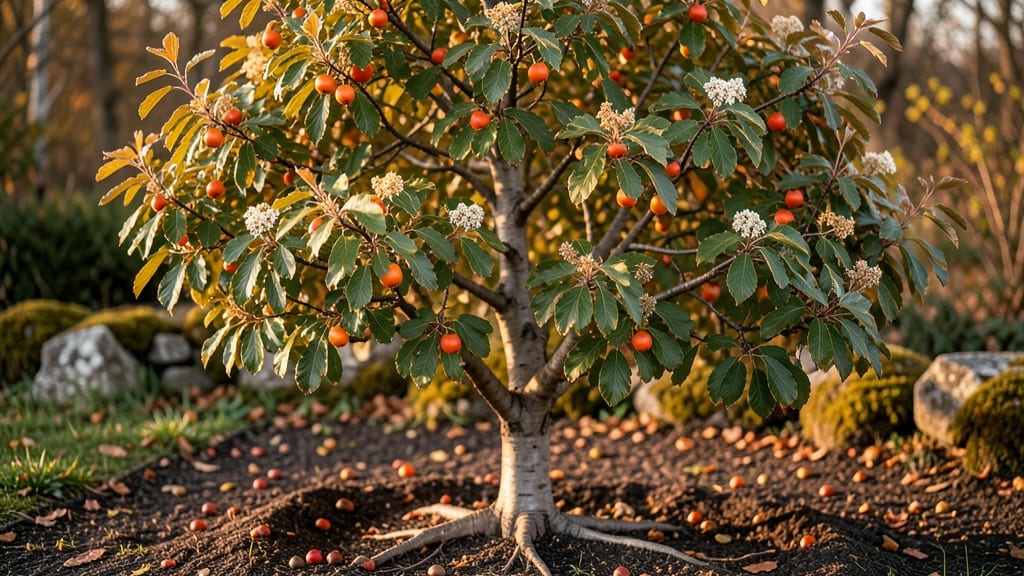
A rowan tree looks like a small, graceful deciduous tree with a rounded crown, featuring smooth gray bark that develops scaly ridges with age. Its leaves are oval, serrated-edged, and bright green, turning fiery red or orange in autumn, while clusters of bright red berries appear in late summer, resembling small apples or ornaments.
A rowan tree stands out with its elegant, almost fairy-tale appearance. 🌳 The bark starts smooth and silvery-gray but gradually forms striking, peeling ridges as the tree matures, giving it a textured look.
Its leaves are the star of the show—bright green and slightly jagged, they transform into vibrant reds and oranges in fall, creating a stunning contrast against the gray bark.
These trees typically grow between 15 to 30 feet tall, with a sprawling, rounded shape that makes them perfect for gardens or woodland edges.
What really catches the eye are the clusters of bright red berries that appear in late summer. 🍎 These berries, often called "mountain ash" berries (though not true ash), hang in dense bunches and resemble tiny apples, adding a pop of color that lasts well into winter.
The berries aren’t just decorative—they’re a favorite of birds and have historical uses in traditional remedies and even as a natural dye.
💡 In This Article
- Identifying Rowan Tree Features: Bark, Leaves, and Growth Habit
- How to Spot Rowan Berries and Their Unique Uses
Identifying rowan tree features: bark, leaves, and growth habit
The rowan tree's bark is one of its most distinctive features, starting as a smooth, silvery-gray surface when young. As the tree matures, typically between 10-20 years, the bark develops horizontal, scaly ridges that resemble alligator skin.
These ridges create a textured pattern that becomes more pronounced with age, giving the trunk a rugged yet elegant appearance. 🌿 The bark's natural silver-gray hue provides excellent camouflage against winter snow, helping the tree blend into its woodland surroundings.
Rowan leaves are another standout characteristic, measuring about 1-3 inches long with a distinctive oval shape and finely serrated edges. When young, they emerge with a soft, velvety texture and bright green color that immediately catches the eye.
By late summer, the leaves develop a waxy coating that helps them resist drought and pests. The real showstopper comes in autumn when these leaves transform into fiery shades of red, orange, and purple—colors that can last well into winter before falling.
What sets rowan trees apart from similar species like mountain ash is their growth habit. Rowans typically grow to 15-30 feet tall with a rounded, spreading crown that creates a natural canopy. Their branches often grow at wide angles, creating an open, airy structure that allows sunlight to filter through.
Unlike apple trees, rowans have a more delicate, almost whimsical appearance, with their thin, flexible branches that can bend without breaking—a trait that has earned them the nickname "witch's tree" in folklore.
The tree's seasonal changes are particularly dramatic. In spring, new growth emerges with a fresh, almost citrusy aroma, while summer brings clusters of small white flowers that attract pollinators. These flowers eventually develop into the tree's signature berries, but it's the autumn foliage that truly makes rowans unforgettable.
The combination of fiery leaves and persistent red berries creates a visual spectacle that lasts for months, making rowans a favorite in garden landscapes.
One fascinating botanical detail is how rowan leaves contain small glands along their veins that produce a bitter compound called parasorbic acid.
This natural chemical acts as a deterrent to many herbivores, including deer and rabbits, which is why rowan trees often survive in areas where other plants are browsed heavily. The acid also contributes to the tree's medicinal properties, which have been used for centuries in traditional remedies.
For those trying to identify rowans in the wild, pay attention to these key features: the distinctive bark ridges, the serrated leaves with their autumn color change, and the persistent red berries.
These characteristics create a unique profile that's hard to confuse with other trees, especially when you consider the rowan's overall graceful, almost fairy-tale appearance in the landscape. 🌟