
Watering
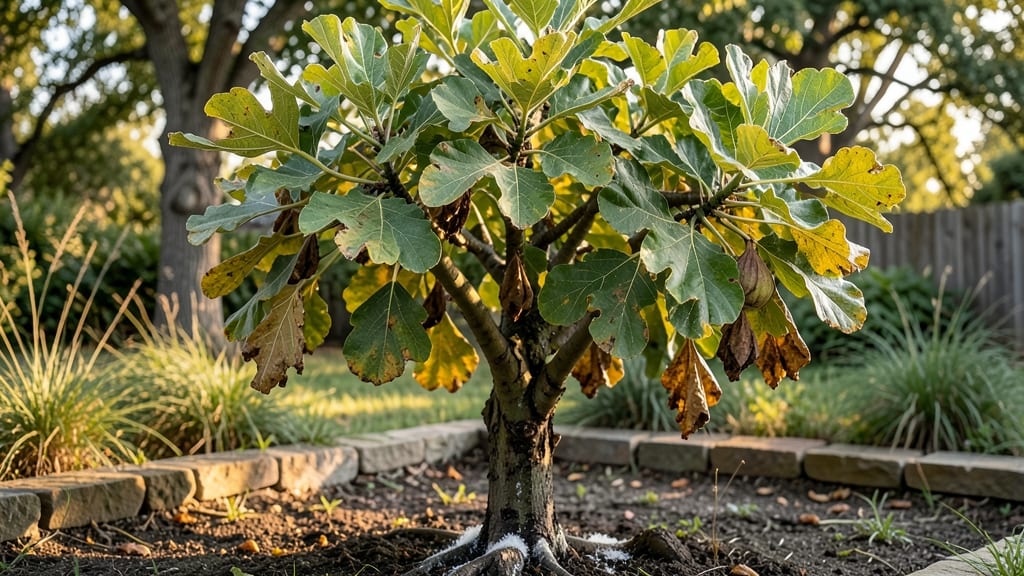
An overwatered fig tree shows up in ways that look an awful lot like neglect—yellowing leaves, drooping branches, and a sad, soggy mess beneath the surface. 🌿 I’ve seen it happen more times than I’d like to admit, usually after a well-meaning gardener assumes "more water is better."
The truth is, figs hate wet feet, and once the roots start drowning, the damage spreads fast.
Look for leaves that turn yellow first along the edges, then spread inward like a slow-motion wave. The soil might smell musty or sour, and if you dig down an inch or two, you’ll find roots that look mushy and brown—not the crisp white or tan of healthy roots.
The canopy sags like a deflated balloon, and new growth either stunts or falls off entirely. Between you and me, this is the plant equivalent of a cry for help.
Fixing it starts with cutting back on water—let the top inch of soil dry out completely before adding more. Improve drainage by mixing in perlite or sand, and if the roots are already rotting, you may need to trim the worst of them.
Within a few weeks, you’ll see the leaves perk up and new growth emerge, proving that sometimes less really is more.
Prevention is easier than cleanup: check soil moisture with your finger before watering, and always choose containers with drainage holes. Fig trees are tough once they’re established, but they’re also stubborn about their needs.
Give them room to breathe, and they’ll reward you with glossy green leaves and sweet, sun-ripened fruit all season long.
Root Causes Of Overwatering
Overwatering a fig tree isn’t just a gardening mistake—it’s a silent killer that disrupts the plant’s delicate balance of water, oxygen, and nutrients. Understanding why this happens helps you prevent it before your tree’s health spirals. Here’s a breakdown of the key culprits, backed by science and actionable insights.
Fig trees thrive in well-draining soil, but many gardeners (even seasoned ones) overestimate how much water these drought-tolerant plants need. The problem? Consistent moisture—especially in heavy clay or compacted soil—prevents roots from accessing oxygen, leading to anaerobic conditions (a fancy term for "no air").
- Automatic systems (like drip irrigation or timers) often run on fixed cycles, ignoring real-time soil moisture. A set-it-and-forget-it approach can drown roots faster than you’d think.
- Seasonal ignorance: Winter watering is a common trap. Fig trees enter dormancy in cooler months, slowing water uptake by up to 70%. Yet, many gardeners keep watering as if it’s summer.
- Mulch misapplication: While mulch retains moisture, piling it too thickly (over 3 inches) can suffocate the soil beneath, trapping excess water against the roots.
💡 Pro Tip: Stick your finger 2–3 inches into the soil before watering. If it’s damp, wait. If it’s bone-dry, water deeply—but only until excess drains away.
Fig trees hate soggy feet. If your container or garden bed lacks proper drainage, water pools around the roots, crowding out oxygen and inviting root rot pathogens like Phytophthora or Pythium. Even "well-draining" potting mixes can compact over time, turning into a waterlogged brick.
| Red Flags | Why It Happens |
|---|---|
| Water pooling on the soil surface after irrigation | No drainage holes in pots or a sloped garden bed that traps water. |
| Slow water absorption (hours to drain) | Compacted soil or a mix heavy on clay/organic matter (e.g., too much peat moss). |
| Mushy, black roots when inspected | Chronic saturation + fungal/bacterial growth in anaerobic soil. |
🔥 Fix It: For containers, drill additional drainage holes if needed and elevate pots on feet (like cinder blocks) to prevent saucer buildup. In gardens, amend soil with perlite, coarse sand, or grit to improve aeration.
Not all water stress comes from the hose. Humidity, rainfall, and even microclimates in your yard can turn a "normal" watering routine into a disaster.
Fig trees in shady, humid areas (like under eaves or near ponds) transpire 30–50% less than those in full sun, meaning their roots stay wet longer.
- High humidity: Slows evaporation, so soil stays damp for days. In tropical climates, this can mean weekly watering turns into daily drowning.
- Rainfall + irrigation combo: Many gardeners forget to adjust watering after a downpour. A 1-inch rainstorm can deliver enough water for a fig tree’s needs for 5–7 days.
- Windbreaks: While they protect trees, they can also trap moisture near the base, creating a "greenhouse effect" for roots.
✨ Smart Hack: Use a moisture meter or the squeeze test (grab a handful of soil—if it holds shape, it’s too wet). In humid climates, water in the morning to allow foliage to dry before nightfall.
Love kills, too. Fig trees are succulents—they store water in their trunks and roots, so they don’t need frequent watering. Yet, many gardeners water at the first sign of wilting, not realizing the tree might be thirsty for air, not H₂O.
- Mistaking thirst for stress: Yellowing leaves or drooping can mean overwatering or underwatering. The key difference? Overwatered leaves feel spongy; underwatered ones are crispy.
- Pot size mismatch: A 5-gallon fig tree in a 1-gallon pot will dry out faster, but once repotted into a larger container, roots spread too quickly for the new soil to dry out—leading to root bound + rot.
- Fertilizer + water = double trouble: Over-fertilizing (especially with high nitrogen) encourages lush, water-guzzling growth. Pair that with regular watering, and you’ve created a perfect storm for root suffocation.
🎯 Rule of Thumb: When in doubt, underwater slightly. Fig trees prefer drought to soggy roots. If you’re unsure, skip a watering and check the soil first.
Revive Your Fig Tree Now
Overwatering can turn your fig tree into a soggy mess, but the good news is that with the right steps, you can nurse it back to health—even if it’s already showing signs of distress.
Below, we’ll break down cause-specific fixes to get your tree thriving again, plus prevention tips to keep it happy long-term.
If your fig tree’s leaves are turning yellow (especially older ones), it’s crying out for less moisture. Here’s how to help:
🔥 Step 1: Pause Watering Immediately
- Stop watering for at least 3–5 days to let the soil dry out. This breaks the cycle of excess moisture.
- Pro Tip: 💡 Use your finger to check soil moisture—if the top 1–2 inches are damp, wait longer.
🍳 Step 2: Improve Drainage Fast
Fig trees hate soggy roots, so act quickly:
- Repot (if needed): If the pot has no drainage holes, transfer the tree to a container with holes or add a layer of perlite to the bottom.
- Raise the pot: Place it on feet or a saucer to prevent water pooling.
- Amend the soil: Mix in coarse sand, perlite, or pumice (20–30%) to improve aeration.
👨🍳 Step 3: Adjust Your Watering Routine
- Water deeply but infrequently: Wait until the top 2–3 inches of soil are bone-dry before watering again.
- Morning watering wins: Water in the early morning so excess moisture evaporates by night.
- Avoid wetting leaves: Use a soaker hose or drip irrigation to target roots, not foliage.
If your fig tree’s roots look dark, mushy, or smell foul, root rot has set in. Act fast before the tree collapses.
🔪 Step 1: Trim the Damage
- Remove infected roots: Gently wash the roots and snip off any black, mushy sections with sterilized pruners.
- Disinfect tools: Wipe pruners with rubbing alcohol between cuts to prevent spreading rot.
🌡️ Step 2: Dry Out the Roots
- Air-dry for 24–48 hours: Lay the tree on a clean towel in a shady, well-ventilated spot (no direct sun).
- Replant in fresh soil: Use a well-draining mix (cactus/succulent soil + perlite) and a clean pot with drainage.
✨ Step 3: Boost Recovery with Fungicide (If Severe)
- Hydrogen peroxide spray (3%): Lightly mist the roots and soil to kill fungus (repeat weekly for 2 weeks).
- Fungicide treatment: Use a copper-based fungicide (like Copper Soap) if rot persists.
A drooping fig tree is often root-bound or suffocating from too much water. Here’s how to perk it up:
🌿 Step 1: Check for Root Bound
- Gently remove the tree from its pot and inspect the roots.
- If roots circle tightly, trim the outermost roots and loosen the root ball before replanting.
💧 Step 2: Water Only When Necessary
- Stick to the “finger test”: Insert your finger 3 inches deep—if dry, water; if moist, wait.
- Use a moisture meter for accuracy (especially in clay pots, which retain water longer).
🎯 Step 3: Fertilize Lightly (But Right)
- Wait 4–6 weeks before fertilizing after recovery.
- Use a balanced, slow-release fertilizer (like 10-10-10) diluted to half strength to avoid burning roots.
Once your tree is back on track, prevent future overwatering with these habits:
| Problem | Solution |
|---|---|
| Poor drainage | Use terracotta pots (breathable) or add gravel at the bottom. |
| Inconsistent watering | Group plants by water needs and stick to a schedule (e.g., every 7–10 days in summer). |
| Compacted soil | Aerate annually by gently forking the soil or adding compost. |
| Overpotting | Repot every 2–3 years in a pot only 2–3 inches larger in diameter. |
| Ignoring weather | Reduce watering in rain—fig trees need less water when humid. |
Final Thought: 🌟 Overwatering is reversible, but speed matters. The sooner you act, the better your fig tree’s chances of bouncing back. With adjusted watering, better soil, and a little TLC, your tree will be strong, green, and fruit-bearing in no time!
Frequently asked questions
Why do fig tree leaves turn yellow when overwatered, but look similar to nutrient deficiency?
Yellowing from overwatering starts at the leaf edges and spreads inward, often paired with spongy, mushy leaves that feel soft when touched. Nutrient deficiency causes yellowing between veins first, and leaves stay crisp. Check the soil—if it smells sour or stays wet for days, it’s overwatering.
Can I save a fig tree with root rot from overwatering?
Yes, but act fast! Trim all black, mushy roots, repot in sterile, well-draining soil, and avoid watering for 3–5 days to dry the roots. Use a 3% hydrogen peroxide spray (1 part peroxide to 4 parts water) on roots weekly for 2 weeks to fight fungus.
How often should I water a fig tree in summer vs. winter?
In summer, water when the top 2–3 inches of soil are dry (about every 7–10 days). In winter, reduce to every 3–4 weeks—fig trees need far less water during dormancy. Always check soil moisture first with your finger!
What’s the best pot material for preventing overwatering in fig trees?
Terracotta pots are ideal—they wick moisture away from roots and dry out faster than plastic. Add 3–4 drainage holes and elevate the pot on feet or a saucer to prevent water pooling. For containers, use a mix of cactus soil + perlite (60/40 ratio).
Will overwatering kill my fig tree quickly, or does it take weeks?
It depends on severity. Mild overwatering causes yellowing in 1–2 weeks, while chronic soggy soil leads to root rot in 3–4 weeks. If roots are already rotting, the tree can decline rapidly—sometimes within days. Prevention (proper drainage + soil checks) is key!