
Size
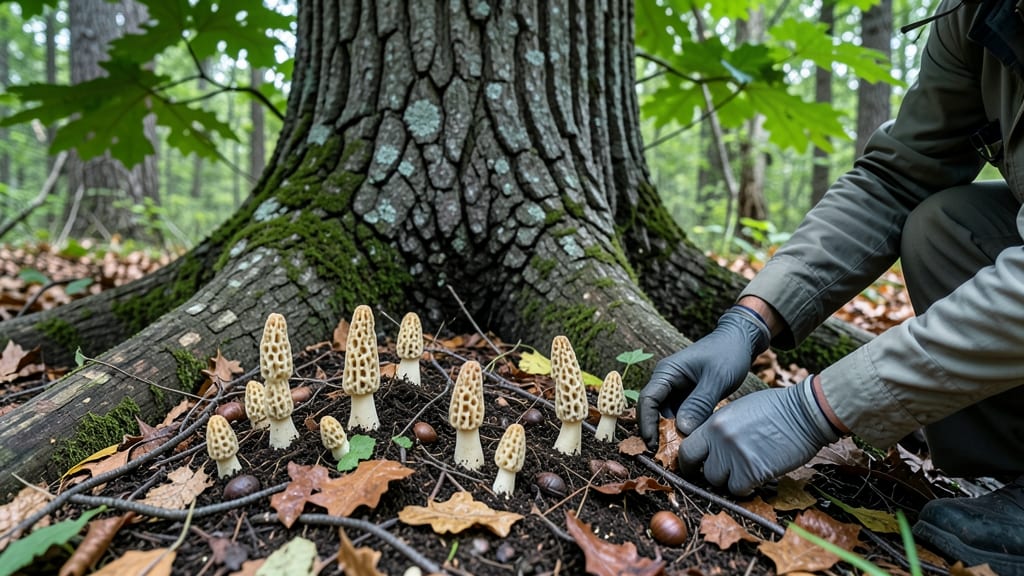
Morel mushrooms grow by specific trees, most commonly near apple, ash, elm, and sycamore, though they also thrive alongside oak, hickory, and tulip poplar. Foragers often find them in wooded areas with decaying roots or burned patches near these host trees.
Morels thrive near these trees because they form a symbiotic relationship with their roots, feeding on decaying wood and organic matter. 🌳 The fungi break down nutrients in the soil, while the trees benefit from enhanced nutrient absorption.
Ash and elm trees, in particular, are hotspots because their roots create ideal microclimates for morel growth, especially after wildfires or logging activities. Foraging success often depends on recognizing these host trees and understanding their seasonal cycles.
Beyond the top 12 species, morels also appear near less common trees like black walnut or beech, though yields are typically smaller. The key is patience—morels emerge in spring when soil temperatures reach 50–60°F, often within 2–3 weeks after the host tree's leaves begin to unfurl.
This timing window is critical for a successful harvest.
💡 In This Article
- How Tree Species Influence Morel Growth Patterns
- Top 12 Trees That Attract Morel Mushrooms
How tree species influence morel growth patterns
Morels don't just grow near trees—they form an intricate ecological partnership with their host species. These fungi rely on the tree's root system to access nutrients from decaying wood and organic matter, while the tree benefits from the morel's ability to break down complex compounds.
Ash and elm trees, for example, produce roots that create ideal microclimates with higher moisture retention and richer soil chemistry, making them prime morel hosts. The fungi thrive in these conditions because the roots release compounds that stimulate fungal growth, particularly after disturbances like wildfires or logging.
The chemistry of decay plays a crucial role too. Morels prefer trees with soft, rotting wood—think of ash or sycamore roots that have begun to decompose.
These trees often have higher lignin content in their decaying matter, which morels can metabolize more efficiently than hardwoods like maple. 🌱 What's fascinating is how morels can "sense" these conditions: their mycelium networks spread underground, detecting the right balance of moisture, temperature (50–60°F soil), and decaying organic material before emerging above ground.
This relationship explains why morels often appear in burned patches or areas with deadfall. Fire creates ideal conditions by killing competing vegetation while leaving nutrient-rich charcoal and ash behind—a perfect environment for morels to colonize.
The fungi also benefit from the increased porosity of burned soil, which improves water and nutrient uptake. Foragers who understand this ecology can predict where morels will emerge by looking for these disturbed areas near their preferred host trees.
Not all trees are equal partners, though. Some species, like apple or tulip poplar, provide excellent conditions but may have shorter windows for morel growth due to their faster decomposition rates. Others, like oak, create more stable environments but require decades of decay before becoming productive morel hosts.
This variability is why experienced foragers develop mental maps of their local forests, tracking which trees have produced morels in past seasons.
One often-overlooked factor is the mycorrhizal network these trees share with other plants. Morels can connect to this underground web, allowing them to access nutrients from multiple sources. This is why you might find morels growing near multiple tree species—even if they're not directly connected to a single host.
The network acts like a fungal internet, distributing resources and signals that trigger morel growth when conditions are right.
Seasonal timing also ties directly to tree biology. Morels typically emerge when their host trees are in early spring growth phases, often within 2–3 weeks of bud break. This synchronization ensures the fungi have access to fresh nutrients as the tree's roots become more active.
For example, ash trees often produce morels when their leaves are just beginning to unfurl, creating a 10–14 day window where conditions are nearly perfect for foraging.