
Pruning
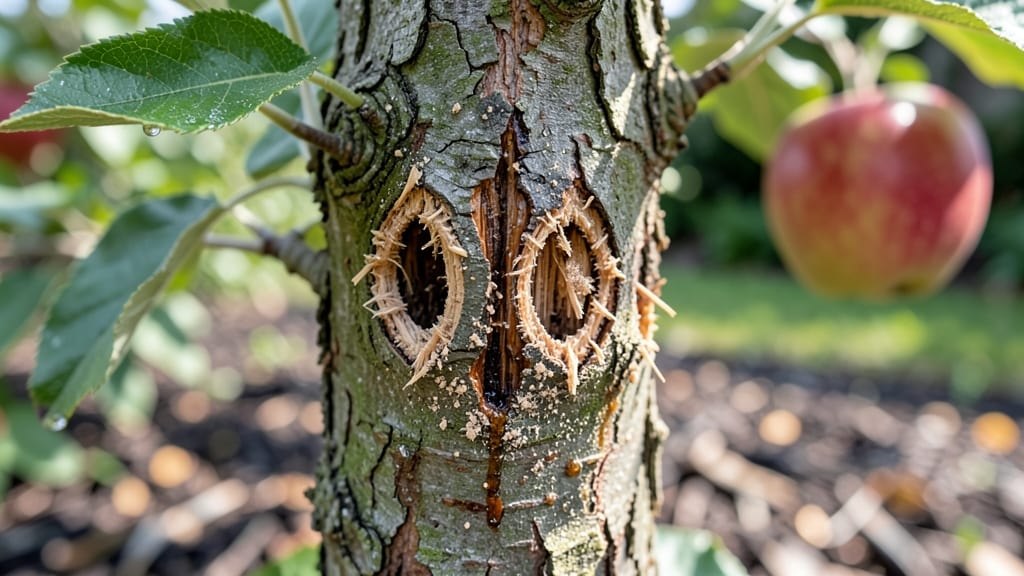
Your apple tree’s sudden decline might not be from disease—it’s likely apple tree borer damage, and time is critical. 🌳 These wood-boring beetles chew through bark and sapwood, turning once-healthy branches into hollowed-out skeletons.
The first sign? Tiny, D-shaped exit holes near cracks or wounds, followed by oozing sap and wilting leaves. I’ve seen trees go from thriving to dying in just weeks if left untreated.
The good news? You can still save your tree with the right steps. Prevention starts with keeping your tree healthy—watering deeply during droughts, removing damaged branches, and applying tree wrap to protect the trunk.
For active infestations, manual removal of larvae (with a screwdriver or knife) or targeted sprays like neem oil can disrupt their life cycle before they cause irreversible harm.
Once you spot the damage, act fast: prune affected branches 12 inches below the infestation to stop the spread, then seal the wounds with pruning paint. Systemic insecticides, applied in early spring or late fall, can reach larvae deep in the wood.
With prompt action, your tree can recover—though severe cases may require professional help to restore its structure.
This isn’t just about saving the tree; it’s about future harvests. A borer-free apple tree means fewer stressed limbs, better fruit production, and years of healthy growth. Start with the steps here, and your tree might just bounce back stronger than ever.
Root Causes Of Tree Stress
Apple tree borer infestations rarely strike healthy, thriving trees. Instead, these pests target weakened specimens, exploiting vulnerabilities that make them easy prey. Understanding the underlying factors that stress your tree is the first step to prevention—and saving your orchard.
Let’s break down the key reasons why borers choose your apple trees as their next meal.
Extreme weather—whether scorching heat, freezing winters, or prolonged drought—can leave your apple tree’s defenses compromised. When trees struggle to regulate moisture or maintain energy reserves, their bark becomes softer and more susceptible to borer attacks.
- Drought conditions: Borers thrive when trees are water-stressed. Dry soil forces roots to work harder, weakening the tree’s structural integrity and making it an easier target for larvae burrowing into the cambium layer.
- Temperature swings: Sudden freezes or heatwaves can kill bark tissue, creating entry points for borers. Young trees, in particular, lack the resilience of mature specimens.
- Poor soil drainage: Waterlogged roots suffocate the tree, starving it of oxygen and nutrients. Weakened roots mean the tree can’t transport defensive compounds effectively, leaving it vulnerable.
💡 Pro Tip: Mulch heavily around the base of your tree (but avoid piling it against the trunk) to retain moisture and regulate soil temperature. Aim for 2–4 inches of organic mulch, like wood chips or straw, to protect roots year-round.
A tree that’s already battling disease, pests, or improper care becomes a buffet for borers. If your apple tree is struggling, it’s essentially sending out a neon "EAT ME" sign. Here’s how neglect sets the stage:
- Lack of pruning: Overgrown branches create dense canopies that trap moisture, promoting fungal infections (like Nectria canker) and weakening the tree’s structure. Borers exploit these weak spots to lay eggs.
- Improper fertilization: Too much nitrogen can lead to rapid, weak growth, while deficiencies in essential nutrients (like potassium or phosphorus) stunt the tree’s ability to fight off invaders.
- Unresolved pest infestations: If your tree is already hosting aphids, mites, or scale insects, it’s likely stressed. These pests sap sap and create wounds that borers can exploit.
- Physical damage: Broken branches, deep cuts from pruning, or even lawnmower wounds create perfect entry points for borer larvae to infiltrate the tree.
🔥 Actionable Fix: Conduct a spring and summer pruning session to remove dead, diseased, or crossing branches. Sterilize pruning tools with rubbing alcohol to prevent spreading pathogens. For fertilization, opt for a balanced, slow-release formula (e.g., 10-10-10 NPK) and test soil pH annually.
Borers don’t work alone—they often follow in the wake of other tree stressors. If your apple tree is already hosting secondary pests or diseases, it’s a prime candidate for an infestation. Here’s how it plays out:
| Pest/Disease | How It Weakens the Tree | Borers’ Role |
|---|---|---|
| Coddling moth | Larvae burrow into fruit, causing rot and attracting fungal infections. | Weakened branches become easy targets for borer larvae. |
| Fire blight (Erwinia amylovora) | Bacteria kills bark tissue, creating oozing cankers that borers exploit. | Larvae tunnel into dead or dying wood, accelerating tree decline. |
| Apple scab | Fungal spores clog stomata, reducing photosynthesis and stunting growth. | Stressed foliage means weaker structural defenses. |
| Root rot (e.g., Phytophthora) | Fungal infection destroys root systems, starving the tree of water/nutrients. | Above-ground borers move in to finish off a tree already on life support. |
🎯 Prevention Strategy: Monitor your trees for early signs of these pests/diseases (e.g., blackened fruit, oozing cankers, or yellowing leaves). Treat fungal issues with copper fungicides and bacterial infections with streptomycin (follow label instructions). For coddling moths, use pheromone traps or kaolin clay sprays.
Not all apple trees are equally at risk. Younger trees and certain varieties are more susceptible to borer damage due to their biological makeup:
- Young trees (1–5 years old): Their bark is thinner and less resistant to larval tunneling. Borers can cause fatal damage before the tree has a chance to develop thicker defenses.
- Stress-prone varieties: Some apple cultivars (like McIntosh or Gala) are more susceptible to disease and pests, making them borer magnets. Rootstock also plays a role—dwarfing rootstock (e.g., M.9) can stress trees if not managed properly.
- Graft union stress: If your tree was grafted, poor healing at the junction or incompatible rootstock can create weak points where borers enter.
🌡️ Climate Consideration: Trees in hot, dry climates (e.g., the Southwest U.S.) or humid regions (e.g., the Southeast) face higher borer pressure. Choose drought-tolerant varieties (like Liberty or Enterprise) and ensure proper irrigation.
Quick Fixes for Apple Tree Borer Woes
If your apple tree is showing signs of stress from apple tree borer damage, don’t panic—there are practical, step-by-step solutions to help you save your tree and restore its health. The key is acting fast and targeting the root (literally!) of the problem.
Below, we’ve mapped out cause-specific fixes, from immediate damage control to long-term prevention, so you can tackle this pest with confidence.
---
The sooner you spot signs of apple tree borer activity—like sawdust-like frass, oozing sap, or wilting branches—the easier it is to treat. Pro tip: Inspect your tree in late winter or early spring (before borers become active) and again in summer when damage is most visible.
What to do: - Shake the tree gently over a white sheet or tarp. If borers are present, adult moths or larvae will fall out, confirming infestation. - Look for D-shaped exit holes (a dead giveaway of borer activity). - Check for weeping sap—this is the tree’s way of signaling distress.
💡 Prevention tip: If you’ve had borer issues before, prune in late winter to remove weak or damaged branches before borers emerge.
---
If you’ve confirmed an infestation, act fast to starve out larvae and prevent further damage. The goal? Disrupt their lifecycle before they mature.
#### Step-by-Step Borer Eradication: 1. Prune Infested Branches 🔪 - Use sterilized pruners to cut 12–18 inches beyond the visible damage (borers may have tunneled deeper). - Burn or bag the cuttings (do not compost them—borers can survive).
2. Apply Horticultural Oil or Soap Spray 🛡️ - Mix 1–2% horticultural oil (like Neem oil or dormant oil) with water and spray thoroughly on the trunk and branches in early spring (before buds swell). - Repeat every 2–4 weeks during the growing season for heavy infestations. - Alternative: Insecticidal soap (less toxic but requires frequent reapplication).
3. Seal Entry Holes 🛠️ - Once you’ve removed the borers, fill holes with pruning sealant or tree wound dressing to prevent secondary infections (like fungal growth).
🌡️ Pro tip: Apply treatments on a cool, cloudy day—heat can burn the tree’s bark if oil is used improperly.
---
Prevention is your best weapon against apple tree borers. Healthy trees are resilient, and a few simple habits can make your tree less appealing to pests.
#### Preventative Measures: | Action | How to Do It | Best Time | |--------------------------|---------------------------------------------------------------------------------|-----------------------------| | Deep Watering | Water slowly at the base (1–2 inches per week) to encourage deep roots. | Spring & Fall | | Mulch Properly | Apply 2–4 inches of organic mulch (wood chips, straw) away from the trunk. | Early Spring | | Encourage Beneficial Insects | Plant dill, fennel, or yarrow nearby to attract parasitic wasps (natural borer predators). | Year-Round | | Avoid Over-Fertilizing | Use balanced, slow-release fertilizer—too much nitrogen attracts borers. | Early Spring | | Monitor for Stress | Prune thin branches, remove dead wood, and thin fruit to reduce strain. | Late Winter & Summer |
✨ Bonus tip: Reflective mulch (like aluminum foil wrapped around the trunk) can disorient emerging moths and reduce egg-laying.
---
If your tree is severely damaged (e.g., large sections of bark missing, oozing sap year-round, or sudden dieback), it may need professional intervention.
An arborist can: - Assess the extent of borer tunnels (sometimes requiring boroscope inspection). - Recommend systemic insecticides (like imidacloprid) for deep infestations. - Advise on tree removal if the tree is beyond saving (to prevent spread to other trees).
🎯 Cost-saving tip: If your tree is young or valuable, early treatment is cheaper than replacement!
--- Remember: Apple tree borers are annual pests, meaning they re-infest every year if not controlled. Stay vigilant, and your tree will bounce back stronger than ever! 🍏💪
Frequently asked questions
How can I tell if my apple tree has borer damage?
Look for D-shaped exit holes in the bark (about 1/8-inch wide) and tiny piles of sawdust-like frass near the trunk or branches. You may also see oozing sap, wilting leaves, or branches that crack unexpectedly. Shake the tree over a white sheet—if borers are present, adults or larvae will fall out.
Can I save an apple tree with severe borer damage?
It depends on the extent! For young trees, aggressive pruning (12 inches below damage) and systemic insecticides can work. Mature trees with 50%+ bark loss may need professional help or removal to prevent spread. Always act fast—borers weaken trees quickly, but healthy trees recover better with proper care.
What’s the best time of year to treat borer damage?
Target early spring (before buds swell) or late fall when borers are dormant. Apply dormant oil sprays then, and repeat every 2–4 weeks during active seasons. Avoid treating during extreme heat—it can harm the tree. Summer inspections help catch new infestations early.
Are there organic ways to control apple tree borers?
Yes! Try neem oil or kaolin clay sprays (disrupts egg-laying), or introduce parasitic wasps (like Spilochalcis bruchophaga) by planting dill or yarrow nearby. For manual removal, use a screwdriver to pull larvae from tunnels—just wear gloves! Seal holes with pruning paint afterward.
Will borer damage affect my apple harvest next year?
It might! Severe damage can reduce fruit production by 30–50% as the tree diverts energy to healing. However, if you treat the infestation now, your tree can recover and rebound for next season. Focus on pruning, deep watering, and soil health to help it recover faster.