
Container Gardens
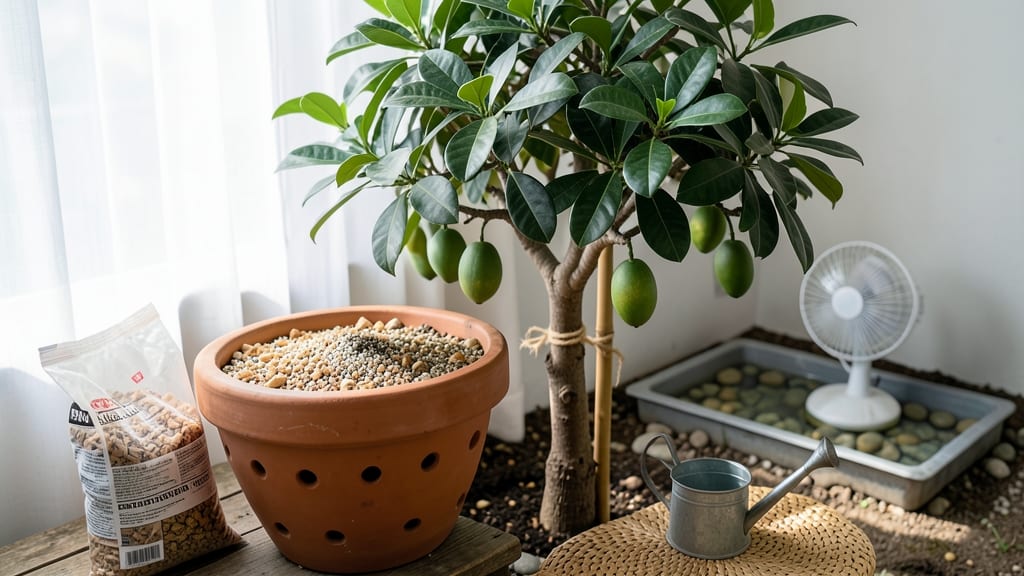
You can grow a mango tree in a pot using dwarf varieties, but it requires a minimum 15-gallon container, well-draining soil, and 6+ hours of full sun daily. Regular pruning is essential to control size and promote airflow for fruit production.
Dwarf mango varieties like 'Cogshall' or 'Ice Cream' thrive in containers because they naturally stay under 10 feet tall, making them perfect for patios or balconies. 🌱 The key to success lies in mimicking their tropical native conditions—using a mix of potting soil and perlite ensures proper drainage, while consistent watering (keeping soil slightly moist but never soggy) prevents root rot.
I've found that moving potted mango trees indoors during winter (if temperatures drop below 50°F) extends their lifespan significantly.
For best results, feed your container mango with a balanced citrus fertilizer every 4-6 weeks during growing season, and repot every 2-3 years to refresh the soil. Patience is crucial—most dwarf varieties take 3-5 years to bear fruit, but the reward of homegrown tropical mangoes makes the wait worthwhile.
💡 In This Article
- Best Dwarf Mango Tree Varieties for Containers
- Container Gardening Tips for Mango Trees
Best dwarf mango tree varieties for containers
Not all mango varieties adapt well to container life, but dwarf cultivars like 'Cogshall' and 'Ice Cream' are specifically bred to thrive in pots. These varieties typically stay under 8-10 feet tall at maturity, making them perfect for patios or balconies.
The 'Cogshall' variety, for example, produces small, sweet fruits with a creamy texture, while 'Ice Cream' offers a milder flavor profile that's less acidic than its full-size counterparts. 🌱 What makes these varieties ideal is their naturally compact root systems, which prevent the stress of overcrowding that plagues larger mango trees in containers.
The key to their success lies in their genetic adaptation to confined spaces. Unlike standard mango trees that can grow 60+ feet tall in tropical climates, dwarf varieties have been selectively bred to maintain a smaller stature without sacrificing fruit production.
Their leaves are also proportionally smaller, reducing the tree's overall water and nutrient demands—critical factors when growing in finite container volumes. For instance, a 15-gallon pot can comfortably support a 3-year-old 'Cogshall' tree, whereas a standard variety would require a massive 100+ gallon container to prevent root binding.
Another excellent option is the 'Julie' variety, which produces fruits weighing 1-2 pounds—perfect for container growing. These mangoes ripen slightly earlier than standard varieties, giving you a head start on the harvest season. The trade-off?
They may produce fewer fruits than their larger counterparts, but the convenience of growing them in pots often outweighs this limitation. When selecting a variety, also consider your climate: some dwarf types tolerate cooler temperatures better than others, making them suitable for regions with mild winters.
For visual appeal, the 'Haden' dwarf variety stands out with its vibrant orange-red skin and sweet, fibrous flesh. This variety typically matures in 4-5 years in containers, providing a quicker return on your gardening investment.
The key to choosing the right variety is balancing fruit quality with your specific growing conditions—whether that means prioritizing cold tolerance, early fruiting, or compact growth habits. 🌿 Each of these dwarf varieties offers a unique combination of traits that make container growing not just possible, but rewarding.
When purchasing a dwarf mango tree, look for young plants labeled as "container-appropriate" or "patio-sized." These are often available from specialty nurseries that focus on tropical fruit trees. Avoid standard mango seedlings, as they'll quickly outgrow even the largest pots.
The initial investment in a properly bred dwarf variety pays off in the long run with healthier trees, better fruit production, and fewer maintenance challenges. For best results, start with a 5-6 gallon pot for young trees and gradually upgrade to 15+ gallons as they mature.
One final consideration is the tree's growth habit. Some dwarf varieties grow in a more upright form, while others develop a bushier shape. The 'Ice Cream' mango, for example, has a naturally bushy growth pattern that works well in containers, while 'Cogshall' tends to grow more vertically.
This difference affects how you'll need to prune and train the tree as it grows. Choosing a variety that matches your available space and pruning preferences will make container growing much more manageable. 🌳