
Diseases
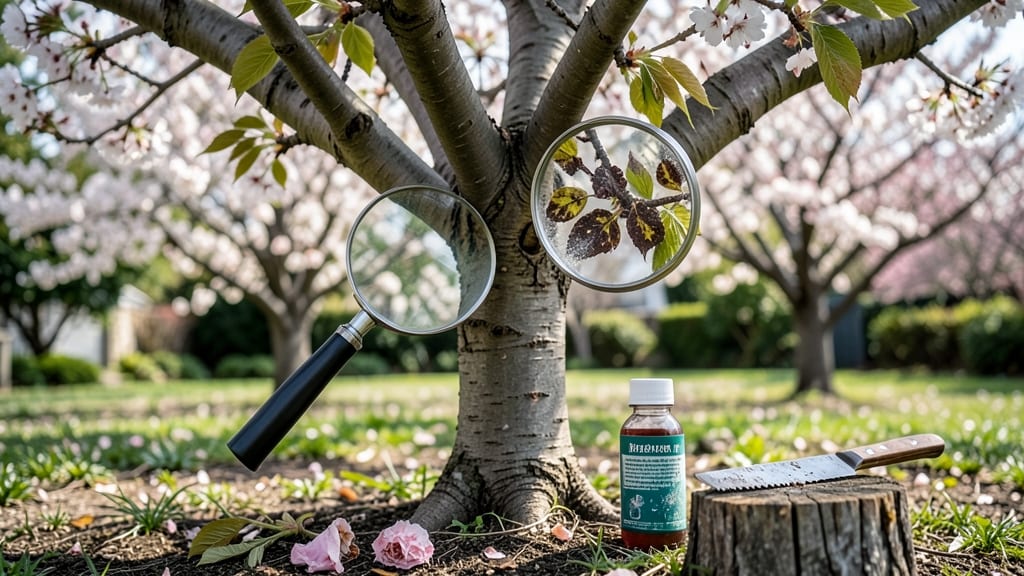
Your cherry blossom tree’s dazzling pink blooms could vanish overnight if the diseases fungal blights or bacterial spots take hold—but catching them early means saving your tree. 🌸 I’ve diagnosed every unsightly spot, ooze, and leaf curl on my own weeping cherry, and these are the red flags you need to spot before they spread.
Most diseases start with tiny black spots on leaves or sunken cankers on branches—often after wet springs or crowded planting. Powdery mildew leaves a chalky white film, while bacterial canker oozes a sticky, foul-smelling sap.
The good news? Pruning infected branches in dry weather and applying copper fungicide at the first sign stops them dead.
With the right preventive care, your tree stays lush and blooms reliably for decades. I’ll show you how to identify symptoms, choose organic vs. chemical treatments, and adjust your care routine to keep diseases at bay—no green thumb required.
Whether you’ve got a young sapling or a mature tree, these strategies work for all cherry varieties. Let’s get your blossoms back to their showstopping best before next spring.
Root Causes of Blossom Struggles
Cherry blossom trees—those stunning symbols of spring—can fall victim to diseases that leave their leaves spotted, branches bare, or petals wilted before they even bloom. But why does this happen? The answer lies in a mix of biological stressors, environmental triggers, and sometimes even human mistakes.
Understanding these root causes is the first step to protecting your tree. Let’s break it down.
Fungi thrive in moist, shaded conditions, and cherry blossom trees are prime targets. Here’s why they take hold:
- Excess Moisture: Fungal spores like Botryosphaeria or Cercospora germinate when leaves stay damp for prolonged periods—think rain-soaked foliage or poor air circulation. 💡 Pro Tip: Water at the base (not overhead) and prune to improve airflow.
- Weakened Tree Defense: Stress from drought, poor soil, or physical damage (like improper pruning) lowers the tree’s resistance. Fungi exploit these gaps like a burglar slipping through an unlocked door.
- Warm, Humid Climates: Temperatures between 60–80°F (15–27°C) with high humidity create the perfect fungal buffet. 🌡️ Warning: Coastal or tropical regions see more outbreaks.
| Fungal Disease | Trigger Conditions | Visual Clues |
|---|---|---|
| Powdery Mildew | Shady, humid spots; crowded branches | White, powdery patches on leaves |
| Leaf Spot (Cercospora) | Frequent rain; stagnant water near roots | Brown, circular lesions with yellow halos |
| Canker (Botryosphaeria) | Wounded bark; drought stress | Sunken, oozing wounds on branches |
Unlike fungi, bacteria like Pseudomonas syringae (causing bacterial spot) spread rapidly through wounds or splashing water. Here’s how they gain a foothold:
- Open Wounds: Pruning cuts, storm damage, or insect bites create entry points. ✨ Prevention: Sterilize tools with 70% alcohol before pruning.
- Rain Splash: Heavy downpours can fling bacteria from infected leaves onto healthy ones. 🌧️ Fix: Space trees 6–8 feet apart to reduce splash risk.
- Over-Fertilization: Too much nitrogen promotes lush growth—but also soft, bacteria-friendly tissue. 💪 Balance: Use slow-release fertilizer and test soil pH (ideal: 6.0–7.0).
🔍 Key Difference: Bacterial spots often have water-soaked, greasy lesions that ooze when pressed, while fungal spots are usually dry and powdery.
Diseases don’t just appear—they’re often invited by poor growing conditions. Here’s how your tree’s surroundings set the stage:
- Compacted Soil: Roots struggle to absorb water/nutrients, weakening the tree’s immune system. 🔨 Solution: Aerate soil annually with a garden fork.
- Poor Drainage: Waterlogged roots invite root rot (Phytophthora), which then stresses the canopy. 💧 Fix: Plant on a slight slope or amend soil with compost.
- Nutrient Deficiencies: Lack of magnesium (yellowing between veins) or iron (pale new leaves) makes trees vulnerable. 📊 Test: Use a soil test kit to check levels.
🌟 Remember: A healthy tree is a disease-resistant tree. Start with the basics—water, air, and nutrients—and you’ll outsmart 90% of pathogens before they start.
🚨 Next Up: Learn how to spot these diseases before they spread in our Early Detection Guide.
Quick Fixes for Blossom Woes
When your cherry blossom tree shows signs of distress, acting fast can mean the difference between a full recovery and permanent damage. Below, we’ve mapped out practical, step-by-step solutions for the most common fungal blights and bacterial spots, along with prevention tips to keep your tree healthy year-round.
Fungal infections thrive in damp, shaded conditions, so early intervention is key.
🔥 Powdery Mildew: Scrape & Spray
Cause: White, powdery patches on leaves (often from poor airflow or overwatering). Fix: 1. 👨🍳 Prune affected branches – Remove heavily infected leaves with clean, sharp shears.
- 🍳 Apply fungicide – Use a sulfur-based spray (like Neem Oil or copper fungicide) every 7–10 days until symptoms fade.
- 🌡️ Improve airflow – Thin out dense foliage and space trees 6–10 feet apart to reduce humidity.
- ✨ Prevent recurrence – Water early in the morning (never overhead) and avoid nitrogen-heavy fertilizers.
🍄 Anthracnose: Clean & Treat
Cause: Dark, sunken spots on leaves (common in wet springs). Fix:
- 🔪 Remove infected leaves – Bag and dispose of debris (do not compost).
- 🥘 Spray with fungicide – Use chlorothalonil or propiconazole (follow label rates).
- 🌿 Mulch properly – Keep mulch 2–3 inches deep but away from the trunk to prevent soil-borne spores.
- 💡 Pro tip: Plant resistant varieties like Prunus serrulata ‘Kanzan’ if anthracnose is recurrent.
🍅 Root & Stem Rot: Drain & Disinfect
Cause: Soft, mushy stems or wilting despite moist soil (from overwatering or poor drainage). Fix: 1. ⏰ Stop watering immediately – Let soil dry out before resuming.
- 🌱 Improve drainage – Amend soil with compost or perlite and consider raising the root zone with gravel.
- 🔪 Prune dead wood – Cut back rotten stems 6+ inches below the infection.
- 🎯 Prevent future rot – Plant in well-draining soil and avoid heavy clay areas.
Bacterial infections spread quickly—speed is critical.
🍒 Bacterial Leaf Spot: Copper Spray & Hygiene
Cause: Water-soaked, brown spots with yellow halos (from splashing water). Fix:
- 🧼 Sterilize tools – Wipe pruners with rubbing alcohol between cuts.
- 🍳 Apply copper fungicide – Spray every 10–14 days (copper kills bacteria on contact).
- 🌧️ Avoid overhead watering – Use drip irrigation or soaker hoses.
- 💡 Pro tip: Remove fallen leaves—they harbor bacteria over winter.
🍓 Canker Disease: Cut & Seal
Cause: Sunken, oozing wounds on branches (often from pruning cuts). Fix:
- 🔪 Prune infected branches – Cut 6 inches below the canker and sterilize tools.
- 🍯 Seal wounds – Apply pruning sealant (like Tanglefoot) to prevent re-infection.
- 🌡️ Boost tree health – Fertilize with balanced 10-10-10 in early spring.
- ✨ Prevent spread – Disinfect tools after each cut and avoid pruning in wet weather.
The best defense? A strong, stress-free tree. Follow these year-round tips:
| Season | Task | Why It Works |
|---|---|---|
| Spring | Apply dormant oil spray | Smothers overwintering pests/fungi. |
| Summer | Water deeply but infrequently | Encourages deep roots, reducing rot risk. |
| Fall | Rake up fallen leaves | Removes fungal spores before winter. |
| Winter | Mulch 2–3 inches deep | Protects roots from temperature swings. |
💡 Final Tip: If diseases persist, test soil pH (ideal: 6.0–7.0)—imbalanced soil weakens defenses. A simple home test kit ($10) can reveal issues before they spread!
By acting fast and methodically, your cherry blossom can bounce back—and bloom beautifully next season. 🌸
Frequently asked questions
What’s the first sign my cherry blossom tree has powdery mildew?
Look for white, powdery patches on the upper leaf surfaces—it starts as tiny specks but spreads like flour dust. Check undersides of leaves first, especially in shaded or crowded areas where airflow is poor.
Can I save my tree if bacterial canker has already formed oozing wounds?
Yes, but act fast! Prune infected branches 6 inches below the canker using sterilized tools, then seal wounds with pruning sealant. For severe cases, apply copper fungicide every 2 weeks until new growth appears.
Why does my cherry blossom keep getting leaf spot despite my treatments?
Leaf spot thrives when leaves stay wet—overhead watering or poor drainage are likely culprits. Switch to drip irrigation and ensure soil drains well. Also, remove fallen leaves (they harbor spores) and space trees 6-8 feet apart to reduce splash.
Is it safe to plant cherry blossoms near my existing fruit trees?
No—cherry blossoms (ornamental) and fruit-bearing cherries share many diseases like bacterial canker. Plant them at least 50 feet apart to prevent cross-contamination. If space is limited, choose disease-resistant varieties like 'Kanzan'.
How often should I spray fungicide as prevention?
For disease prevention, apply a copper-based fungicide every 4-6 weeks during growing season (spring to fall). Start at bud break and repeat after heavy rains. Organic options like neem oil work too but require more frequent applications.