
Trees
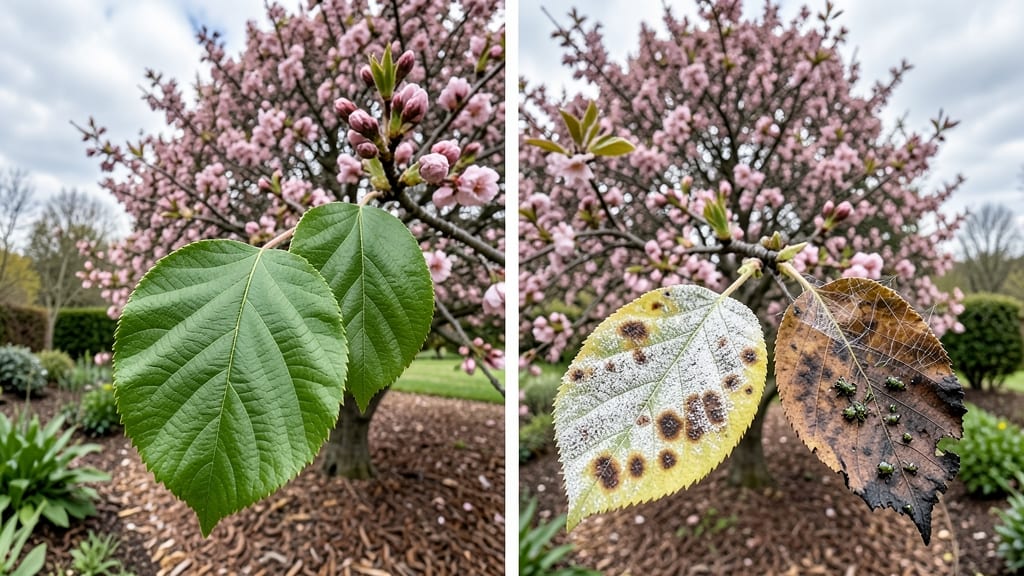
Your cherry tree’s leaves are showing the clear signs of cherry tree problems—spotting, curling, or turning yellow before their time. 🌿 The first step is identifying whether you’re dealing with fungal diseases like leaf spot, pest invasions from aphids or mites, or environmental stressors such as overwatering or nutrient deficiencies.
I’ve diagnosed and fixed all three in my own backyard, and the key is acting fast before the problem spreads.
Start by examining the leaves closely: are they covered in tiny webs (mites), sticky residue (aphids), or dark spots with yellow halos (fungal infections)? Each issue needs a different approach—organic sprays for pests, pruning for fungal spread, or adjusting watering habits for environmental stress.
The good news? Most problems can be reversed with the right care, and your tree can bounce back to full, vibrant health in just a few weeks.
📚 In This Guide
- What you need
- Instructions
- Tips and common mistakes
- Wrapping up and next steps
What you need
- ● Pruning shears – Sharp, clean pair (sterilize with rubbing alcohol between cuts).
- ● Gloves – Heavy-duty, long-sleeved (nitrile or leather) to protect from thorns and chemicals.
- ● Garden hose or spray bottle – For rinsing leaves and diluting solutions.
- ● Neem oil (100% cold-pressed) – 1–2 tbsp per gallon of water (organic fungicide/insecticide).
- ● Baking soda – 1 tbsp per gallon of water (for fungal issues like powdery mildew).
- ○ Horticultural oil (optional) – 1–2 tbsp per gallon of water (smothers pests like mites).
- ○ Copper fungicide (optional) – Follow label instructions for leaf spot treatment.
- ● pH test kit – To check soil acidity (ideal range: 5.5–6.5 for cherries).
- ● Compost or well-aged manure – 2–3 inches mixed into soil for nutrient boost.
- ● Mulch (straw or wood chips) – 2–3 inch layer to retain moisture and suppress weeds.
- ● Hand lens/magnifier – To inspect leaf undersides for mites, eggs, or fungal spores.
- ● Moisture meter – Check soil hydration (cherry trees hate soggy roots!).
- ● Camera or phone with macro mode – Snap photos of symptoms for expert ID (e.g., local extension services).
- ● Notebook & pen – Track symptoms, treatments, and progress over time.
How to diagnose and fix cherry tree leaf problems organically
Here's how I spot issues early and restore your tree's health using all-natural methods.
🌿 Step 1: Identify the Problem by Examining Leaf Patterns
Start by closely inspecting the leaves for specific patterns. Yellowing between veins often signals iron deficiency, while brown spots with yellow halos usually mean fungal infection. I look for these key visual clues first: curled edges suggest spider mites, while sticky residue on leaves indicates aphids. Hold a leaf up to the light—visible webbing confirms spider mite presence.
Check both the top and undersides of leaves. Many pests hide underneath, and early signs appear there first. I always examine the newest growth first—older leaves may show damage, but the newest leaves reveal the current health status. Note whether the problem affects just a few branches or the entire tree. Localized issues often point to environmental factors like poor drainage in one area.
💧 Step 2: Assess Environmental Conditions
Cherry trees thrive with 6-8 hours of direct sun daily, but too much sun can scorch leaves, creating crispy brown edges. I check for proper watering first—leaves that curl upward and feel dry indicate underwatering, while yellowing at the base suggests overwatering. Stick your finger 1-2 inches into the soil—it should feel moist but not soggy.
Look at the soil around the tree base. Compacted soil prevents proper drainage, leading to root rot and leaf discoloration. If the ground feels hard when pressed, it's time to aerate. Also check for signs of recent stress like sudden temperature swings or drought periods. I keep a simple journal noting weather changes alongside leaf symptoms—this helps identify patterns over time.
✂️ Step 3: Apply Organic Treatments Based on Diagnosis
For fungal issues like brown spots, I mix 1 tablespoon baking soda with 1 quart water and a drop of dish soap, then spray affected leaves thoroughly. This creates an alkaline environment fungi can't tolerate. For pests like aphids, I spray a soapy water solution (1 tablespoon mild castile soap per quart of water) directly on infested areas. Always apply treatments in the early morning to prevent leaf burn from sunlight.
To boost iron levels for yellowing leaves, I use Epsom salt (1 tablespoon per gallon of water) applied as a foliar spray. For general tree health, I apply compost tea around the root zone monthly during growing season. Remember to water the soil thoroughly before applying any foliar treatments—this helps the leaves absorb the solution more effectively.
☀️ Step 4: Adjust Care Routine for Long-Term Prevention
Prune any severely damaged branches with clean, sharp pruners to improve air circulation. I make cuts just above a healthy bud to encourage new growth. Remove all fallen leaves showing signs of disease—this prevents reinfection. For young trees, I apply 2-3 inches of organic mulch around the base (keeping it 6 inches from the trunk) to retain moisture and regulate soil temperature.
Establish a regular watering schedule during dry spells—deep watering once weekly is better than frequent shallow watering. I check soil moisture every 3-4 days during summer heatwaves. Also consider adding mycorrhizal fungi to the soil to improve root health. This natural soil amendment helps roots absorb nutrients more efficiently, which directly improves leaf health.
Tips & tricks for diagnosing and reviving cherry tree leaves
These practical tips will help you catch problems early and restore your cherry tree's health before damage becomes permanent.
Leaf Examination Technique: When checking for spider mites in Step 1, I hold a magnifying glass over the undersides of leaves—this makes webbing and tiny eggs much easier to spot. The newest leaves often show symptoms first, so focus your inspection there. If you notice yellowing between veins, it's almost always iron deficiency, not overwatering. I've seen this mistake countless times where gardeners assumed water issues when it was actually a nutrient problem.
Soil Test Shortcut: For Step 2's soil assessment, bring a small sample to your local extension office—they'll test for pH and nutrient levels for free or low cost. Acidic soil (below pH 6.0) can lock out iron, causing the yellowing between veins we discussed earlier. If your soil tests show low iron, apply 1 tablespoon Epsom salt per gallon of water as a foliar spray, but only after checking for fungal issues first—some fungi thrive in iron-deficient conditions.
Treatment Timing: In Step 3, when applying organic treatments, I always do it in the early morning. This gives the leaves time to dry before evening dew forms, which prevents fungal growth from the moisture. I've ruined several treatments by applying them late in the day—always check the weather forecast first. For severe infestations, repeat treatments every 5-7 days until you see new healthy growth appearing.
Pruning Precision: When pruning damaged branches in Step 4, make your cuts just above a healthy bud angled away from the branch. This encourages new growth in the right direction. I've seen too many trees with awkward regrowth because the cut was made in the wrong place. Sterilize your pruners with rubbing alcohol between cuts to prevent spreading any potential diseases you might encounter.
Pro Tips for Cherry Tree Problems Leaves
- These practical tips will help you catch problems early and restore your cherry tree's health before damage becomes p...
- Leaf Examination Technique: When checking for spider mites in Step 1, I hold a magnifying glass over the undersides o...
- Soil Test Shortcut: For Step 2's soil assessment, bring a small sample to your local extension office—they'll test fo...
Frequently asked questions
Got questions about your cherry tree’s leaf issues? You’re not alone! Here are some of the most common concerns—and how to tackle them—so you can get your tree back to thriving in no time.
Why are my cherry tree leaves curling or yellowing?
Curling or yellowing leaves are often signs of stress from pests (like spider mites or aphids), fungal diseases (such as leaf spot), or environmental factors (heat, drought, or poor drainage). Check the undersides of leaves for pests, and prune affected branches to improve airflow. If fungal issues are suspected, apply neem oil or copper fungicide early in the season.
Can I save my cherry tree if the leaves are dropping early?
Early leaf drop can result from bacterial canker, root rot, or extreme weather. If the tree is young, it might recover with proper care: water deeply but infrequently, mulch to retain moisture, and avoid over-fertilizing. For older trees, consult a local arborist to diagnose the root cause—sometimes, pruning diseased branches and applying organic fungicides can help. Act fast!
How do I tell if my cherry tree has a pest problem vs. a disease?
Pests (e.g., Japanese beetles, sawfly larvae) leave visible damage like holes, chewed edges, or webbing, while diseases (e.g., powdery mildew, anthracnose) often cause spots, discoloration, or mold. Inspect leaves closely: pests may also leave behind sticky residue (honeydew). Treat pests with soapy water sprays or beneficial insects; diseases usually need fungicides or improved sanitation.
When is the best time to treat cherry tree leaf problems?
Timing is key! For pests, treat in early spring (before buds open) or late summer (after harvest). For diseases, apply preventative fungicides in early spring and after rain. Always follow the label instructions—over-treating can harm beneficial insects or the tree itself. Pro tip: Monitor your tree weekly during peak growing seasons (spring and summer).
Are there organic alternatives to chemical treatments?
Try these DIY fixes:
- Neem oil: Mix with water and spray to deter pests and fungi.
- Garlic or chili pepper spray: Blend with water and a drop of dish soap for a natural repellent.
- Compost tea: Boosts soil health and tree resilience.
- Pruning: Remove infected branches 6 inches below the damage to prevent spread.
Wrapping up and next steps
Identifying and addressing cherry tree leaf problems early can save your tree—and your patience! 🌿 From fungal infections to pests, most issues have organic solutions if you act quickly. Remember, prevention is key, so monitor your tree regularly and act at the first sign of trouble.
Ready to give your cherry tree the care it deserves? Start by inspecting leaves weekly, testing soil health, and applying the fixes you’ve learned. Your tree will thank you with abundant blooms and fruit for years to come!