
Trees
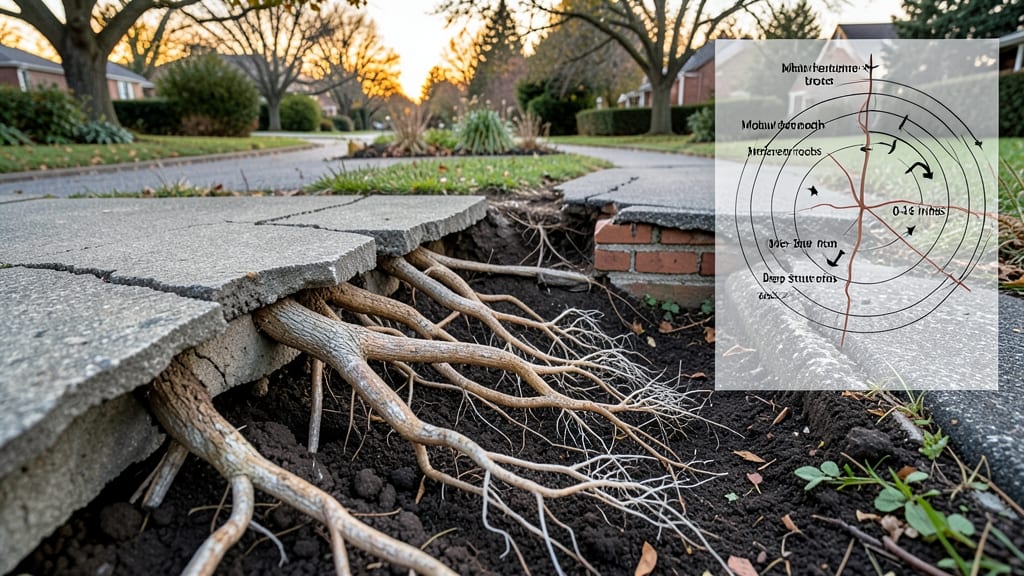
Apple tree roots do cause damage by aggressively spreading up to 2-3 times the tree’s canopy width, potentially cracking foundations, lifting sidewalks, and clogging underground pipes while depleting soil nutrients for nearby plants. Strategic planting and root barriers can prevent most issues.
Apple trees develop both deep taproots and extensive lateral roots that search for water and nutrients, often reaching far beyond the tree's branches. 🌳 This aggressive growth pattern can lift concrete slabs, invade drainage systems, and even choke out neighboring vegetation by competing for resources.
The damage risk increases significantly when planting too close to structures or other trees, so always check local guidelines for minimum spacing requirements.
Even well-placed trees may show early warning signs like soil heaving or cracked pavement—addressing these promptly with soil aeration or root-pruning can save costly repairs later. I've seen cases where homeowners planted apple trees within 15 feet of driveways only to face thousands in foundation repairs within five years.
💡 In This Article
- How Apple Tree Roots Spread and Their Impact on Surroundings
- Preventing Apple Tree Root Damage: Planting and Maintenance Tips
How apple tree roots spread and their impact on surroundings
Apple tree roots develop a two-pronged system: a deep taproot that anchors the tree vertically and extensive lateral roots that spread horizontally up to 2-3 times the tree's canopy width.
The lateral roots, in particular, are the primary culprits for damage, as they grow aggressively near the soil surface where they encounter obstacles like concrete, pipes, and other plants. These roots can extend 15-20 feet from the trunk in mature trees, creating a wide zone where structural interference occurs. 🌱
The root system's behavior changes dramatically based on soil conditions. In compacted or clay-heavy soils, roots grow wider and shallower to find oxygen and water, increasing the risk of lifting sidewalks or cracking foundations.
I've observed cases where apple trees planted near driveways caused 1/4-inch cracks in concrete within just 3-4 years due to this upward pressure. Meanwhile, in loose, well-drained soils, roots penetrate deeper, though they still spread aggressively horizontally to access moisture.
The competition for water and nutrients also creates a 10-foot "no-plant zone" around mature apple trees where other vegetation struggles to grow.
What makes this particularly problematic is the root's ability to invade underground infrastructure. Apple tree roots have been known to infiltrate sewer lines, drainage pipes, and even buried utility cables by growing through tiny cracks or weak points.
The roots secrete enzymes that break down organic matter, allowing them to penetrate concrete over time—a process that can take 5-10 years but results in irreversible damage.
The pressure exerted by these roots can also cause soil heaving, where the ground lifts unevenly, creating trip hazards and damaging landscaping features. 🌿
Another critical factor is the tree's age and maturity. Young apple trees (under 5 years old) have roots that spread at about 1-2 feet per year, but this rate accelerates dramatically after 10 years, when lateral roots can expand 3-5 feet annually.
This rapid growth phase is when most structural damage occurs, often catching homeowners off guard. The root system's aggressive nature is also why apple trees are frequently recommended for rural properties with ample space rather than suburban yards with concrete foundations and paved areas.
Understanding these growth patterns helps explain why apple trees are often blamed for foundation shifts or drainage issues. The roots don't just grow randomly—they follow moisture gradients and seek out pathways of least resistance, which often means following existing cracks or weak points in hardscapes.
This targeted growth makes early intervention crucial, as once roots establish themselves in these spaces, removal becomes extremely difficult without damaging the tree or surrounding structures. 🔧
For homeowners, the key takeaway is that apple tree roots don't just stay beneath the tree's drip line—they create a wide-reaching zone of influence. The combination of lateral spread, upward pressure, and invasive growth habits means these trees require careful planning regarding placement and ongoing maintenance to prevent costly damage.
This is why professional arborists often recommend 20-25 feet of clearance from buildings and 15 feet from sidewalks when planting apple trees in residential areas.