
Flowers
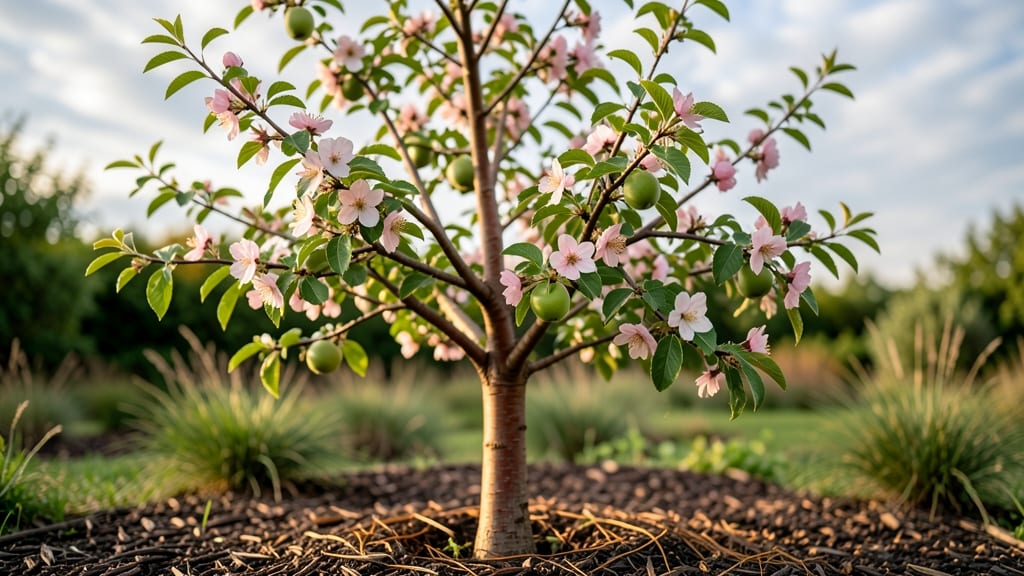
The flowers on a peach tree do turn into fruit only when pollinated by bees, wind, or manual intervention, since the blossoms' ovules require fertilization to transform into peaches. Without pollination, the flowers simply drop off after a few weeks.
This process relies on the flower's reproductive anatomy: each blossom contains both male and female parts, but needs external pollen transfer to trigger fruit formation. 🌸 Bees are the most effective pollinators, but wind can also carry pollen between trees—especially important for varieties that require cross-pollination.
The timing matters too; spring blooms must align with active pollinator activity to ensure successful fruit set. Without these conditions, the tree's energy goes to producing more flowers rather than developing fruit.
What's interesting is that some peach varieties are self-pollinating, while others need pollen from different trees. This biological quirk explains why you might see heavy blooms one year but sparse fruit the next—it's not just about the flowers, but about whether they get properly fertilized.
Understanding this helps gardeners troubleshoot why their trees might not be producing as expected.
💡 In This Article
- How Peach Tree Pollination Works for Fruit Development
- Maximizing Peach Tree Fruit Yield Through Pollination
How peach tree pollination works for fruit development
Peach tree flowers contain both male and female reproductive parts, but they can't fertilize themselves without external help. Each blossom has a central pistil (female part) topped with a sticky stigma that captures pollen, surrounded by five stamens (male parts) that produce pollen grains.
When pollen lands on the stigma, it triggers a biochemical reaction that allows sperm cells to travel down the pistil's style to reach the ovules—tiny structures inside the ovary that will develop into peaches after fertilization.
This process is called double fertilization, where one sperm cell fertilizes the egg cell and another combines with two other cells to form the endosperm that nourishes the developing fruit.
The timing of this process is critical: peach trees typically bloom in early spring when temperatures hover between 50-75°F, creating ideal conditions for pollinators. Bees are the most effective agents, collecting pollen from one flower and transferring it to another while gathering nectar.
Wind can also carry pollen, but it's less efficient—this is why cross-pollination (between different trees) is often necessary for varieties that aren't self-fertile. For example, 'Elberta' peaches require pollen from another tree to set fruit, while 'Redhaven' can self-pollinate but produces more fruit with cross-pollination.
The pollen must land within 24-48 hours of the stigma becoming receptive, or the flower will naturally abscise (drop off).
Here's what happens when pollination succeeds: after fertilization, the ovary begins expanding as the ovules develop into seeds, while the surrounding petals fall away. The flower's energy shifts from reproduction to fruit development, which typically takes 6-8 weeks to reach harvest size.
The fruit's skin color change from green to its mature hue signals the ripening process, during which sugars accumulate and the flesh softens. Without pollination, the flower's resources are wasted—it simply drops off within 2-3 weeks, leaving no fruit behind.
This biological mechanism explains why some trees look spectacular with blooms but produce little to no fruit.
Temperature plays a surprising role in pollination success. Cold snaps below 50°F during bloom can reduce bee activity by up to 70%, while high humidity can make pollen grains clump together, preventing effective transfer. Even rain can wash away pollen from stigmas.
These environmental factors create what's called "pollination windows"—specific periods when conditions are optimal for fruit set. Gardeners in cooler climates often see reduced yields because their bloom periods may coincide with unpredictable weather patterns that limit pollinator activity.
Interestingly, peach trees have evolved different pollination strategies based on their genetic makeup. Some varieties produce more pollen (male-sterile trees), while others have more receptive stigmas (female-sterile trees). When planted together, they create a mutualistic relationship where each tree benefits from the other's reproductive strengths.
This is why commercial orchards often plant multiple varieties in close proximity to ensure cross-pollination. The result? A 30-50% increase in fruit yield compared to planting single varieties alone.
What most gardeners don't realize is that even successful pollination doesn't guarantee fruit development. After fertilization, the tree must also balance its energy between fruit growth and other functions like leaf production.
This is why professional growers practice fruit thinning—removing excess fruit early in the season to allow remaining peaches to reach their full potential size and quality. Without this intervention, trees might produce hundreds of small, underdeveloped peaches rather than a manageable number of premium-quality fruits.