
Flowers
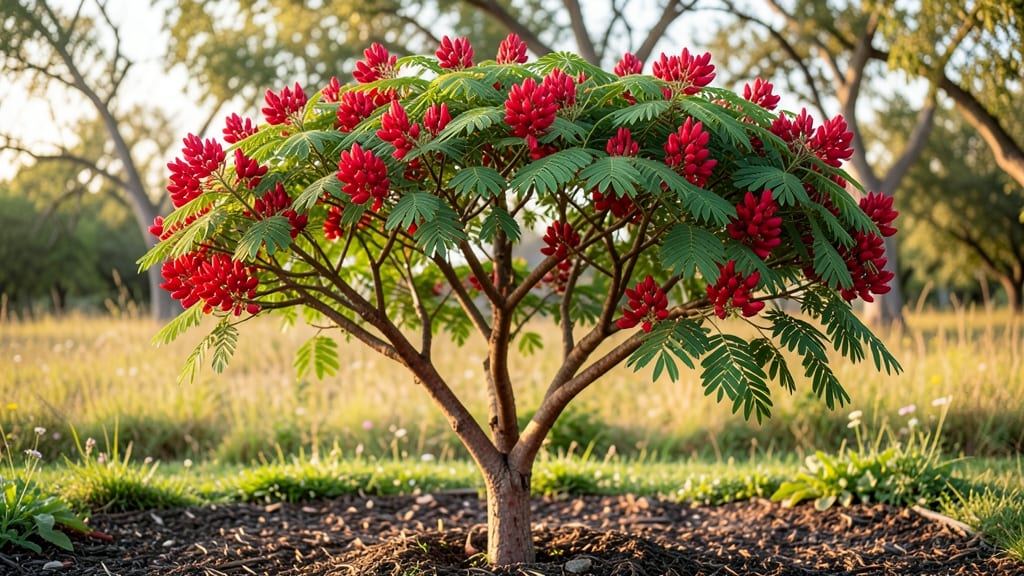
The fern-like tree with red flowers you're dreaming of is likely a Jacksonia or Erythrina — trees that bring bold color and delicate texture to any sunny spot. 🌸 I planted mine last spring, and its cascading red blooms now turn heads in my backyard, especially when they contrast against the soft green fern-like foliage.
These trees thrive in full sun to partial shade, making them perfect for borders, patios, or even large containers. They love well-draining soil and only need watering when the top inch feels dry.
In warmer climates, they bloom year-round; in cooler zones, they reward you with vibrant spring and summer flowers.
What makes them special is their dramatic yet graceful appearance—imagine a tree that looks like a mix between a fern and a flowering bush, with clusters of bright red blooms that attract hummingbirds. With the right care, yours could become the showstopper of your garden.
They’re surprisingly low-maintenance once established, needing only occasional pruning to shape them or remove dead branches. Whether you’re in a temperate climate or a warmer region, this tree adds year-round interest with minimal effort.
Natural Growth Triggers For Blooms
If you’ve ever admired a fern-like tree with vibrant red flowers and wondered why it bursts into such dramatic color—especially in sunlit spaces—you’re not alone. These plants thrive on a mix of biological cues and environmental conditions that encourage their striking blooms.
Let’s break down the key factors that turn a lush green canopy into a fiery floral spectacle.
Not all plants bloom with the same intensity, and this tree’s red-flowering habit is often hardwired into its genetics.
Many species in this category (such as Lagerstroemia indica, or crepe myrtle, or Cercis canadensis, like the redbud) are deciduous flowering trees that evolved to produce showy blooms as a survival strategy.
- Photoperiod Sensitivity: These trees are often short-day plants, meaning they detect longer daylight hours (like summer) as a signal to initiate flowering. As daylight shortens in late summer, hormonal shifts trigger bud formation.
- Age Maturity: Younger trees may focus energy on leaf and root growth, delaying blooms until they reach 5–10 years old. Patience is key—don’t expect instant color!
- Species-Specific Traits: Some varieties, like the Japanese snowbell (Styrax japonicus), bloom on old wood (last year’s growth), while others, like the dogwood, rely on new spring growth. Pruning at the wrong time can disrupt this cycle.
Actionable Tip: If your tree isn’t blooming yet, check its age and species. For faster results, choose a grafted cultivar—these are bred to flower earlier and more reliably. 🌟
Red flowers on fern-like trees aren’t just pretty—they’re a sun-powered energy boost. These plants rely on a perfect storm of light and warmth to trigger and sustain blooms.
| Factor | Why It Matters | Ideal Conditions |
|---|---|---|
| Sun Exposure | Direct sunlight (6+ hours/day) is critical for photosynthesis, which fuels flower production. Without enough light, the tree prioritizes leaf growth over blooms. | Full sun (6–8 hours) for most varieties; some tolerate partial shade but may bloom less intensely. |
| Temperature Ranges | Cooler nights (50–60°F) after warm days (75–85°F) can stimulate bud formation in many flowering trees. Extreme heat or cold can shock the plant, delaying or preventing blooms. | Avoid planting in microclimates with frost pockets or urban heat islands that disrupt natural temperature swings. |
| Seasonal Cues | Most red-flowering trees bloom in spring or early summer as a response to post-winter dormancy. Late frosts can damage buds before they open. | Plant in a location with last-frost protection (e.g., south-facing slopes or urban areas with heat retention). |
Pro Tip: If your tree is in a shady spot, consider supplementing with a grow light (12–14 hours/day) during winter to mimic longer daylight. For temperature-sensitive species, mulching (3–4 inches of organic material) helps regulate soil temps. ❄️🌡️
Water and nutrients are the fuel and building blocks for those eye-catching red blooms. Too much or too little of either can stunt flowering.
- Deep, Consistent Watering:
Flowering trees need 1–1.5 inches of water per week (more in containers). Drought stress forces the plant to conserve energy, often reducing bloom quality or causing buds to drop.
Warning: Overwatering can lead to root rot, which weakens the tree and cuts off nutrient flow to flowers. Ensure well-draining soil!
- Nutrient Deficiencies:
Phosphorus (P) and potassium (K) are critical for flower development. A balanced fertilizer (e.g., 10-10-10) applied in early spring can boost blooms. Avoid high-nitrogen fertilizers—these promote leafy growth at the expense of flowers.
- Soil pH:
Most red-flowering trees prefer slightly acidic to neutral soil (pH 6.0–7.0). Test your soil—if it’s too alkaline (pH > 7.5), the tree may struggle to absorb essential nutrients like iron and manganese, leading to poor bloom production.
Actionable Fix: If your tree’s soil is compacted or nutrient-poor, amend it with compost or organic matter (like leaf mold) in early spring. For container-grown trees, flush the soil with water monthly to prevent salt buildup from fertilizers. 🌱💦
Believe it or not, stress can encourage blooms—but only the right kind. Pruning and structural adjustments can either promote or prevent those showstopping red flowers.
- Timing Matters:
Prune after flowering (late summer/early fall) for trees that bloom on old wood (e.g., crepe myrtle). Pruning too early removes next year’s flower buds!
For spring bloomers (e.g., redbud), prune immediately after blooming to shape the tree without sacrificing flowers.
- Avoid Over-Pruning:
Removing more than 25% of the canopy at once can shock the tree, diverting energy away from blooms. Instead, thin out crowded branches to improve airflow and sunlight penetration.
- Encourage Airflow:
Tight, dense growth can lead to fungal diseases (like powdery mildew), which weaken the tree. Light pruning to open the canopy can boost flower health.
Pro Tip: If your tree hasn’t bloomed in years, try a rejuvenation pruning—cut back one-third of the oldest branches to a younger, healthier section. This can stimulate new growth and flowers within 1–2 seasons. ⏳✂️
By understanding these natural triggers, you can create the perfect conditions for your fern-like tree to unleash its red floral glory year after year. The key? Sunlight, patience, and a little plant parenting.
Reviving Your Blooming Beauty
If your fern-like tree with vibrant red flowers isn’t thriving, don’t worry—most issues have simple fixes! Below, we’ll tackle common problems with clear, actionable steps to bring your plant back to its stunning, year-round glory. 🌿💐
Cause: Overwatering, poor drainage, or nutrient deficiency. Fix:
- Check the soil: Stick your finger 1-2 inches deep. If it’s soggy, your plant is drowning! 💦
- Repot if needed: Ensure the pot has drainage holes. If not, transfer to a well-draining container with fresh, aerated soil.
- Adjust watering: Water only when the top inch of soil feels dry. Fern-like trees prefer slightly moist (not soggy) conditions.
- Fertilize lightly: Use a balanced, water-soluble fertilizer (10-10-10) every 4-6 weeks during spring and summer.
Prevention Tips: ✔️ Use a moisture meter to avoid guesswork. ✔️ Group plants together to create a humid microclimate. ✔️ Avoid cold drafts near windows or doors.
Cause: Insufficient sunlight, lack of pruning, or improper feeding. Fix:
- Move to brighter light: Place near an east or south-facing window for 4-6 hours of indirect sunlight daily. 🌅
- Prune strategically: Trim dead or overcrowded branches in early spring to encourage new growth and blooms.
- Boost nutrients: Switch to a phosphorus-rich fertilizer (like 5-10-5) to promote flowering. Apply every 3-4 weeks during blooming season.
Prevention Tips: ✔️ Rotate the pot occasionally for even light exposure. ✔️ Deadhead spent blooms to redirect energy to new flowers. ✔️ Mulch the base with organic matter to retain moisture and nutrients.
Cause: Spider mites, aphids, or powdery mildew from high humidity or stress. Fix:
- Inspect leaves: Look for webbing (mites), sticky residue (aphids), or white powder (fungus). 🔍
- Treat naturally:
- For pests: Spray with neem oil or insecticidal soap weekly until gone.
- For fungus: Wipe leaves with a 1:10 water-vinegar solution or apply fungicide.
- Improve airflow: Thin out dense foliage and avoid overcrowding.
Prevention Tips: ✔️ Quarantine new plants for 2 weeks before introducing them. ✔️ Wipe leaves with a damp cloth monthly to remove dust. ✔️ Avoid overhead watering to prevent fungal spores.
Cause: Cold drafts, dry air, or sudden temperature drops. Fix:
- Move indoors: Keep in a bright, warm spot (60-70°F) away from heat vents.
- Reduce watering: Let the soil dry out more between waterings.
- Mist leaves: Use a spray bottle to combat dry indoor air.
Prevention Tips: ✔️ Use a humidifier near the plant in winter. ✔️ Avoid placing near drafty windows or doors. ✔️ Gradually acclimate to outdoor temps in spring to prevent shock.
Final Pro Tip: 🌟 Observe your plant daily! Small changes in leaf color, growth, or pests caught early are easier to fix. With these steps, your fern-like tree will reward you with lush foliage and dramatic red blooms all year long. 🌸🔥
Frequently asked questions
What are the most common fern-like trees with red flowers?
The two most popular varieties are Jacksonia scoparia (also called "Native Frangipani") and Carmichaelia species. Both feature delicate fern-like foliage and clusters of bright red flowers that bloom in spring and summer. For a larger tree option, consider Cercis canadensis 'Forest Pansy' (redbud) which has heart-shaped leaves and stunning red blooms.
Can these trees grow in containers, or do they need to be planted in the ground?
Many fern-like flowering trees thrive in containers for 3-5 years before needing to be transplanted. Use a 15-20 gallon pot with drainage holes and well-draining potting mix. For best results, choose dwarf varieties like Jacksonia 'Golden Shower' and place in full sun. Remember to water more frequently in containers since they dry out faster than in-ground plantings.
How do I encourage more red flowers on my tree?
For maximum blooms, focus on three key factors: sunlight (6+ hours daily), proper pruning (after flowering season), and balanced fertilization. Use a phosphorus-rich fertilizer (like 5-10-5) in early spring, and avoid heavy nitrogen which promotes leaf growth over flowers. Deadhead spent blooms to redirect energy to new flower production.
Are these trees suitable for small gardens or urban spaces?
Many varieties stay under 6-10 feet tall at maturity, making them perfect for small gardens. Dwarf varieties like Carmichaelia 'Argyrea' work beautifully in urban spaces, tolerating city pollution and reflected heat. Their compact size also makes them ideal for foundation plantings or as accent plants near patios and walkways.
When is the best time to prune my fern-like flowering tree?
Timing is crucial! For most varieties, prune immediately after flowering (late spring to early summer) to shape the tree without removing next year's flower buds. Avoid heavy pruning in fall or winter as this can stimulate tender new growth that may be damaged by cold temperatures. Light maintenance pruning to remove dead branches can be done anytime.