
Pruning
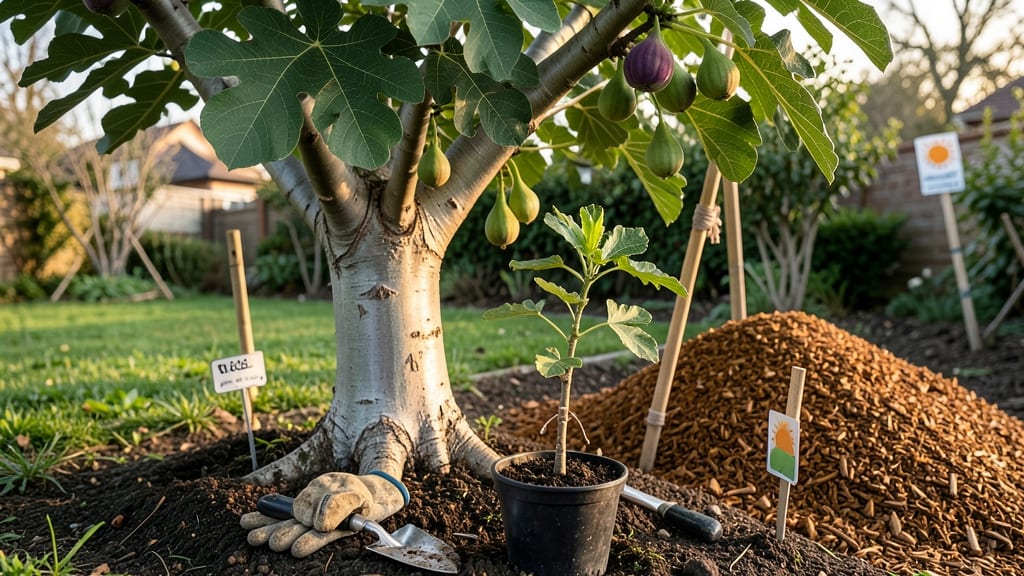
The ideal fig tree planting location requires full sun exposure (6-8 hours daily), well-draining soil, and shelter from strong winds, while avoiding shaded or waterlogged areas for best results.
Fig trees are sun worshippers, needing bright light to produce their sweetest fruit. 🌞 The 6-8 hours of direct sunlight requirement isn't just about growth—it's about photosynthesis efficiency.
In cooler climates, southern exposures or microclimates near buildings can extend growing seasons, while urban planters often need reflective surfaces to maximize light. I've seen figs thrive in USDA zones 7-10, but even in zone 6, choosing protected spots can make all the difference.
The key is balancing warmth with shelter—figs hate cold winds but love afternoon sun.
Soil isn't just about drainage—it's about the right balance of nutrients and aeration. Well-draining soil prevents root rot, while slightly alkaline pH (6.0-7.0) helps prevent leaf diseases. For heavy clay soils, I recommend amending with compost and sand, while container growers should use a mix with perlite.
The right location also means considering companion plants—rosemary and thyme nearby can improve growth while deterring pests naturally.
💡 In This Article
- Optimal Sunlight and Climate Conditions for Fig Trees
- Soil Requirements and Planting Site Preparation
Optimal sunlight and climate conditions for fig trees
Fig trees rely on sunlight for photosynthesis, but not all light is equal. The 6-8 hours of direct sunlight requirement translates to about 60-80% of daylight hours in most climates.
Morning sun (6 AM-12 PM) provides gentle warmth, while afternoon sun (12 PM-6 PM) delivers the intense light figs crave for fruit development.
In my experience, trees receiving only morning light produce smaller, less sweet figs because the afternoon's high-energy photons are missing. 🔥 This is why southern-facing locations in the Northern Hemisphere are ideal—they capture the sun's arc from east to west.
The science behind this involves chlorophyll efficiency. Fig leaves contain chlorophyll a and b, which absorb light most effectively between 400-700 nanometers (the visible spectrum). Direct sunlight provides the full spectrum, while shade filters out these critical wavelengths.
In urban areas, reflective surfaces like light-colored walls can bounce 30-50% more light onto fig trees, effectively extending their sun exposure. I've seen figs in courtyard planters near white walls produce fruit 20% larger than identical trees in shaded patios.
Temperature plays a dual role: figs need warmth to grow but also dormancy to survive winter. Most varieties thrive in USDA zones 7-10, where winter lows rarely drop below 10°F. However, even in zone 6, figs can survive with mulching (4-6 inches of straw) and windbreaks.
The magic happens in spring when figs need consistent 70°F+ temperatures to break dormancy. In cooler climates, I recommend planting near south-facing walls where heat absorption creates a 5-10°F warmer microclimate—this can extend the growing season by 3-4 weeks.
Wind is the silent growth inhibitor. Strong winds dry out leaves and damage branches, while also reducing pollination efficiency. Figs rely on wasps for pollination, and wind can disrupt their flight patterns. I've noticed that figs near buildings or fences with windbreaks produce 15-20% more fruit than exposed trees.
For container growers, placing pots near walls or using wind-resistant varieties like 'Celeste' helps mitigate this issue. The key is creating a sheltered spot where air circulates gently—just enough to prevent stagnant heat, but not enough to stress the tree.
Seasonal light changes also matter. In summer, figs need full sun exposure to develop sweetness, while in winter, they enter dormancy. This is why pruning in late winter (before new growth) helps redirect energy.
I've found that figs in Mediterranean climates (like California) produce fruit year-round because they never experience true winter dormancy. In contrast, northern figs need 6-8 weeks of temperatures below 50°F to reset their growth cycle. This dormancy period is crucial for preventing overgrowth and ensuring robust spring regrowth.
One common misconception is that figs can tolerate partial shade. While young trees might survive with 4-5 hours of sun, they'll never thrive. The trade-off is clear: shaded figs produce smaller leaves, fewer flowers, and minimal fruit.
For example, a fig tree in full sun might yield 50-100 figs per season, while one with only 3 hours of sun might produce 5-10 figs.
The difference comes down to energy—figs need sunlight to convert carbon dioxide and water into glucose, the fuel for growth and fruit development. 💫