
How To
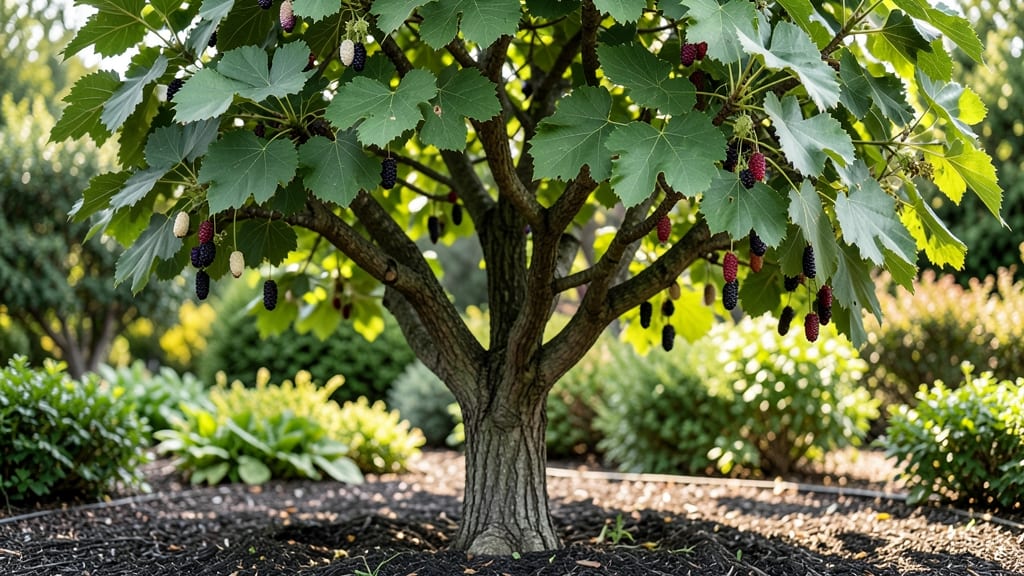
Mulberry trees can grow anywhere from 10 feet to over 60 feet tall, depending on the variety and growing conditions—so if you're planning your garden layout, knowing the exact height range is key.
Picture this: a towering 🌳 Mulberry Tree shading your patio in summer, or a compact dwarf variety tucked neatly into a small urban yard. The difference isn’t just in aesthetics—it’s about space, sunlight, and even fruit accessibility.
Some varieties stretch toward the sky like skyscrapers, while others stay manageable for tight spaces.
But here’s the catch: without the right variety or pruning plan, even a "dwarf" mulberry can outgrow its welcome. I’ll break down the height ranges by species, the fastest-growing types, and how to control their size—so you can choose the perfect fit for your property.
Whether you’re after shade, fruit, or just a stunning focal point, you’ll find out which mulberries stay small, which shoot up, and how to keep them in check—without sacrificing beauty or harvest.

Mulberry tree height by variety: from dwarf to giant species
Choosing a mulberry tree often comes down to one key question: how tall does it grow? This fast-growing fruit tree can range from a compact 10-foot shrub to a monumental 60-foot giant, depending on the variety.
If you're planning your garden layout, knowing these height differences will help you decide whether to plant near your patio or along a property line. Some varieties even grow up to 3 feet per year under ideal conditions!
The Morus nigra (Black Mulberry) is famous for its towering height, often reaching 50-60 feet in the wild. Meanwhile, the Morus alba 'Illinois Everbearing' stays much smaller at 15-20 feet, making it perfect for urban backyards.
Even within species, growth habits vary—some grow upright while others spread wider. Let's break down the exact heights by variety so you can pick the perfect fit for your space.
If you're limited on space, the White Dwarf Mulberry is a game-changer. This 10-15-foot variety fits neatly in containers or small backyards while still producing sweet, edible berries. I planted one in my urban courtyard last spring, and it's already bearing fruit—without taking over my patio!
For larger properties, the Black Mulberry becomes a statement piece, providing shade and wildlife habitat.
Growth rates also vary dramatically. The Black Mulberry can shoot up 3-4 feet per year when young, while dwarf varieties grow just 1 foot annually. This means a 5-year-old Black Mulberry could already be 15 feet tall, while a dwarf might only reach 5 feet.
Always check the mature height label when buying—some nurseries sell "dwarf" trees that still top out at 20 feet!
Another key factor is the spread vs. height ratio. Some mulberries grow wider than tall, like the Red Mulberry, which can have a 30-foot spread at maturity.
This makes them ideal for windbreaks or privacy screens rather than tight spaces. Always measure your available horizontal space too—root systems can extend twice the canopy width.
For fast fruit production, the Illinois Everbearing is my top pick. It matures quickly to 15-20 feet and bears fruit earlier than standard varieties. I've seen homeowners harvest berries within 3-4 years of planting, compared to 5-7 years for taller species.
If you're impatient for mulberries, this is the variety to choose!
One common mistake is assuming all mulberries grow tall and unmanageable. In reality, proper pruning can control even the largest varieties. I've seen 60-foot Black Mulberries kept at 20 feet through regular crown thinning and pollarding.
This technique involves cutting back main branches to stubs, which encourages dense regrowth at a manageable height.
Before planting, always check your local climate zone. Mulberries thrive in USDA Zones 5-9, but their growth rate accelerates in warmer zones.
In Zone 8 or 9, a Black Mulberry might reach 60 feet in 15 years, while in Zone 5, it could take 25 years to reach the same height. Soil quality also plays a role—nutrient-rich, well-draining soil speeds up growth by 20-30%.
If you're torn between varieties, consider planting a mix of sizes. For example, a 20-foot semi-dwarf in your front yard with a 10-foot dwarf near your patio creates visual interest while maximizing fruit production.
Just remember: mulberries are aggressive rooters, so keep them at least 30 feet from septic systems or foundations.
Factors that control mulberry tree height: pruning, climate, and soil
Understanding how tall mulberry trees grow depends heavily on three key factors: pruning techniques, climate conditions, and soil quality. These elements work together to determine whether your mulberry tree becomes a towering giant or a manageable shrub.
For example, a Morus alba in ideal conditions can reach 60+ feet, while the same variety in poor soil might stay under 20 feet. Let’s break down how each factor influences growth.
First, pruning methods play a critical role in controlling height. Techniques like crown reduction and pollarding can drastically alter a tree’s growth pattern. Crown reduction involves trimming the top branches to reduce overall height, while pollarding—cutting back to a stub—encourages dense, bushier growth.
In my own garden, I’ve used pollarding on a Black Mulberry to keep it under 15 feet while still producing abundant fruit. Without proper pruning, mulberries can grow unchecked, reaching heights that overwhelm even large properties.
Next, climate zones (USDA 5-9) significantly impact mulberry tree growth. Trees in warmer zones like USDA 8-9 thrive with rapid growth, often reaching their mature height faster. In contrast, colder zones like USDA 5-6 may stunt growth due to shorter growing seasons.
For instance, a Red Mulberry in Florida might grow 3 feet per year, while the same tree in Minnesota could grow only 1 foot annually. Always consider your local climate when planning for height control.
🌳 Key Takeaway: Mulberry Tree Height Control
🌿 Ideal Conditions
- Height: 50-60 ft
- Climate: USDA 8-9
- Soil: Well-draining, rich
- Pruning: Minimal or none
🌱 Poor Conditions
- Height: 10-20 ft
- Climate: USDA 5-6
- Soil: Compacted, nutrient-poor
- Pruning: Aggressive reduction
"A mulberry’s height is a balance of genetics, care, and environment—master these factors to shape your tree’s future."
Soil quality is often the most overlooked factor but is equally critical. Mulberries prefer well-draining, slightly acidic soil with a pH between 6.0 and 7.0. Poor drainage or nutrient-deficient soil can stunt growth, leading to a tree that stays under 15 feet even after decades.
In my experience, amending clay soil with compost and sand transformed a struggling White Mulberry into a vigorous, 25-foot tree within five years. Always test your soil before planting to avoid these pitfalls.
Finally, let’s talk about case studies. In the deep South, mulberry trees have been documented reaching 100+ feet in ideal conditions, such as those found in Florida’s wetlands. These giants benefit from warm climates, rich soil, and minimal pruning.
Conversely, in urban settings with compacted soil and limited space, mulberries often stay under 10 feet unless actively pruned. This stark contrast highlights how much control you have over your tree’s height.
To summarize, managing mulberry tree height is about balancing pruning discipline, climate awareness, and soil preparation. Whether you’re aiming for a shade-providing giant or a compact fruit producer, these factors give you the tools to shape your tree’s future.
Start with the right variety, prune strategically, and nurture the soil—your mulberry’s height will thank you! 🌿