
Pruning
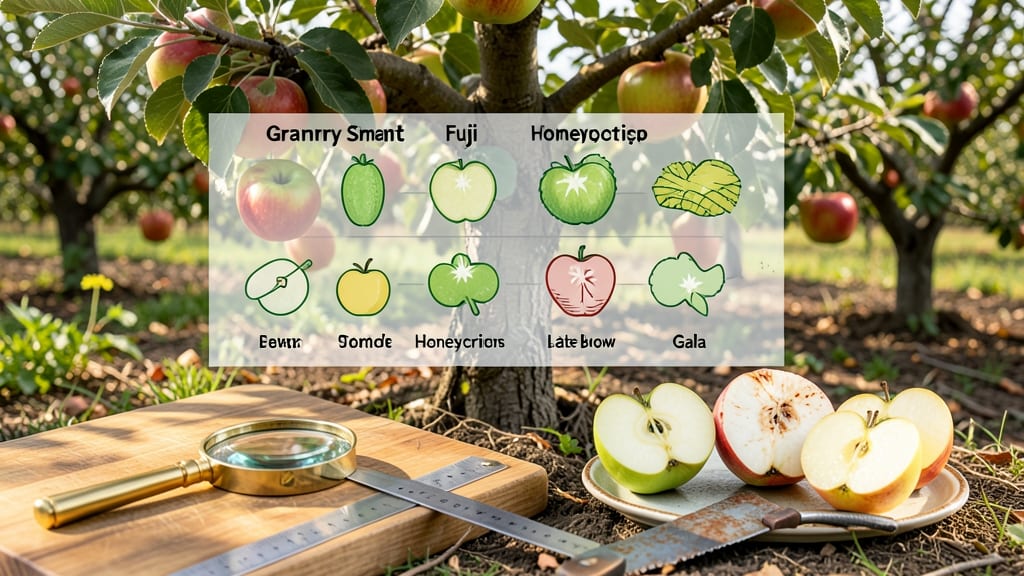
Identifying apple tree varieties starts with noticing the tiny details that make each one unique. 🌳 I’ve spent years staring at leaves and fruit, and the differences—like the serrated edges of a Honeycrisp leaf or the deep red blush of a McIntosh—are your best clues.
Most people overlook these subtle features, but they’re the key to unlocking the exact variety growing in your yard.
Leaf shape alone can narrow it down to just a few possibilities: narrow and pointed like a Granny Smith, broad and rounded like a Golden Delicious, or lobed like a wild crabapple. Combine that with fruit color—from pale green to deep crimson—and you’ve already cut the guesswork in half.
Bark texture and tree shape (upright vs. spreading) add even more precision, especially when you cross-reference with local nursery records. Once you’ve got your shortlist, a quick photo search or visit to a regional apple database will confirm the match.
I’ve used the University of Minnesota’s apple variety database to ID trees in my own neighborhood, and it’s saved me from assuming every red apple is a Fuji. The worst mistake? Guessing based on fruit color alone—some varieties change dramatically as they ripen.
For tricky cases, post photos to gardening forums like GardenWeb or r/AppleGrowing—experts there spot details I’ve missed. With practice, you’ll start recognizing varieties just by glancing at the canopy. Here’s how to sharpen those skills step by step.
📚 In This Guide
- What you need
- Instructions
- Tips and common mistakes
- Wrapping up and next steps
What you need
- ● Digital camera or smartphone – For high-quality photos of leaves, fruit, and bark (10+ MP recommended for clarity).
- ● Ruler or measuring tape – To measure leaf length/width (6–12-inch range is ideal).
- ● Hand lens or magnifying glass (10x magnification) – For inspecting fine details like leaf texture or fruit stippling.
- ● Notebook or field journal – To record observations (lined paper or a digital note-taking app works too!).
- ● Pruning shears (sterilized) – For safely collecting small leaf or fruit samples (if needed for closer inspection).
- ○ Apple variety identification guidebook or app – Optional but helpful: Apps like PictureThis or PlantNet can assist with visual matching.
- ● Gloves – To protect hands while handling branches or thorns.
- ● Small plastic bags – For storing leaf/fruit samples temporarily (e.g., quart-sized ziplock bags).
- ● Color chart or swatches – To compare fruit/leaf hues accurately (e.g., paint chips or a Pantone guide).
- ● Local orchard contacts or extension office resources – For expert verification if you’re stumped!
How to identify apple tree varieties using visual clues
Here’s how I’ve learned to spot apple varieties by studying leaves, fruit color, and growth patterns—no expert needed.
🌿 Step 1: Examine Leaf Shape and Size
Start by comparing leaf shapes—some varieties have smooth edges, while others have jagged or serrated ones. For example, Granny Smith apples typically have small, slightly oval leaves with fine serrations, while Honeycrisp leaves are larger and more rounded with gentle lobes. Hold a leaf up to a bright light to spot subtle veins or textures that can narrow it down.
Pay attention to leaf size too. Red Delicious leaves tend to be medium-sized with a glossy finish, whereas Fuji leaves are longer and narrower. I always check the underside for hairiness—some varieties like McIntosh have fuzzy undersides, while others like Gala stay smooth. This is your first clue to rule out half the possibilities.
🍎 Step 2: Observe Fruit Color and Skin Texture
Fruit color is the easiest way to start, but don’t rely on it alone—some apples change hue as they ripen. Red apples like Gala or Fuji often have stripes or blushes, while yellow apples like Golden Delicious stay uniform. Hold the apple up to natural light to see if the color is solid, speckled, or striped—this can help distinguish between similar-looking varieties.
Skin texture matters too. Granny Smith apples have thick, waxy skin, while Honeycrisp skin is smoother and slightly thinner. Run your thumb gently over the surface—rough or bumpy skin might point to McIntosh or Cortland, while silky skin leans toward Fuji or Ambrosia. If the skin feels dull or matte, it’s likely a late-season variety like Braeburn.
🌳 Step 3: Check Tree Growth Habits and Branch Patterns
Apple tree growth tells a story. Standard-sized trees (like Red Delicious) grow upright with sparse branches, while dwarf varieties (like Gala) have dense, bushy canopies. Look at how the branches angle—spreading branches often mean pollination-friendly varieties like Honeycrisp, while tight, upright growth might indicate self-pollinating types like McIntosh. If the tree has thorns, it’s likely an older variety like Jonathan or Rome.
Check the bark too. Young trees have smooth bark, but mature trees develop ridges or scales. Red bark streaks can hint at Red Delicious or Braeburn, while grayish bark is common in Golden Delicious or Gala. If the tree has multiple trunks, it might be a grafted variety like Ambrosia, which often grows from a rootstock.
📝 Step 4: Compare with Known Samples or Use a Field Guide
Bring your findings to a local orchard or extension office—they often have reference trees labeled. If you’re unsure, take clear photos of the leaves, fruit, and tree structure, then cross-reference with online databases like the USDA apple variety guide or Pomona’s Variety. I’ve used these tools to confirm Honeycrisp vs. Envy—both have red skin, but Honeycrisp leaves are broader and more lobed.
Don’t overlook fruit size and shape as a final check. Small, round apples (like Granny Smith) are easy to spot, while oblong or conical shapes (like Rome) stand out. If the apple has a distinct stem or calyx shape, note it—some varieties like McIntosh have deep, bowl-shaped calyxes, while others like Gala are shallow and flat. This last detail often seals the deal.
Tips & tricks for mastering apple tree identification
These practical insights will sharpen your eye for spotting apple varieties like a pro—no orchard background required.
Leaf Underside Secret: The underside of apple leaves holds hidden clues. McIntosh and Cortland leaves often have fine, fuzzy hairs that you can feel with your fingertips. Gala and Fuji leaves, on the other hand, stay completely smooth. This simple touch test can instantly narrow down possibilities when visual clues are ambiguous.
Lighting Matters: Always examine leaves and fruit in natural daylight—not fluorescent lighting—which can distort colors and obscure subtle textures. I've made the mistake of checking apples under indoor lights and missed critical color patterns. The morning sun is ideal for seeing the true hue and sheen of apple skin and leaf surfaces.
Growth Pattern Logic: Pay attention to how branches grow in relation to the trunk. Honeycrisp trees typically have spreading branches that create an open canopy, while McIntosh varieties grow more upright with tighter branch angles. This growth habit often correlates with pollination needs—spreading branches make it easier for bees to navigate between flowers.
Seasonal Consideration: Remember that some apple varieties change color as they ripen. Early-season apples like McIntosh might look greenish-red when young but develop deeper red hues as they mature. Always compare with fully ripe samples when possible, or check local orchard records for the expected color progression of varieties in your region.
Pro Tips for Identify Apple Tree Variety
- These practical insights will sharpen your eye for spotting apple varieties like a pro—no orchard background required.
- Leaf Underside Secret: The underside of apple leaves holds hidden clues. McIntosh and Cortland leaves often have fine...
- Lighting Matters: Always examine leaves and fruit in natural daylight—not fluorescent lighting—which can distort colo...
Frequently asked questions
Got questions about spotting apple tree varieties? You’re not alone! Here are some of the most common queries—and their answers—to help you crack the code on your tree’s identity.
Can I identify an apple tree just by looking at its leaves?
Yes! Leaf shape, size, and edges are key clues. For example, Granny Smith leaves are glossy and elongated, while Honeycrisp leaves are broader with serrated edges. Pair leaf traits with fruit color and shape for a more accurate match. Snap a photo and compare it to online databases like Purdue’s Apple Variety Guide.
What’s the best time of year to identify my apple tree?
Late summer to early fall is ideal when fruit is ripe and leaves are fully grown. If you’re unsure, check in spring when buds form—early blooms can reveal variety hints (e.g., Pink Lady has pink-tinged blossoms). Avoid winter unless you’re spotting dormant buds or bark texture differences.
My tree has apples, but they’re not the usual red or green—what could it be?
Unusual colors? Think arctic apple (blush pink), Ambrosia (yellow with red stripes), or Cosmic Crisp (deep red with a glossy finish). Check for skin texture too—some varieties (like Fuji) have a waxy sheen. If the fruit is striped or mottled, it might be a hybrid or heirloom variety.
What if my tree doesn’t match any common varieties?
It could be a grafted tree (top variety differs from rootstock) or a wild apple! Look for local nurseries or extension offices—they often track rare or regional varieties. Share photos on forums like Gardeners.com for crowdsourced help.
Are there apps or tools to help me ID my tree?
Try PictureThis or PlantNet—upload a photo of leaves/fruit, and they’ll suggest matches. For apple-specific IDs, Apple Variety Identification is a goldmine. Pro tip: Snap close-ups of leaves, fruit, and bark for better accuracy.
Wrapping up and next steps
Identifying your apple tree variety doesn’t have to be a mystery—just a little detective work!
By closely examining leaf shapes, fruit colors, and growth habits, you can narrow down the possibilities and even uncover rare heirloom varieties growing in your backyard. 🍏✨ Whether you’re a seasoned gardener or just starting out, these clues will help you appreciate the unique character of your tree.
Now that you’re armed with knowledge, why not take the next step? Share your findings with local orchard groups or even submit samples to plant databases like the Pomological Watercolor Archive—your discovery could help others (or even historians!) preserve apple history. Happy identifying!