
Fertilization
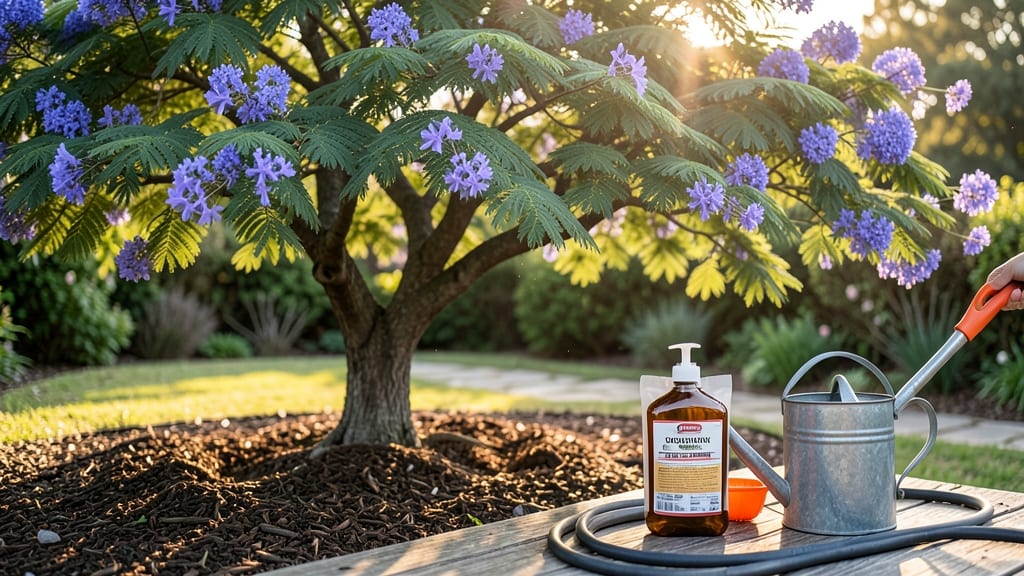
Fertilizing your jacaranda tree with the right fertilizer is the secret to those show-stopping purple cascades every spring.
Picture this: your tree stands tall, but the blooms are sparse or the leaves look weak. That’s not just a drought issue—it’s a nutrient mismatch. Too much nitrogen and you’ll get lush foliage but no flowers; too little phosphorus and the roots won’t support those heavy branches.
The key is balancing the ratios just right for your tree’s stage of life.
In this guide, I’ll break down the optimal NPK ratios for seedlings, mature trees, and peak-blooming stages, plus how to spot when your soil is begging for a tune-up.
We’ll also compare organic and synthetic fertilizers—because your jacaranda doesn’t care how it gets fed, just that it gets the right stuff at the right time.
Ready to turn your jacaranda tree 🌳 into a blooming superstar? Let’s dive into the science (and shortcuts) that make the difference between a few sad flowers and a canopy of purple perfection.

Optimal NPK ratios for jacaranda trees by growth stage
Jacaranda trees thrive when their NPK ratios match their growth stage. Too much nitrogen can delay blooms, while too little phosphorus stunts root development. The key is balancing these nutrients to encourage vibrant flowers and strong stems.
Let’s break down the science-backed ratios for each stage—seedling, mature, and blooming—plus how to adjust if your tree shows signs of deficiency or stress.
For seedlings, focus on phosphorus and potassium to build a sturdy root system. A 3-4-6 NPK ratio is ideal during the first year, as young jacarandas need more phosphorus for early growth.
Avoid high-nitrogen fertilizers, which can cause leggy, weak stems that struggle to support future blooms. Think of this stage as laying the foundation for your tree’s future flowering potential.
As your jacaranda matures (years 2-5), shift to a balanced NPK ratio like 6-6-6 or 8-3-9. This supports both leafy growth and root expansion while preparing the tree for its first major bloom cycle.
Apply fertilizer every 6-8 weeks during the growing season (spring through early fall) to maintain steady nutrition without overloading the soil.
When your jacaranda reaches blooming maturity (typically 5+ years), prioritize phosphorus and potassium to trigger those iconic purple flower clusters. A ratio like 5-10-10 or 6-12-12 works wonders, especially when applied in late winter to kickstart spring blooms.
Think of this as the "bloom booster" phase—your tree is ready to show off its best colors!
Adjusting for soil deficiencies is easier than you think. If your jacaranda’s leaves turn yellow, it’s often a sign of nitrogen deficiency—switch to a 10-5-10 ratio for a quick fix. For sparse blooms, increase phosphorus with a 0-10-10 fertilizer in early spring.
Always test your soil first to avoid overcorrecting, which can lead to leaf burn or salt buildup in the root zone.
Seasonal timing is everything. Apply spring fertilizers (March-April) to fuel new growth, and give a light fall feeding (October-November) to harden roots before winter. Skip fertilizing in winter months—your tree is dormant and won’t benefit from extra nutrients.
This disciplined approach prevents over-fertilization, which can weaken your jacaranda’s immune system and attract pests.
Over-fertilizing is a common mistake that can stunt blooms and damage roots. Symptoms include crispy leaf edges, slow growth, or a sudden drop in flowers. If you notice these signs, flush the soil with water to dilute excess salts, then switch to a low-nitrogen fertilizer (like 3-1-2) for recovery.
Patience is key—your jacaranda will bounce back with proper care.
For established trees, slow-release granules are my top recommendation. They provide steady nutrition without the risk of runoff or root burn. Sprinkle them around the drip line (not the trunk) and water deeply to activate.
If you prefer organic options, composted manure or bone meal can boost phosphorus naturally—just apply them in early spring for best results.
Pro tip: Pair your NPK adjustments with mulching to retain moisture and regulate soil temperature. A 2-3 inch layer of organic mulch (like wood chips) also slowly releases nutrients as it breaks down, giving your jacaranda a steady
Organic vs. synthetic fertilizers: what works best for jacarandas?
Choosing the right fertilizer for your jacaranda tree can feel overwhelming, especially when weighing organic vs. synthetic options. Both have unique benefits, but your tree’s nutrient needs and growth stage will determine which works best.
For vibrant blooms and robust foliage, understanding the pros and cons of each type is key.
Synthetic fertilizers offer precise NPK ratios and quick results, but they can disrupt soil health over time. Organic options, like compost teas or bone meal, improve soil structure and provide slow-release nutrients—ideal for long-term growth. Let’s break down the best choices for your jacaranda’s needs.
Organic vs. Synthetic Fertilizers for Jacarandas
Organic Fertilizers
- Pros: Improves soil health 🌱
- Pros: Slow-release nutrients ✅
- Pros: Environmentally friendly 🌿
- Cons: Slower results 🐢
- Cons: Requires frequent application ⏰
Synthetic Fertilizers
- Pros: Fast nutrient delivery ⚡
- Pros: Precise NPK control 📊
- Pros: Easy to apply 🪴
- Cons: Risk of soil depletion 🌍
- Cons: Can cause leaf burn 🔥
For young jacarandas, I recommend starting with organic slow-release granules, like fish emulsion or alfalfa meal. These provide a balanced NPK ratio while enhancing soil microbial activity. Mix them into the top 6 inches of soil during spring planting for steady growth.
If your jacaranda’s blooms are sparse, switch to a phosphorus-rich organic fertilizer, such as bone meal (5-10-0 NPK). Apply it in early spring to encourage root development and flowering. For mature trees, compost tea is a fantastic liquid feed—it’s packed with micronutrients and improves soil structure over time.
Synthetic options, like 8-3-9 NPK granules, are great for quick fixes but should be used sparingly. Overapplying them can lead to salt buildup and root burn.
Always water thoroughly after application to dilute excess salts. For a balanced approach, alternate between organic and synthetic fertilizers every 3 months.
My top pick for sustainable growth? A blend of worm castings and kelp meal. Worm castings add beneficial microbes, while kelp meal boosts chlorophyll production for lush foliage. Sprinkle this mix around the drip line in early spring and again after blooming to maintain vigor.
Remember, the best fertilizer for your jacaranda depends on your goals: fast blooms, soil health, or long-term sustainability. Start with organics for a healthier tree, and use synthetics only when needed for a quick nutrient boost. 🌳