
Pruning
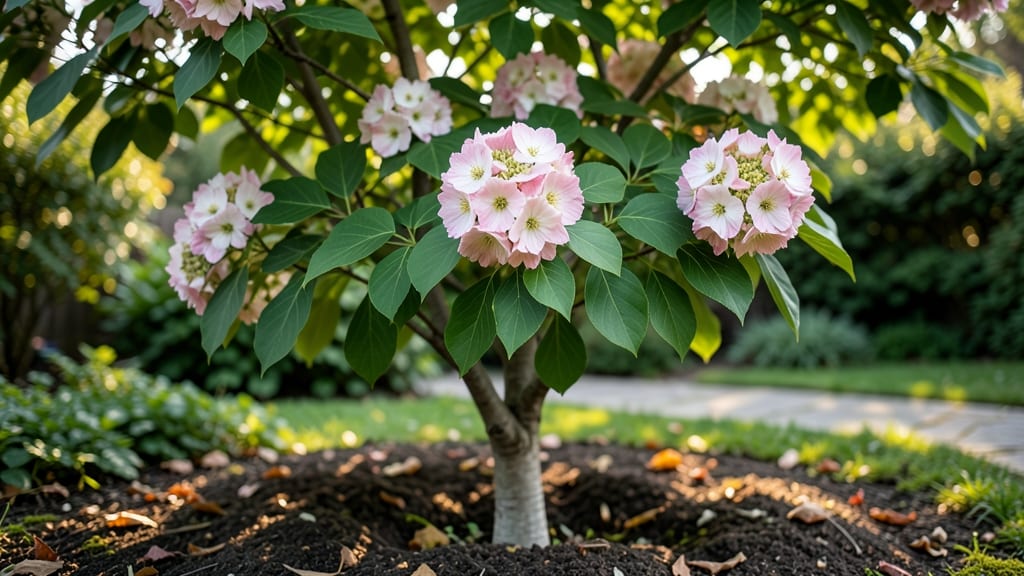
Strategic pruning turns Kousa dogwood flowers into a year-round spectacle. ✨ I’ve learned the hard way that this tree’s delicate blooms need precise timing—cut too early, and you risk losing next season’s showstopper flowers; too late, and you stunt growth.
The key is understanding its unique growth pattern, where flowers form on last year’s wood but still need air circulation to thrive.
This isn’t your average dogwood—its papery, pink-to-white blooms last 6-8 weeks, and the red berries that follow add seasonal interest. Unlike flowering cherries or crabapples, Kousa dogwoods bloom on old wood but respond well to light shaping cuts.
The goal? Open up the canopy for sunlight while preserving next year’s flower buds hidden in the branches.
You’ll end up with a tree that flowers earlier in spring and stays lush through fall. The secret is pruning right after blooming (late May-June) and avoiding heavy cuts that remove next year’s potential flowers. Even black thumbs can master this—just follow the “one-third rule” and watch the blooms multiply.
Works for urban landscapes, shade gardens, or as a statement specimen. Here’s how to keep yours thriving without sacrificing those iconic flowers.
📚 In This Guide
- What you need
- Instructions
- Tips and common mistakes
- Wrapping up and next steps
What you need
- ● Pruning shears: Bypass pruners (sharp, 6-8" blades) for clean cuts on small branches (1/4"–3/4" thick). Must be sterilized with rubbing alcohol before and after use. 🔪
- ● Loppers: Bypass or anvil type (8-10" blades) for medium branches (3/4"–2" thick). Look for ratcheting handles for extra leverage.
- ● Pruning saw: Curved-tooth or folding saw for thick branches (2"–4" thick). A bow saw is ideal for larger cuts.
- ○ Gloves: Heavy-duty gardening gloves (nitrile-coated for grip and protection against thorns). Optional: Arm sleeves for extra defense.
- ● Disinfectant: 70% isopropyl alcohol or hydrogen peroxide (3%) in a spray bottle to sterilize tools and prevent disease spread.
- ○ Pruning sealant: Tree wound sealant (optional but recommended for cuts larger than 1" to reduce sap loss and infection risk).
- ● Ladder or step stool: Sturdy, extendable ladder (rated for your weight + tools) or a stable stool (12–14" height) for reaching higher branches.
- ● Marking twine or flags: Colored twine or small plastic flags to tag branches for removal (helps visualize the final shape).
- ● Safety gear: Safety glasses (to shield eyes from debris) and closed-toe shoes (no sandals!).
- ● Extension pole pruners: For high branches without a ladder (10–15' reach).
- ● Branch bag or tarp: To collect pruned branches easily (reduces mess and makes cleanup a breeze!).
- ● Plant growth regulator: Dormant oil spray (applied post-pruning in late winter to deter pests).
- ● Camera or sketchbook: To document the tree’s structure before pruning (helps plan cuts like a pro!).
- ● First-aid kit: For minor cuts or scrapes (because safety first!).
Instructions for pruning Kousa dogwood trees to encourage year-round blooms
This is how I maintain my Kousa dogwood's stunning floral displays—strategic cuts that keep it healthy and flowering beautifully.
✂️ Step 1: Prune Immediately After Spring Flowering
The best time to shape your Kousa dogwood is right after its spring blooms fade. This timing ensures you remove spent flowers while leaving next year’s buds intact. I always wait until late May or early June when the petals have fallen completely—never prune while flowers are still open, as you risk removing next year’s bloom buds hidden in the leaf axils.
Start by removing any dead, diseased, or crossing branches first. These are easy to spot—they’re either brown and brittle or growing inward toward the center of the tree. Use clean, sharp pruners to make cuts just outside the branch collar, the swollen area where the branch meets the trunk. This prevents unsightly stubs and promotes faster healing. For larger branches over 1 inch in diameter, sterilize your tools with rubbing alcohol to prevent bacterial infections.
🌿 Step 2: Thin the Canopy for Better Airflow and Light
Kousa dogwoods naturally develop dense canopies, which can lead to fungal issues if airflow is poor. My goal is to create an open, vase-like shape that allows sunlight to penetrate to the inner branches. Look for branches that are growing straight up or rubbing against others—these are prime candidates for removal. I typically remove no more than 25% of the foliage in any single pruning session to avoid shocking the tree.
Focus on thinning from the bottom up. Start at the outer edges and work your way inward, removing smaller branches first. This opens up the center of the tree while maintaining its natural shape. You’ll see a noticeable difference in how light filters through the canopy after just one season of this method. Avoid cutting back more than ⅓ of the branch length at any one time, as this can stress the tree and reduce flowering.
☀️ Step 3: Light Summer Pruning for Shape and Health
During the summer months, I do light maintenance pruning to keep the tree looking its best. This is when I address any new growth that’s become too leggy or unruly. The key here is to make small cuts—never remove more than 10-15% of the foliage in summer. I wait until July or August to do this, as pruning too late in the season can stimulate new growth that won’t harden off before winter.
Look for branches that are growing in awkward directions or spoiling the tree’s natural form. Make your cuts just above a leaf bud or side branch, angling the cut slightly away from the bud to allow water to run off. This encourages the tree to develop new branches in the right direction. Summer pruning also helps control the tree’s size, which is especially useful if your Kousa dogwood is growing near a structure or sidewalk. Just remember—less is more with summer pruning.
⏰ Step 4: Minimal Winter Pruning to Prepare for Spring
Winter is the quietest time for pruning Kousa dogwoods, but it’s still important to do a final check before spring growth begins. I limit winter pruning to removing any dead, broken, or diseased branches that may have appeared over the past year. Avoid heavy pruning in winter, as the tree is dormant and more vulnerable to stress. If you must make larger cuts, do so in late winter (February), just before buds begin to swell.
This is also a good time to check for any suckers or water sprouts that may have appeared at the base of the tree. These fast-growing shoots divert energy away from the main structure, so I remove them completely at the base. Sterilize your tools between cuts to prevent spreading any potential diseases. By the time spring arrives, your tree will be ready to burst into bloom with minimal stress from winter pruning.
🌱 Step 5: Post-Pruning Care for Strong Recovery
After pruning, your Kousa dogwood will need extra care to recover and prepare for the next flowering season. Water deeply right after pruning, especially if the weather has been dry. This helps the tree replace lost foliage and encourages new growth. I also apply a 2-3 inch layer of organic mulch around the base, keeping it a few inches away from the trunk to prevent rot.
Monitor the tree closely in the weeks following pruning for any signs of stress, such as yellowing leaves or wilting branches. If you notice any issues, adjust your watering or pruning approach for the next cycle. A well-pruned Kousa dogwood should show new growth within 4-6 weeks, with stronger branches and more abundant blooms the following spring. The key is consistency—stick to this schedule, and your tree will reward you with stunning flowers year after year.
Tips & tricks for perfect Kousa dogwood pruning
These strategic insights will help you maintain your tree's health and maximize those breathtaking blooms year after year.
Timing is Everything: The window between late May and early June is critical for Step 1 pruning. I've learned the hard way that pruning too early can remove next year's flower buds while waiting too long risks leaving dead flowers on the tree. Look for completely fallen petals—this is your visual cue that the tree has finished blooming for the season. This timing ensures you're cutting at the optimal moment when the tree's energy is focused on developing next year's blossoms.
Branch Selection Strategy: In Step 2, focus on creating that open vase shape by removing branches that grow straight up or rub against others. I use a simple test: if two branches are touching, one must go. For larger branches over 1 inch in diameter, I make my cuts just outside the branch collar—this prevents unsightly stubs and promotes faster healing. Remember, you're aiming to remove no more than 25% of the foliage in any single session to avoid shocking the tree.
Summer Pruning Secrets: During the summer maintenance in Step 3, I wait until July or August to address leggy growth. The key is making small cuts—never more than 10-15% of the foliage. I look for branches growing in awkward directions and make my cuts just above a leaf bud, angling slightly away from the bud. This technique encourages new growth in the right direction while maintaining the tree's natural form. The goal is subtle shaping, not dramatic transformation.
Post-Pruning Recovery: After completing all pruning steps, focus on recovery. I water deeply right after pruning to help the tree replace lost foliage, then apply a 2-3 inch layer of organic mulch around the base. The mulch helps maintain moisture while keeping it a few inches away from the trunk prevents rot. Monitoring for signs of stress like yellowing leaves during the 4-6 week recovery period helps me adjust my care approach for optimal results.
Pro Tips for Kousa Dogwood Tree Flower
- These strategic insights will help you maintain your tree's health and maximize those breathtaking blooms year after ...
- Timing is Everything: The window between late May and early June is critical for Step 1 pruning. I've learned the har...
- Branch Selection Strategy: In Step 2, focus on creating that open vase shape by removing branches that grow straight ...
Frequently asked questions
Got questions about keeping your kousa dogwood tree blooming beautifully year-round? Here are some of the most common queries—and their answers—to help you master pruning like a pro!
When is the best time to prune kousa dogwood flowers?
The ideal time is late winter or early spring (February–March), just before new growth begins. This ensures you remove dead or weak branches without sacrificing next year’s blooms. Avoid pruning after flowering—you’ll risk cutting off next season’s buds!
Can I prune kousa dogwood in winter?
Yes, but only if it’s dormant and temperatures are above freezing. Winter pruning (December–February) works well in mild climates, but in colder zones, wait until late winter to avoid stressing the tree. Always use sharp, clean tools to prevent damage!
How do I encourage more flowers on my kousa dogwood?
To boost blooms, prune lightly each year—remove only dead, diseased, or crossing branches. Avoid heavy cuts, as kousa dogwoods flower on old wood. Thin the canopy slightly to improve airflow and sunlight exposure, which triggers more vibrant blooms!
What should I avoid when pruning kousa dogwood?
Avoid these mistakes:
- Pruning after flowering—this removes next year’s buds.
- Over-pruning—kousa dogwoods are sensitive to heavy cuts.
- Using dull tools—jagged cuts invite disease.
- Ignoring deadwood—always remove it to keep the tree healthy.
Are there alternatives to pruning for maintaining kousa dogwood flowers?
While pruning is key, you can also:
- Ensure well-draining soil and full sun (6+ hours/day).
- Fertilize lightly in early spring with a balanced 10-10-10 formula.
- Water deeply during droughts to support bloom production.
- Mulch around the base to retain moisture and regulate soil temp.
Wrapping up and next steps
The Kousa dogwood tree’s stunning blooms are a reward for thoughtful care, and with the right pruning techniques, you can keep its flowers thriving year-round! 🌸 By understanding when and how to trim—whether for shape, health, or bloom control—you’ll ensure your tree stays vibrant and full of life.
Now that you’re armed with knowledge, grab those shears and give your Kousa dogwood the attention it deserves.
Next step: Schedule your first pruning session in late winter or early spring (before buds swell) to kickstart the season with confidence. Happy pruning!