
Pruning
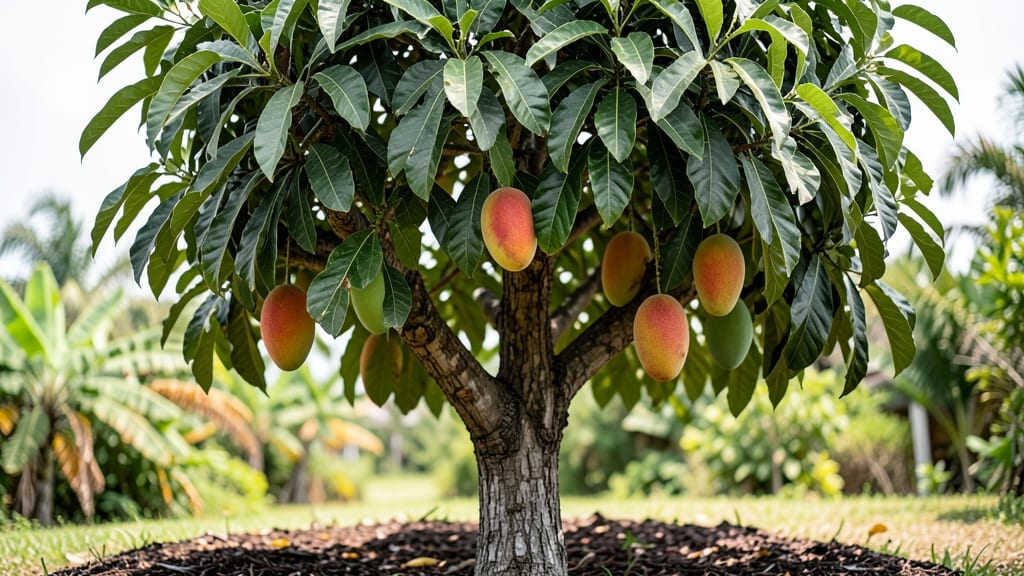
A mango tree with ripe fruits transforms your garden into a tropical oasis 🥭, but timing the harvest is everything.
There’s nothing quite like the moment you spot your mango tree heavy with vibrant, sun-ripened fruit—except the disappointment of harvesting too early or too late. Mastering the art of picking mangoes at their peak ensures sweet, juicy rewards and keeps your tree thriving for years.
Beyond the obvious visual appeal, ripe mangoes add texture and color to your garden design, making them a standout feature in tropical or exotic landscapes. Pair them with complementary plants like hibiscus or frangipani for a showstopping display that invites admiration.
In this guide, I’ll show you how to spot perfectly ripe mangoes, harvest them safely, and even repurpose any overripe fruit to maximize your tropical harvest’s beauty and value.


How to identify perfectly ripe mangoes on the tree
Picking mangoes at the right moment transforms your harvest from meh to magical. The secret lies in combining three key signals: visual cues, tactile feedback, and aromatic clues. Ignore one, and you risk tart, underripe fruit or mushy overripe disappointment.
I’ve learned this the hard way—once I waited too long, and my ‘Keitt’ mangoes turned to pulp before I could enjoy them!
Start by scanning your mango tree for color changes—this is your first major clue. Most varieties shift from green to yellow, orange, or red, depending on the cultivar. For example, ‘Haden’ mangoes develop a deep red blush, while ‘Kent’ mangoes turn golden-yellow.
Pro tip: Check the side of the fruit facing the sun first, as shade can delay color development.
| Cue Type | Sign of Ripeness | What to Look/Feel |
|---|---|---|
| Visual | Color Change | Deep, uniform hue (no green patches) |
| Tactile | Fruit Give | Slight yield near stem (like a ripe avocado) |
| Aromatic | Sweet Scent | Tropical fragrance near stem (not near blossom end) |
| Stem Test | Easy Release | Stem detaches with gentle twist (no force needed) |
Next, perform the gentle squeeze test—this is where many gardeners go wrong. Press your thumb near the fruit’s stem (not the blossom end). A ripe mango will feel slightly soft, like pressing a peach at its peak.
If it’s rock-hard, it’s underripe. If it’s mushy, you’ve missed your window. I once picked a ‘Tommy Atkins’ that gave like a stress ball—it was already fermenting by dinner!
Don’t overlook the aroma test, the most overlooked cue. Sniff near the stem end (not the blossom end). A ripe mango emits a sweet, tropical fragrance—think candy-like or perfumed.
If it smells bland or floral, it’s not ready. My ‘Ataulfo’ mangoes always pass this test with a vanilla-cinnamon scent that’s impossible to miss.
The stem twist test is your final check. Grasp the fruit’s stem and give it a quarter-turn twist. If it separates cleanly from the branch, it’s ready. If it resists, wait 2-3 days.
Forcing it off can damage the tree and the fruit. I learned this lesson when I yanked a ‘Irwin’ mango too hard—it left a ragged scar on the branch and bruised the fruit.
Common mistakes include relying on one cue alone or picking based on calendar dates. Mangoes ripen asynchronously, so some fruits may be ready weeks before others on the same tree.
I once harvested my entire crop on October 15th because my neighbor said that’s when ‘Haden’ mangoes ripen—only to find half were still green! Always check 3-4 fruits for consistency.
Variety matters too. ‘Ataulfo’ mangoes ripen faster than ‘Keitt’ mangoes, and some tropical varieties never fully color up but become soft and fragrant instead. Keep a harvest journal to track your tree’s patterns.
Note the year, variety, and exact cues when you pick—this becomes your personalized guide for future seasons.
Finally, avoid the blossom-end trap. Some gardeners check ripeness at the fruit’s blossom end, but this area stays green longer. Always inspect the stem end for color, scent, and texture.
I once sliced into a mango based on the blossom end’s color—only to find the inside was still hard and green near the pit!
Master these cues, and you’ll never miss the perfectly ripe mango again. The reward? Fruits so sweet they’ll make your neighbors jealous—and a tree that stays healthy and productive for decades. Now, go enjoy that harvest! 🥭
Step-by-step guide to harvesting mangoes without damaging the tree
Harvesting mangoes at the perfect moment is an art that balances fruit ripeness with tree health. A single wrong move can bruise the fruit or stress the branches, reducing next year’s yield.
I’ve learned the hard way—overripe mangoes falling prematurely or branches snapping under heavy loads. The key? Gentle techniques and the right tools to protect both your harvest and mango tree.
Before you climb the ladder, know that hand-picking is safer than pruning branches. Mango trees have delicate wood that can split or crack if you’re too aggressive. Start by inspecting the fruit for color changes, a slight give when pressed, and a sweet aroma near the stem.
These signs mean your mangoes are ready—but timing matters just as much as technique.
🌱 Step-by-Step Harvesting Process
-
Step 1: Gather Tools
Use a sturdy ladder, pruning shears (for stubborn stems), and a bucket lined with a soft cloth to cushion fruit. -
Step 2: Twist Gently
Grasp the mango near the stem and twist slowly until it separates naturally. Avoid pulling—this can tear the branch. -
Step 3: Support Heavy Branches
If branches sag, prop them with a support stake or ask someone to hold them while harvesting to prevent breakage. -
Step 4: Prune Damaged Wood
After harvesting, trim any dead or broken branches with sterilized shears at a 45-degree angle, ¼ inch above a bud. -
Step 5: Clean Up
Remove fallen leaves or fruit immediately to prevent disease. Disinfect tools with rubbing alcohol to stop pathogen spread.
Never cut the stem with shears—this can introduce bacterial infections like anthracnose, which thrives in wet conditions. If a mango refuses to twist, it’s not ripe yet.
Patience pays off with sweeter, juicier fruit. I once left a batch on the tree an extra week, and the flavor difference was night and day.
Post-harvest care is just as critical. Water your mango tree deeply after harvesting to replenish moisture lost during fruit production. Apply a balanced fertilizer (like 6-6-6) in early spring to replenish nutrients. Avoid heavy fertilizing now—your tree needs to recover, not grow new leaves.
Watch for signs of stress, like yellowing leaves or wilting branches. These could signal over-harvesting or nutrient deficiency. If you’ve taken too many mangoes at once, your tree might need extra care to bounce back.
Mulch around the base with organic matter to retain moisture and protect roots from temperature swings.
With these steps, you’ll enjoy a bountiful harvest year after year without sacrificing your mango tree’s health. The secret? Treat your tree like a partner—give it what it needs, and it’ll reward you with fruit that’s as beautiful as it is delicious. 🌳