
Pruning
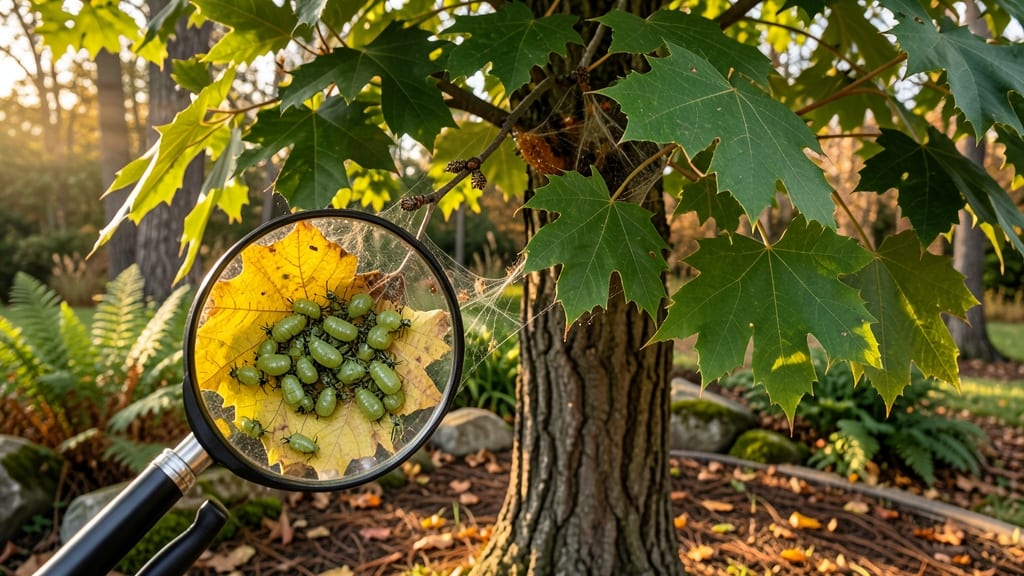
Your maple tree’s vibrant leaves shouldn’t turn into a pest buffet. 🌳 I’ve battled aphids, scale, and beetles on my sugar maple, and these organic barriers—like neem oil sprays, sticky traps, and beneficial nematodes—keep my tree thriving without harsh chemicals.
The key is acting early when you spot sticky residue or skeletonized leaves.
Most damage starts small: aphids cluster on new growth, scale insects hide under bark, and beetles chew ragged edges. My go-to defense is a weekly inspection in spring and summer, plus reflective mulch to deter Japanese beetles. These pests target stressed trees, so proper watering and pruning cut their appeal.
By combining physical barriers (row covers for young trees) with biological controls (ladybugs for aphids), you’ll see fewer holes and more robust foliage. The best part? These methods protect pollinators while keeping your tree strong for decades.
For severe infestations—like borers tunneling under the bark—consult an arborist. But for 90% of cases, these organic strategies work within 2-3 seasons. Your maple’s future starts with a little prevention now.
Root Causes of Maple Tree Infestations
Maple trees are resilient, but even their defenses can be overwhelmed by pests. Understanding why these issues arise is the first step to preventing them. Here’s a breakdown of the key factors that make your maple tree a target—and how science explains the chaos.
Pests don’t randomly attack healthy trees. Instead, they’re drawn to maples that are already under stress, sending out chemical distress signals that act like a neon "Open" sign for insects and diseases.
- Drought or Overwatering: Maple trees thrive in balanced moisture. Too little water causes roots to struggle, while soggy soil suffocates them. Both scenarios trigger the tree’s jasmonic acid response—a natural alarm system that attracts sap-sucking pests like aphids and scale insects.
- Poor Soil Nutrition: Deficiencies in nitrogen, phosphorus, or micronutrients (like magnesium) weaken a tree’s cell walls, making it easier for borers and bark beetles to penetrate. Fun fact: A nitrogen-deficient maple may produce fewer defensive resins, leaving it vulnerable to maple wilt pathogens.
- Physical Damage: Broken branches or bark wounds expose the tree’s vascular system. Pests like the maple leaf cutter (a type of sawfly) zero in on these entry points, using them to lay eggs and disrupt sap flow.
💡 Pro Tip: Conduct a soil test every 2–3 years. Amend soil with compost or a slow-release fertilizer (like 10-10-10) to reduce stress signals.
Pests aren’t the villains—they’re opportunists thriving in ecosystems where their natural predators are missing. Maple trees in urban or suburban areas often lack the biodiversity of a forest, tipping the scales in favor of pests.
| Pest | Missing Predator | Why It Matters |
|---|---|---|
| Japanese Beetles | Parasitoid wasps (e.g., Tiphia vernalis) | Beetles devour maple leaves, but without wasps to lay eggs in their grubs, populations explode. Urban landscapes often lack the native grasses these wasps need to survive. |
| Aphids | Ladybugs and lacewings | Overuse of broad-spectrum pesticides kills aphid predators faster than the aphids themselves. Without these beneficial insects, aphid colonies multiply unchecked. |
| Maple Borers | Woodpeckers and ants | Borers tunnel into stressed trees, but woodpeckers (who feast on larvae) avoid urban areas due to lack of dead wood habitats. Ants, which sometimes prey on borer eggs, are outcompeted by invasive species like Argentine ants. |
🌡️ Climate Connection: Warmer winters (thanks to climate change) allow pests like the spotted lanternfly to survive in regions where they once froze out. These insects love maple sap and lay eggs on tree trunks, hatching in spring to feast on foliage.
Pruning is supposed to help trees—but bad cuts can turn a maple into a pest buffet. Improper techniques create wounds that heal slowly, inviting infections and insects.
- Topping or Stub Cuts: Removing large branches abruptly leaves jagged stubs that don’t seal properly. These wounds become entry points for hypoxylon canker (a fungal disease) and borers, which lay eggs in the exposed wood.
- Wrong Timing: Pruning during sap flow season (late winter to early spring) stresses the tree, making it more attractive to pests. The high sugar content in sap during this time is like a pest smoothie.
- Over-Pruning: Removing more than 25% of the canopy in one season forces the tree to divert energy from defense mechanisms. This leaves it vulnerable to maple decline, a complex condition linked to stress and pest pressure.
✨ Best Practice: Prune maples in late fall or early winter (when they’re dormant) and use the three-cut method to minimize wound size. Always sterilize tools with 70% isopropyl alcohol to prevent spreading diseases like Verticillium wilt.
By addressing these root causes—stress, ecosystem imbalances, and pruning mistakes—you’re not just treating symptoms. You’re cutting off the pests’ invitation to the party. 🎉
Natural Fixes for Maple Tree Troubles
When pests invade your maple tree, the good news is that many solutions are simple, organic, and effective—no harsh chemicals required. Below, we’ve mapped out practical fixes for common maple tree pests, along with prevention tips to keep your tree thriving long-term.
Signs: Sticky residue (honeydew), curled leaves, or tiny bugs clustered on branches.
How to Fix It: 🔥 Blast Them Off – Use a strong spray of water (from a hose or pressure nozzle) to dislodge aphids and scale. Repeat every 3–5 days until they’re gone. 🍳 Soapy Spray Solution – Mix 1 tbsp mild castile soap or neem oil with 1 quart of water. Spray directly on infested areas (avoid overuse—it can harm beneficial insects). 👨🍳 Introduce Predators – Ladybugs and lacewings love eating aphids. Buy them online or attract them with dill, fennel, or marigolds planted nearby.
Prevention Tips: ✔ Encourage natural predators by planting companion flowers like alyssum or yarrow. ✔ Prune early to remove heavily infested branches before pests spread. ✔ Apply horticultural oil in early spring to smother overwintering eggs.
Signs: Skeletonized leaves, metallic green beetles chewing on foliage.
How to Fix It: 🔪 Handpick & Drown – Drop beetles into soapy water (they’re easy to spot—just pluck and drop). 🍳 Beer Trap – Fill a shallow dish with beer and bury it near the tree. Beetles are drawn in and drown. 🌡️ Neem Oil Spray – Apply in the early morning or evening to avoid harming bees (reapply after rain).
Prevention Tips: ✔ Set traps 20+ feet away from your tree—otherwise, they’ll just swarm it. ✔ Plant repellent herbs like rosemary, catnip, or garlic nearby. ✔ Use row covers on young trees if beetles are a recurring issue.
Signs: Thickened, curled leaves with white fungal growth underneath.
How to Fix It: 🥘 Remove & Destroy Infected Leaves – Collect fallen leaves and burn or compost them separately (don’t mulch them back into the soil). 🌡️ Copper Fungicide Spray – Apply copper-based fungicide (organic option) in early spring before new leaves emerge. ⏰ Prune for Airflow – Thin out dense branches to reduce humidity (fungi thrive in moist conditions).
Prevention Tips: ✔ Water at the base (not overhead) to keep leaves dry. ✔ Avoid overhead irrigation during rainy seasons. ✔ Plant resistant varieties like Norway maples if fungal issues persist.
Signs: Sawdust-like frass, oozing sap, or dying branches.
How to Fix It: 🔥 Drill & Inject – Use a hand drill to bore into the tunnel and inject undiluted neem oil or beneficial nematodes (microscopic worm allies). 🍳 Prune & Burn Infested Wood – Cut out heavily damaged branches and burn or dispose of them (don’t chip—borers hide in wood chips). 👨🍳 Wrap Young Trees – Use tree wrap or aluminum foil around the trunk to smother emerging adults.
Prevention Tips: ✔ Keep trees healthy with proper watering and mulching (stressed trees attract borers). ✔ Apply nematodes in early spring to prevent egg-laying. ✔ Inspect for entry holes in late winter and treat early.
💡 Boost Tree Health – Water deeply but infrequently, mulch properly, and fertilize in early spring (balanced organic fertilizer). 🔥 Encourage Beneficial Insects – Plant native wildflowers, clover, and milkweed to attract predator bugs. 🌡️ Monitor Regularly – Check your tree weekly in spring/summer for early signs of trouble. ✨ Use Physical Barriers – Tree guards or row covers can block flying pests like Japanese beetles.
Final Thought: Most maple tree pests can be managed without chemicals—just stay proactive, patient, and consistent. A little effort now saves big headaches (and a dying tree) later!** 🌳💚
Frequently asked questions about maple tree pests
What are the most common pests that attack maple trees?
The top culprits include aphids (tiny green bugs that leave sticky honeydew), Japanese beetles (metallic green beetles that skeletonize leaves), scale insects (brown bumps on branches), and maple borers (larvae that tunnel under bark). Fungal issues like powdery mildew also target stressed trees.
How do I tell if my maple tree has a pest problem?
Watch for sticky residue (honeydew from aphids), chewed leaves (beetles), oozing sap (borers), or thickened leaves (fungus). Inspect bark for tiny holes or sawdust-like frass (borer droppings). Early detection is key—act when you see 10% or fewer leaves affected.
Can I use neem oil on all types of maple tree pests?
Neem oil works well against aphids, scale, and beetles but is less effective for fungal issues like powdery mildew. For fungi, use copper-based sprays instead. Always apply neem oil in the early morning or evening to protect bees, and reapply after rain.
Will pruning my maple tree help prevent pests?
Yes! Prune in late fall or early winter (when trees are dormant) to remove dead/diseased branches—these attract borers. Avoid pruning during sap flow season (late winter to early spring), as open wounds attract pests. Sterilize tools with 70% isopropyl alcohol to prevent spreading disease.
When should I call an arborist for my maple tree pests?
Consult an arborist if you see large exit holes (borers), wilted branches (advanced borer damage), or severe fungal spread. Also seek help if organic methods fail after 2-3 seasons—some infestations (like spotted lanternfly) require professional-grade treatments.