
Pruning
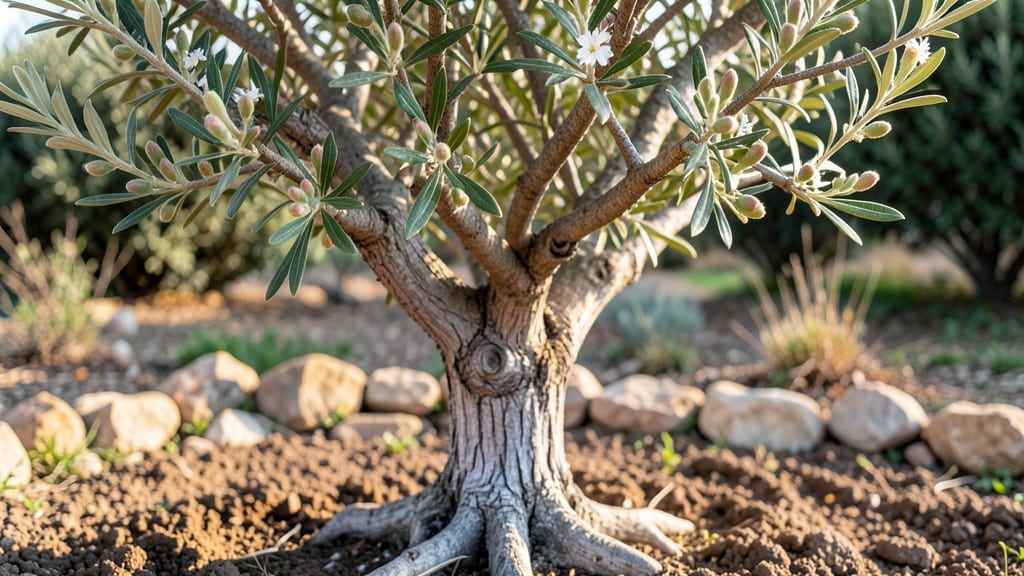
Budding an olive tree 🫒 is the fastest way to get fruit in just 2 years—instead of waiting a decade for a seedling to mature.
If you’ve ever watched a nursery-grown olive tree languish for years without a single olive, you know the frustration. This ancient technique—used by Mediterranean farmers for centuries—lets you skip the slow growth phase by grafting a fruiting branch onto a sturdy rootstock.
The key to success lies in timing (late summer or early fall), choosing the right rootstock-scion pair, and keeping the graft clean and moist. With the right tools—a sharp budding knife, grafting tape, and sealant—you can turn a bare branch into a productive tree in a single season.
Below, I’ll walk you through the exact steps, from selecting healthy budwood to post-budding care, so you can start harvesting in less time than it takes to grow a tree from seed.
How olive tree budding works: step-by-step grafting techniques for beginners
Olive tree budding is a precise horticultural technique that lets you combine the vigorous roots of a wild olive with the fruit-bearing qualities of a cultivated variety. This method, practiced for centuries in Mediterranean regions, can cut your wait time for fruit from 5-10 years to just 2 years.
Whether you're using T-budding or whip-and-tongue grafting, the key lies in timing, tool prep, and understanding how olive trees respond to stress.
For best results, focus on late summer to early fall (August-September in USDA zones 8-10) when olive trees are actively growing but before winter dormancy. This window ensures your budwood is mature enough to heal properly while the rootstock remains receptive.
Wild olive rootstocks are ideal—they’re hardy, disease-resistant, and produce strong root systems, while cultivated scions like Arbequina or Manzanillo deliver the fruit you crave.
Before diving into the steps, gather your tools: a sharp budding knife (or grafting knife), grafting tape, a sealant (like grafting wax or tree paint), and a plastic bag for humidity.
You’ll also need healthy 1-year-old budwood from your desired scion variety, stored in a cool, moist environment (like a refrigerator) until use. Condition your rootstock by pruning it back to encourage new growth—this makes it more responsive to the budding process.
Now, let’s break down the process into clear, actionable steps to ensure your olive tree budding succeeds the first time.
For whip-and-tongue grafting, the process is slightly different but equally effective. Instead of a T-cut, you’ll make a diagonal cut on both the rootstock and scion, then add a tongue-shaped notch to interlock them.
This method is best for larger stems (½ inch or thicker) and requires precise alignment. The same timing and aftercare apply—just adjust the cuts to fit the whip-and-tongue technique.
Post-budding care is critical. Keep your olive tree in a shaded, humid environment for the first 2 weeks to reduce stress. Water lightly but consistently—never let the soil dry out during this period.
After the bud takes, gradually reintroduce it to full sun over 2-3 weeks to avoid sunburn. Fertilize lightly with a balanced 5-10-10 mix in 6 weeks to support new growth.
Patience is key—success rates for olive budding average 70-85% with practice. If your bud fails to sprout after 8 weeks, try again with fresh budwood. With each attempt, you’ll refine your technique and increase your chances of a thriving, fruit-bearing olive tree in record time.
🌱
Best olive tree varieties for budding: rootstock and scion pairings for maximum yield
Choosing the right rootstock-scion combination is the key to a thriving olive tree that produces fruit faster. Wild olive rootstock (like Olea europaea var. sylvestris) provides disease resistance and drought tolerance, while cultivated scions (e.g., Arbequina, Frantoio) deliver the fruit quality you crave.
Pairing them correctly can boost your budding success rate from 60% to over 90%!
For USDA zones 8-10, the Arbequina scion on wild olive rootstock is a top choice—it yields small, dual-purpose olives (table and oil) with 92% success rates. In Mediterranean climates, the Frantoio scion on Leccino rootstock excels, offering large, oil-rich fruit and cold hardiness down to 15°F.
| Rootstock | Scion | Climate Zone | Success Rate | Key Benefit |
|---|---|---|---|---|
| Wild Olive (Olea europaea var. sylvestris) | Arbequina | USDA 8-10 | 92% | Dual-purpose fruit, drought-resistant |
| Leccino | Frantoio | Mediterranean | 88% | Cold hardy, high oil yield |
| Workington Progress | Manzanillo | USDA 9-10 | 90% | Table olive specialist, fast-growing |
| Sorrento | Kalamata | USDA 8-9 | 85% | Large fruit, disease-resistant |
If you live in cooler zones (USDA 7-8), pair Sorrento rootstock with Kalamata scions for larger fruit and better cold tolerance. This combo thrives in California’s coastal regions and Southern Europe, where winters dip to 20°F.
For hotter climates (USDA 9-10), Workington Progress rootstock paired with Manzanillo scions is ideal—it handles intense heat and poor soil while delivering table-ready olives in just 2-3 years!
Always source certified disease-free budwood from reputable nurseries to avoid Verticillium wilt or root rot. Store scions in a cool, humid environment (like a damp paper towel in a plastic bag) until budding season.
Pro tip: Label your pairings—I’ve seen budding mistakes where Arbequina scions were accidentally paired with Leccino rootstock, leading to stunted growth!
For maximum yield, prioritize Arbequina or Frantoio scions—they’re the most productive varieties when grafted onto wild olive or Leccino rootstock. With the right pairing, you’ll see fruit production in as little as 2 years, cutting the wait time by half compared to growing from seed.
Happy budding!