
Pruning
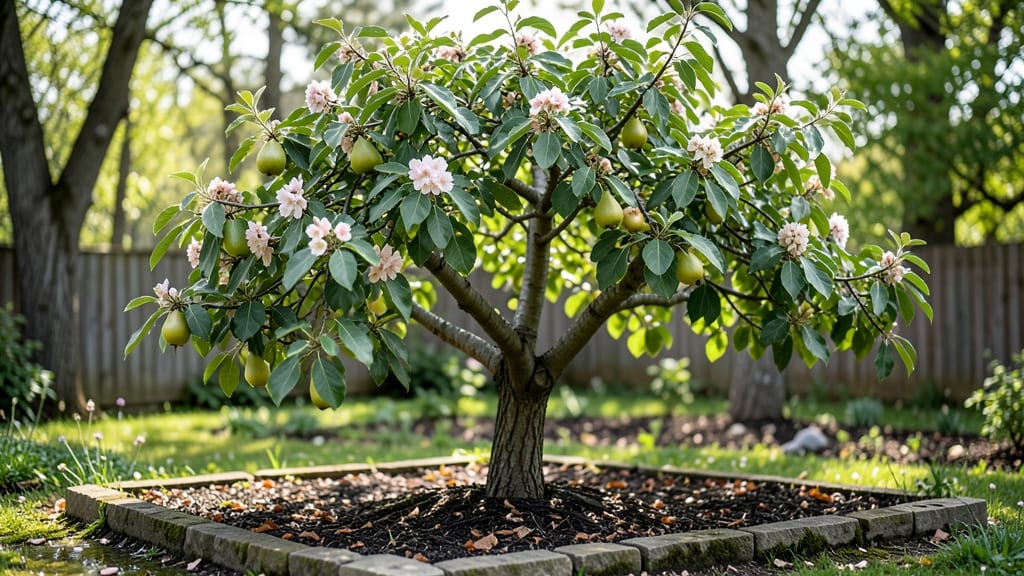
Caring for an oriental pear tree means year-round pruning that transforms it from a tangled mess into a fruitful, picturesque centerpiece. 🌿 I’ve watched mine go from a chaotic tangle of branches to a well-shaped tree producing hundreds of pears—all thanks to a few key cuts at the right times.
The secret isn’t complicated: it’s about opening up the center, thinning crowded branches, and encouraging strong growth where it matters most.
You’ll need basic pruning tools—a sharp pair of bypass pruners, loppers for thicker branches, and maybe a small saw for stubborn growth. The real work happens in late winter (just before buds swell) and again after harvest, but light pruning in summer keeps the tree manageable.
My tree now has better airflow, fewer broken limbs, and fruit that’s easier to pick—no more wrestling with overgrown branches.
By the end of the season, you’ll see a tree that’s stronger, more productive, and easier to maintain. The pears themselves grow larger, the shape stays balanced, and pests have fewer places to hide.
It’s the kind of transformation that makes gardening feel like magic—just with a little elbow grease and timing.
Whether you’re dealing with a young sapling or an established tree, these techniques work for any size. Let’s get those branches in shape so you can enjoy a bountiful harvest year after year.
📚 In This Guide
- What you need
- Instructions
- Tips and common mistakes
- Wrapping up and next steps
What you need
- ● Pruning shears: Bypass pruners (sharp, clean, and disinfected with rubbing alcohol or bleach solution). Recommended: Felco #2 or Fiskars.
- ● Loppers: For thicker branches (up to 2 inches in diameter). Example: Corona or Bahco.
- ● Pruning saw: For branches thicker than 2 inches. Look for: A curved blade for clean cuts.
- ● Gloves: Heavy-duty gardening gloves to protect hands from thorns and rough bark.
- ● Disinfectant: 1 part bleach to 9 parts water (for sterilizing tools between cuts).
- ○ Pruning sealant: Optional but helpful for larger cuts (e.g., Tree Seal Tape or pruning paint).
- ● Ladder or step stool: For reaching higher branches safely (ensure it’s stable!).
- ● Tarp or drop cloth: To collect fallen branches and debris easily.
- ● Hand pruners: For small, precise cuts (great for shaping).
- ● Extension pole saw: For very tall trees (e.g., Fiskars X27).
- ● Rake: To clear away pruned branches and leaves post-pruning.
- ● Notebook & pen: To jot down pruning notes or mark areas for future attention.
Step-by-step guide to pruning your oriental pear tree
Pruning isn't just about shaping—it's the key to fruit abundance and tree health.
✂️ Step 1: Time Your Pruning for Optimal Growth
Oriental pear trees respond best to pruning during their dormant season—late winter or early spring before buds swell. This timing ensures minimal stress while maximizing next year's fruit production. Avoid pruning during fall or summer, as wounds take longer to heal and pests can invade fresh cuts. I mark my calendar for mid-February in most climates, when temperatures hover around 40-50°F—cold enough to keep the tree dormant but warm enough to work comfortably.
If you must prune outside this window, focus on light maintenance like removing dead wood or crossing branches. Heavy structural pruning during active growth weakens the tree and reduces flowering potential. Watch for bud swell—when you see plump buds forming, it's too late for major pruning.
✂️ Step 2: Remove Dead, Diseased, or Weak Wood First
Start by inspecting the entire tree for dead branches—these snap easily when bent and have no green bark or leaves. Use clean, sharp pruning shears to make a 45-degree cut just outside the branch collar (the swollen area where the branch meets the trunk). Diseased branches show signs like oozing sap, fungal growth, or unusual discoloration—cut these out immediately and sterilize your tools with rubbing alcohol between cuts to prevent spreading pathogens.
Next, remove any crossing branches that rub against each other. These create wounds that invite disease and weaken the tree's structure. Look for branches growing inward or downward—they compete with upward-growing branches for sunlight and nutrients. Thin these out first, as they're the easiest to remove without disrupting the tree's natural shape.
✂️ Step 3: Open the Canopy for Sunlight and Airflow
Oriental pears thrive with good airflow, which reduces humidity-related diseases like fire blight. Aim to create an open-centered shape by removing branches that grow straight upward from the center of the tree. These "water sprouts" compete with fruiting wood and block light from reaching inner branches. Cut them back to a side branch or lateral bud, making sure your cut is just above an outward-facing bud to encourage growth in the right direction.
Thin out excessive foliage on the outer edges to improve sunlight penetration. You'll see sparse areas where light can't reach—these are prime spots for pruning. Remove one-third of the oldest branches each year to encourage new growth. This rejuvenation pruning keeps the tree productive and prevents it from becoming overcrowded.
✂️ Step 4: Shape for Fruit Production and Aesthetics
Oriental pears produce fruit on both old and new wood, so your pruning should balance structural integrity with fruit-bearing potential. Focus on scaffold branches—the main limbs that form the tree's framework. These should be spaced 8-12 inches apart along the trunk and angled 45-60 degrees from the vertical. If a scaffold branch grows too upright, it's prone to breaking under fruit weight—prune it back to a lateral bud that grows at a better angle.
For a more open-grown shape, make heading cuts (cutting back to a bud) rather than thinning cuts (removing entire branches). Heading cuts encourage bushier growth, which translates to more fruiting spurs. Avoid cutting back more than one-third of the tree's height in a single year—this can shock the tree and reduce fruit set. Step back frequently to check your progress; the goal is a balanced silhouette with sunlight reaching all branches.
⏰ Step 5: Post-Pruning Care for a Strong Recovery
After pruning, seal larger cuts (over ½ inch in diameter) with pruning sealant to prevent disease entry and reduce water loss. For smaller cuts, let them heal naturally—sealant isn't necessary and can trap moisture. Water the tree deeply to help it recover, especially if the pruning was heavy. Oriental pears are drought-tolerant once established, but they'll appreciate 1-2 inches of water per week during the first growing season after pruning.
Monitor the tree for new growth within 4-6 weeks. Healthy new shoots should emerge from the buds you left behind. If you see no new growth, the pruning may have been too aggressive, or the tree was stressed. In this case, reduce watering slightly and avoid fertilizing until you see signs of recovery. Keep an eye out for pests or disease—pruning wounds can attract borers or fungal infections, so treat any issues promptly with copper fungicide or neem oil as needed.
Tips & tricks for perfect oriental pear tree pruning
Here's what nobody tells you about transforming your tree's health and fruit yield—these are the details that separate a good pruning from a truly exceptional one.
Timing Secret: The mid-February window is your sweet spot, but if you're in a warmer climate (like zones 8-10), shift your pruning to late January when daytime temperatures consistently stay below 50°F. This prevents premature bud swell while still keeping the tree dormant. I've seen trees in Southern California pruned successfully in December—just watch for those first signs of bud activity. The key is to finish before buds begin swelling, which typically happens when nighttime lows stay above 40°F for several days.
Tool Technique: Your pruning shears should be sharper than a surgeon's scalpel—dull tools crush branches instead of making clean cuts. I invest in bypass pruners for branches under ½ inch thick and anvil pruners for thicker branches, but always clean and sterilize between cuts. For branches over 2 inches thick, use a handsaw with a smooth blade to avoid tearing. The 45-degree angle cut just outside the branch collar isn't just aesthetic—it promotes faster healing by allowing water to bead off rather than pool in the wound.
Canopy Strategy: When opening the canopy in Step 3, think of your tree like a cathedral—you want light streaming to the center. Remove those vertical "water sprouts" back to a side branch that grows at a 45-60 degree angle from the trunk. This creates a natural framework where sunlight can reach all fruit-bearing wood. Pro tip: Use a small mirror to check hard-to-see areas—you'll often find hidden crossing branches that need removal. The goal is to create a balanced silhouette where no branch is more than 8-12 inches apart from its neighbors.
Recovery Watch: After pruning, the 4-6 week recovery period is your tree's chance to show you if you've done it right. Look for new shoots emerging from the buds you left behind—these are your tree's way of saying "thank you." If you see no new growth, you've either pruned too aggressively or missed the dormant season window. In this case, reduce watering by 25% and avoid fertilizing until you see signs of recovery. The first flush of new leaves should be vibrant green, not yellow or wilted.
Pro Tips for Oriental Pear Tree Care
- Here's what nobody tells you about transforming your tree's health and fruit yield—these are the details that separat...
- Timing Secret: The mid-February window is your sweet spot, but if you're in a warmer climate (like zones 8-10), shift...
- Tool Technique: Your pruning shears should be sharper than a surgeon's scalpel—dull tools crush branches instead of m...
Frequently asked questions
Got questions about keeping your Oriental pear tree thriving?
Here are answers to the most common concerns—from pruning basics to troubleshooting—so you can grow fruit and shape your tree with confidence.
When is the best time to prune an Oriental pear tree for fruit production?
Prune Oriental pear trees in late winter or early spring (before bud break) to encourage strong fruit production. Avoid heavy pruning in fall, as it can stimulate late growth vulnerable to cold damage. Light shaping pruning after harvest (summer) is fine, but focus on structural cuts in dormant season.
How do I protect my Oriental pear tree from cold damage during winter?
Young trees or those in colder zones benefit from wrapping the trunk with tree wrap and applying a 3–4 inch layer of mulch around the base (keep mulch 6 inches away from the trunk). Avoid pruning late in the season, as new growth is less cold-hardy. Water deeply before freeze to reduce stress—just don’t overwater!
Why are my Oriental pear tree’s leaves curling or dropping, even with proper care?
Curling/dropping leaves often signal pest infestations (e.g., aphids, mites) or fungal diseases (like fire blight). Inspect undersides of leaves for pests and treat with neem oil or insecticidal soap. For fire blight, prune infected branches 6 inches below the damage and sterilize tools with rubbing alcohol. Improve airflow by thinning dense branches.
Can I grow Oriental pears in containers, or do they need a garden bed?
Oriental pear trees thrive in containers for 3–5 years if you choose a dwarf variety and a 15+ gallon pot with drainage. Use well-draining soil and repot annually. However, they’ll need full sun (6+ hours/day) and regular pruning to manage root-bound stress. For long-term fruit production, transplant to a garden bed after 5 years.
How much can I prune an Oriental pear tree without harming it?
Remove no more than 20–25% of the tree’s canopy in one season to avoid stress. Focus on:
- Dead/diseased wood (cut to healthy tissue)
- Crossing or rubbing branches (prune at the branch collar)
- Water sprouts (shoot up from trunk/scaffold branches)
Wrapping up and next steps
Caring for your oriental pear tree is a rewarding journey that combines patience, precision, and a touch of seasonal love.
By mastering year-round pruning—from shaping in winter to thinning fruit in summer—you’ll unlock lush growth, bountiful harvests, and a picturesque tree that steals the show. 🌳✨ Remember, every cut is a step toward a healthier, more productive tree, so don’t hesitate to roll up your sleeves and get hands-on!
Ready to take the next step? Start small—pick one pruning season to focus on this month, then gradually build your skills. Before you know it, you’ll be the proud gardener of a thriving oriental pear tree that’s the envy of the neighborhood! 🍐💚