
Pruning
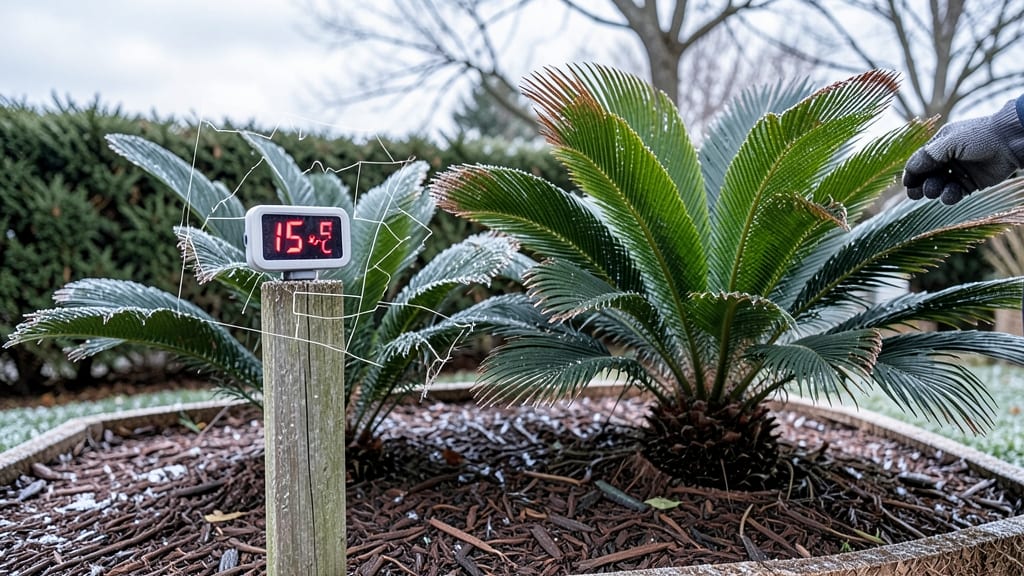
Palm trees with strong cold tolerance thrive in winter when you choose hardy species like the Windmill Palm or Needle Palm, which endure down to 15°F (-9°C) with protective measures. Proper winter care—mulching, trunk wrapping, and shielding from wind—maximizes their survival chances.
Understanding palm tree cold tolerance starts with recognizing that most tropical palms struggle below 30°F (-1°C), but specialized varieties push those limits. 🌬️ The secret lies in their natural adaptations—thicker trunks, waxy leaf coatings, and slower metabolic rates—which help them resist frost damage.
For example, the Needle Palm (Rhapidophyllum hystrix) can handle brief dips to 10°F (-12°C) if protected, while the Windmill Palm (Trachycarpus fortunei) thrives in USDA Zone 6 with proper winter prep.
Beyond species selection, winter prep transforms survival odds. A 3-inch layer of mulch around the base insulates roots, while wrapping trunks with burlap or frost cloth prevents cracking.
I’ve seen dramatic differences in palms that get these treatments versus those left exposed—sometimes the difference between a browned frond and a fully revived tree by spring. For gardeners in marginal zones (USDA 7-8), combining these tactics with windbreaks and avoiding winter watering (which stresses roots) is critical.
💡 In This Article
- Cold-Hardy Palm Tree Species and Their Survival Limits
- Winter Care Tips to Protect Palm Trees from Freezing
Cold-hardy palm tree species and their survival limits
Palm trees achieve cold tolerance through specialized adaptations like thicker trunks and waxy leaf surfaces that reduce water loss. The science behind their resilience lies in their ability to slow metabolic processes when temperatures drop, preventing cellular damage.
For instance, the Windmill Palm (Trachycarpus fortunei) can endure down to 15°F (-9°C) because its fibrous trunk acts as insulation, protecting the vascular system from freezing. This species thrives in USDA Zone 6, making it ideal for colder climates where most palms perish.
Another champion is the Needle Palm (Rhapidophyllum hystrix), which handles brief dips to 10°F (-12°C) thanks to its compact, spiky fronds that minimize surface area for frost formation.
Its slow growth rate also means it conserves energy during cold snaps. 🌟 In contrast, tropical palms like the Coconut Palm (Cocos nucifera) struggle below 30°F (-1°C) because their thin trunks and large leaves make them vulnerable to frost damage and dehydration.
The key difference lies in their evolutionary origins—hardy palms evolved in temperate regions with seasonal cold, while tropical species adapted to stable warmth.
Understanding these limits helps gardeners make informed choices. For example, the Dwarf Palmetto (Sabal minor) tolerates 10°F (-12°C) but requires 3-4 inches of mulch to protect its shallow roots.
Meanwhile, the Chinese Windmill Palm (Trachycarpus wagnerianus) can handle 10°F (-12°C) with minimal protection, making it a top pick for USDA Zone 7 gardens.
The variation in tolerance highlights why species selection is critical—some palms may survive a cold winter, but their long-term health depends on matching their native climate conditions.
Chilling injury occurs when water in palm cells freezes and expands, rupturing cell walls. Hardy palms mitigate this by producing antifreeze proteins that lower the freezing point of their cellular fluids.
This biological adaptation is similar to how some cold-hardy plants survive winter, but palms take it further by combining it with physical protections like thick trunks. For example, the Windmill Palm's trunk can expand and contract without cracking, thanks to its dense fiber structure.
This resilience explains why it’s often recommended for colder regions where other palms fail.
When comparing hardy palms, consider their growth habits too. The Needle Palm grows slowly, making it more resilient to cold stress, while faster-growing species like the Mexican Fan Palm (Washingtonia robusta) may recover from winter damage but often suffer long-term decline.
The trade-off between growth rate and cold tolerance is a key factor for gardeners balancing aesthetics with survival.
For instance, a Needle Palm might take 10 years to reach maturity but survive multiple winters, whereas a Mexican Fan Palm grows 2 feet per year but risks dieback in 20°F (-7°C) temperatures.
For gardeners in USDA Zones 7-8, the best strategy is to pair cold-hardy species with protective measures. The Windmill Palm and Dwarf Palmetto are excellent choices, but even they benefit from mulching and trunk wraps during extreme cold snaps.
In Zone 6, only the hardiest varieties like Trachycarpus fortunei should be planted, as they’re the only ones equipped to handle prolonged sub-freezing temperatures without supplemental heat.