
Trees
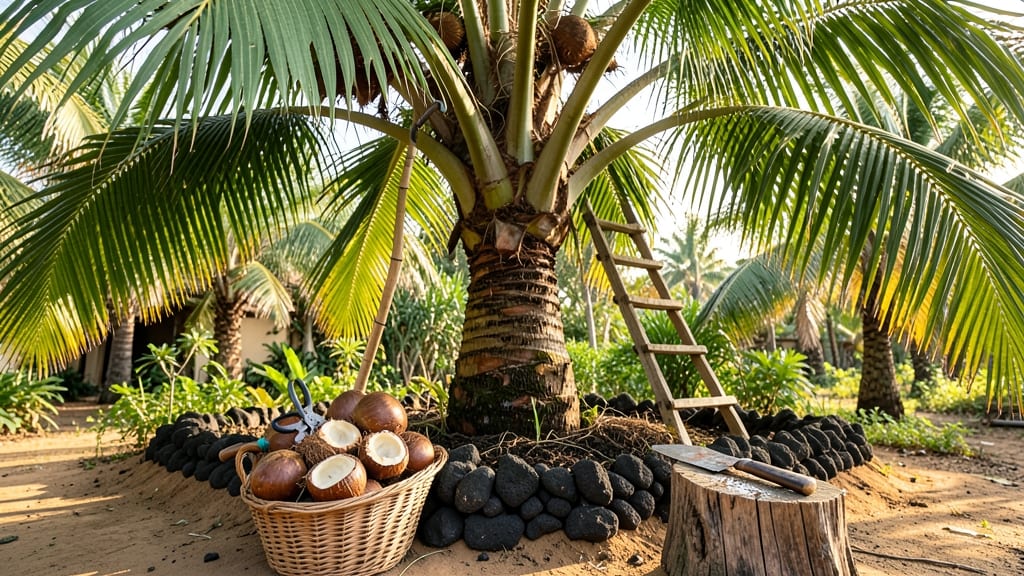
Your palm tree’s fruit staying trapped inside the husk is frustrating—especially when you’re dreaming of fresh coconut water. 🌴 I’ve cracked the code on when and how to harvest those coconuts safely, whether your palm is outdoors or thriving indoors in a sunny spot.
The key is patience, the right tools, and knowing the subtle signs of ripeness that most gardeners miss.
Most people rush harvesting, but a coconut won’t release easily until it’s fully mature—usually 6-12 months after flowering, depending on the palm variety. Look for a few telltale signs: the husk should feel slightly soft when tapped, and the coconut inside will rattle just a little when shaken.
If you crack it too early, the meat stays tough and the water is thin. Trust the process—your patience pays off with a sweet, creamy reward.
Once ripe, harvesting is simple but requires care. Use a sharp machete or pruning shears to cut the husk open cleanly, then drain the water immediately (it’s best fresh!).
The meat inside should separate easily—if it’s still stuck, let the coconut sit in warm water for 10-15 minutes to soften the fibers. Store the drained coconut in a cool, dry place, and you’ll have a pantry staple for months.
For indoor palms, this method works just as well—just ensure your tree gets bright, indirect light and occasional humidity boosts. If your palm isn’t producing fruit at all, check for pests like palm weevils or nutrient deficiencies (yellowing fronds are a red flag).
With the right care, your indoor palm can thrive and reward you with homegrown coconuts year after year.
What Triggers Fruit Retention
When a palm tree holds onto its fruit—like coconuts—long after it’s ripe, it’s usually a mix of natural biology and environmental factors. Understanding these causes can help you predict when to harvest and how to encourage the right timing. Here’s why it happens:
Palm trees, including coconut palms (Cocos nucifera), often retain fruit until the seed inside is fully developed. This is a survival mechanism—nature ensures the seed has the best chance of germination before releasing the fruit. For coconuts, this means:
- Water content: Immature coconuts have high water content (up to 80% in early stages) and a thin, soft husk. The tree won’t drop them until the water reduces to ~40-50%, signaling maturity.
- Endosperm hardening: The white, edible "meat" (endosperm) inside the coconut must fully develop and harden. This process takes 6–12 months depending on the variety and climate.
- Hormonal cues: The tree releases ethylene gas and abscisic acid only when the seed is ready, triggering detachment. If these signals are delayed, the fruit stays attached.
Actionable tip: 🔍 Check for a hard, brown husk and a dull, tan-colored shell—these are signs the seed is mature, even if the fruit looks green outside.
Extreme weather can stall fruit ripening or cause the tree to cling to coconuts longer. Key factors include:
| Factor | Effect on Fruit Retention |
|---|---|
| 🌞 Low sunlight | Reduces photosynthesis, slowing sugar production in the fruit. The tree prioritizes energy for leaves over fruit release. |
| ❄️ Cold snaps | Temperatures below 60°F (15°C) can pause ethylene production, keeping coconuts attached. Frost can even kill immature fruit. |
| 💦 Excess moisture | High humidity or waterlogged soil delays abscission (the natural dropping process). Fungal growth may also weaken the fruit’s stem. |
| 🔥 Drought | Forces the tree to conserve water, sometimes causing premature fruit drop—but in other cases, it overcompensates by holding onto fruit longer. |
Pro tip: 🌡️ Monitor your tree’s microclimate—if it’s in a shady spot or prone to temperature swings, hand-pollinate flowers (if possible) to ensure fruit sets properly.
A coconut palm’s fruit won’t mature—or will stay attached—if pollination or nutrient delivery fails. Here’s how:
- Insufficient pollinators: Coconut palms rely on wind, insects (like beetles), or bats for pollination. Without them, flowers may not develop into fruit, or the fruit may remain underdeveloped.
- Nutrient deficiencies: Low levels of potassium or magnesium can stunt fruit growth. The tree may retain small, unripe coconuts for months.
- Root stress: Compacted soil or poor drainage restricts water/nutrient uptake, leading to aborted fruit that stays attached like a "failed harvest."
Fix it: 🌱 Test soil pH (ideal: 5.5–6.5) and amend with banana peel compost (rich in potassium) or Epsom salt (for magnesium).
When pests or pathogens attack the fruit or tree, the palm may "give up" on certain coconuts, leaving them to rot or linger. Common culprits:
- Rhyncophorus palm weevils: Larvae bore into the fruit, causing premature drop or mummified coconuts that stay attached.
- Nematodes: Microscopic worms in the soil weaken roots, reducing the tree’s ability to support fruit, leading to delayed abscission.
- Fungal infections (e.g., Thielaviopsis): Cause blackened, shriveled coconuts that may remain on the tree for months.
Prevent it: 🛡️ Inspect trees monthly for sawdust-like frass (weevil sign) or yellowing fronds (nematode warning). Prune infected fruit immediately to stop spread.
Young or stressed palm trees may retain fruit longer due to:
- Immature reproductive systems: Trees under 5–7 years old often have delayed fruit maturation. Their energy goes to trunk growth, not coconuts.
- Overbearing: If a tree produces too many coconuts at once, it may prioritize a few over others, leaving some to wither on the branch.
- Genetic traits: Some coconut varieties (e.g., Tall vs. Dwarf) have naturally longer retention periods.
Solution: 🌿 Thin out excess fruit when young (leave 1–2 per bunch) to encourage healthier development.
Fixing Common Palm Tree Fruit Issues
When dealing with palm tree fruit—especially coconuts—you might encounter challenges like unripe nuts, pests, or improper harvesting. Here’s how to troubleshoot and resolve these issues safely and effectively, along with prevention tips to keep your palm tree thriving.
---
If your palm tree fruit isn’t ripening properly, it could be due to environmental factors, nutrient deficiencies, or improper care.
How to Fix It: - 🌞 Ensure Full Sun Exposure: Palm trees need at least 6–8 hours of direct sunlight daily. If your tree is shaded, trim nearby branches or relocate it to a sunnier spot. - 💧 Adjust Watering Practices: Overwatering or underwatering can stunt fruit development. Water deeply 2–3 times per week (more in extreme heat) and ensure proper drainage. - 🌿 Fertilize Correctly: Use a balanced palm fertilizer (high in potassium and magnesium) during the growing season. Avoid over-fertilizing, which can harm roots. - ⏳ Be Patient: Some palm varieties take 1–3 years to bear fruit. If the tree is young, give it time before expecting coconuts.
Prevention Tip: 💡 Mulch the base with organic matter (like coconut coir or compost) to retain moisture and improve soil health.
---
If you notice holes, chewed husks, or missing fruit, pests like rats, palm weevils, or beetles may be the culprit.
How to Fix It: - 🪲 Set Traps or Use Repellents: For rodents, place humane traps or use peppermint oil (soak cotton balls and place near the tree). - 🔍 Inspect Regularly: Check the tree trunk and fruit for borer holes (a sign of palm weevils). Remove infested fruit immediately. - 💦 Apply Neem Oil Spray: Mix 1 tbsp neem oil + 1 tsp dish soap per gallon of water and spray on leaves and fruit to deter pests. - 🌿 Prune Damaged Areas: Trim any severely infested branches to prevent spread.
Prevention Tip: ✨ Keep the area around the tree clean—remove fallen fruit and debris where pests hide.
---
If coconuts fall prematurely or the husk is damaged, harvesting methods may be to blame.
How to Fix It: - ⏰ Harvest at the Right Time: Coconuts are ripe when the husk turns brown and the nut sounds hollow when shaken. Avoid picking green ones—they won’t mature properly. - 🔪 Use the Right Tools: Never climb the tree—use a pole pruner or a long stick with a hook to reach high fruit safely. - 🌴 Cut Carefully: Make a clean cut near the stem (not too close to the nut) to avoid damaging the tree. - 🌡️ Store Properly: After harvesting, let coconuts dry in the sun for 2–3 days before storing in a cool, dry place to prevent mold.
Prevention Tip: 🎯 Harvest in the morning when coconuts are firmer and less likely to bruise.
---
Strong winds can crack coconuts or snap branches, making fruit unusable.
How to Fix It: - 🌳 Support the Tree: If your palm is young or weak, stake it temporarily during storm season to prevent toppling. - 🪓 Remove Broken Fruit: Discard any cracked or split coconuts—they won’t store well and may attract pests. - 🔧 Repair Structural Damage: If branches are broken, prune them back to healthy growth to encourage new, stronger branches.
Prevention Tip: 💡 Plant wind-resistant varieties like the Queen Palm or Mexican Fan Palm if you live in storm-prone areas.
--- Final Thought: With the right care, your palm tree can produce abundant, high-quality fruit year after year. Stay vigilant, act quickly when issues arise, and soon you’ll be enjoying fresh, ripe coconuts straight from your own tree! 🥥✨
Frequently asked questions
Why does my palm tree keep holding onto its fruit instead of dropping it?
The tree naturally retains fruit until the seed inside is fully mature—this can take 6-12 months for coconuts. Look for a hard, brown husk and a hollow sound when tapped. Environmental factors like low sunlight or nutrient deficiencies can delay this process, keeping fruit attached longer than usual.
Can I eat palm tree fruit that's still inside the husk?
Only if it's fully ripe—unripe fruit inside the husk will have tough meat and watery liquid. The husk should be brown and the nut should sound hollow when shaken. If you're unsure, let it ripen further on the tree or harvest and store it in a warm, dry place for 1-2 weeks to complete maturation.
How do I know when palm tree fruit is ready to harvest?
Check for these signs: the husk turns brown, the nut sounds hollow when shaken, and it may start to drop naturally. For coconuts, the husk should feel slightly soft when tapped—if it's still hard and green, it needs more time. Harvesting too early results in poor-quality fruit that won't store well.
What should I do if my palm tree fruit is rotting inside the husk?
Remove it immediately to prevent spread! Rotting fruit often indicates pest infestation (like palm weevils) or fungal infection. Clean the area thoroughly, apply neem oil spray, and check nearby fruit. For severe cases, consult a local arborist—they can recommend targeted treatments to save your tree.
Can indoor palm trees produce edible fruit?
Yes, but with proper care! Indoor palms need bright, indirect light and occasional humidity boosts (like misting). Dwarf varieties like the pygmy date palm are better suited for indoor growing. If your indoor palm isn't fruiting, it may need more sunlight—consider supplementing with grow lights during winter months.