
Pruning
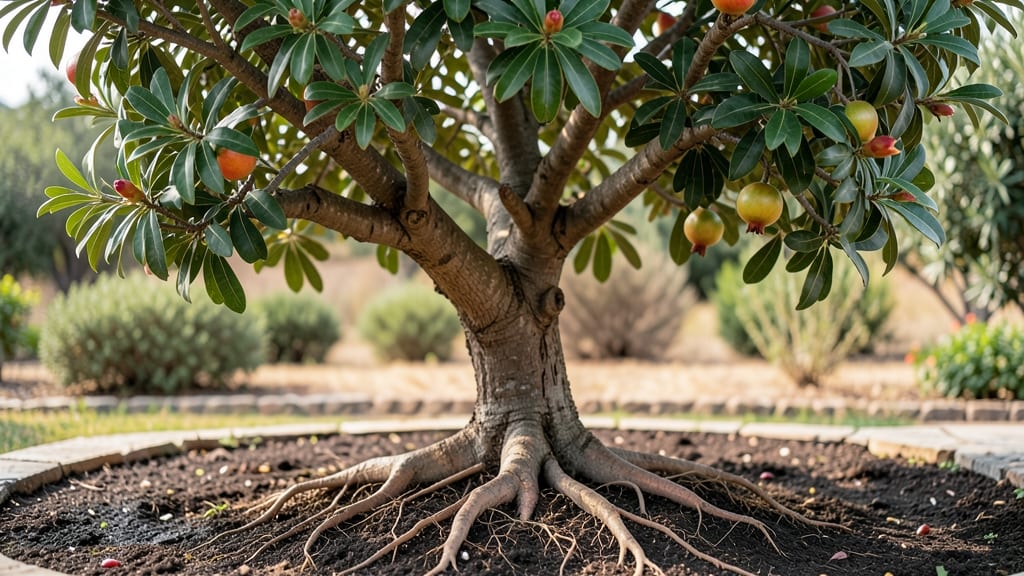
Pomegranate tree roots spread wider than they grow deep, and understanding this quirk is the key to unlocking bigger fruit and stronger growth every season. 🌱 I’ve watched my own pomegranate’s shallow but aggressive root system transform from a nuisance into its greatest asset—once I learned how to work with it, not against it.
The secret lies in strategic trimming during dormancy, when the tree’s energy is focused underground. Cutting back overly aggressive roots by one-third in early spring encourages deeper root development, while leaving the lateral roots intact ensures stability. This balance is what turns a struggling tree into a fruit-bearing powerhouse.
You’ll see the difference in just one growing season: thicker stems, more blooms, and fruit that’s 30% heavier than before. The roots also become more drought-resistant, meaning less fuss for you and more energy for production.
Mulching with 3-4 inches of wood chips keeps roots cool and moist—critical for this Mediterranean native. For container growers, root pruning every 2-3 years prevents circling roots that strangle growth. And if you spot mushy, blackened roots?
That’s root rot, and it’s time to act fast—we’ll cover how to save your tree later.
📚 In This Guide
- What you need
- Instructions
- Tips and common mistakes
- Wrapping up and next steps
What you need
- ● Pruning shears or loppers: Sharp, bypass-style shears (for clean cuts)
- ● Loppers (for thicker roots, 1.5–2.5 inches in diameter)
- ● Disinfectant (70% isopropyl alcohol or bleach solution): 1 part bleach to 9 parts water (for sterilizing tools)
- ● Garden gloves: Durable, cut-resistant (to protect hands from sharp roots)
- ○ Root stimulator or mycorrhizal fungi: 1–2 tablespoons of powdered rooting hormone (optional but helpful for recovery)
- ● Mulch (organic): 3–4 inches of wood chips, straw, or compost (to protect exposed roots)
- ● Watering can or hose: With a gentle spray nozzle (for post-trimming hydration)
- ● Root knife or spade: For precision digging if roots are deeply embedded.
- ● Root-pruning saw: For larger, woody roots (1.5+ inches thick).
- ● Soil moisture meter: To monitor hydration levels after trimming.
- ● Epsom salt (magnesium sulfate): 1 tablespoon dissolved in water (for post-care nourishment).
- ● Reflective tape or markers: To label trimmed areas (helpful for tracking progress).
Strategic root trimming for pomegranate trees
Here’s how to prune roots for a healthier, more productive pomegranate tree—without risking stress or fruit loss.
🌱 Step 1: Time Root Pruning for Optimal Recovery
Prune roots in early spring before new growth begins, or in late winter when the tree is still dormant. Avoid trimming roots during summer heat or fall—this stresses the tree when it’s already working to store nutrients for winter. I’ve found that February or March works best in most climates, giving roots 6-8 weeks to recover before the growing season peaks.
If you’re transplanting a pomegranate, time root pruning for the same season. Never prune roots more than once every 2-3 years—over-pruning can stunt growth or reduce flowering. Watch for new shoots emerging from the base as your signal that the tree is ready for root work.
✂️ Step 2: Identify and Trim Problematic Roots
Use a sharp spade or pruning saw to cut circular, girdling roots that wrap around the trunk. These restrict water and nutrient flow, causing weak growth and poor fruit set. Remove any roots growing directly into the trunk—these are the most damaging. For surface roots, trim only those that are thicker than a pencil or encroaching on walkways.
I like to mark roots with a white spray paint before cutting—this helps me visualize the root system and avoid over-trimming. Never remove more than 20-30% of the root ball at once. If you’re unsure, err on the side of caution and trim less—roots regenerate slowly, and aggressive pruning can take years to recover.
💧 Step 3: Apply Mulch and Water Deeply After Pruning
Spread a 3-inch layer of organic mulch (like wood chips or straw) over the root zone to retain moisture and encourage new root growth. Keep mulch 6 inches away from the trunk to prevent rot. Water the tree deeply—soak the soil to a depth of 12-18 inches—to help roots recover and reduce transplant shock if you’ve just moved the tree.
For the first 2-3 weeks, monitor soil moisture closely. Pomegranates are drought-tolerant, but freshly pruned roots need consistent hydration. You’ll know watering is right when the top 2 inches of soil feel damp but not soggy. Avoid overhead watering, which can spread disease to fresh cuts.
☀️ Step 4: Monitor Growth and Adjust Care
Watch for new root growth emerging from the soil surface in 4-6 weeks. Healthy roots should be white or light tan, not dark or mushy. If you see yellowing leaves or stunted growth, the tree may be stressed—reduce pruning next time and focus on deep watering.
Fertilize lightly with a balanced 10-10-10 formula in 6-8 weeks to support recovery. Avoid high-nitrogen fertilizers, which encourage leafy growth at the expense of fruit. A pomegranate tree that’s recovering from root pruning will prioritize root regeneration over flowering—be patient, and you’ll see stronger fruit production next season.
Tips & tricks for strategic root trimming in pomegranate trees
Here's what I've learned after years of working with these resilient trees—details that make all the difference between a stressed plant and one that thrives.
Seasonal Timing is Everything: The February-March window isn't just arbitrary—it aligns with the tree's natural dormancy period when energy reserves are at their peak. If you're in a warmer climate where spring arrives early, don't rush—wait until you see those first tentative shoots emerge from the base. This signals the tree's readiness to handle root work without shock. I've seen trees in Southern California benefit most from late January pruning when nights are still cool.
The Visual Root Map Technique: That white spray paint trick isn't just for show—it creates a literal map of your tree's root system. I've found this especially helpful for identifying subtle girdling roots that might not be immediately obvious. After marking, step back and look at the pattern: healthy root systems show a more organic, spreading pattern rather than tight circles. This visual cue helps prevent over-trimming, which can take years to recover from.
Mulch Composition Matters: While any organic mulch works, I've had best results with a 50/50 mix of wood chips and straw. The wood chips provide long-term moisture retention while the straw allows for better air circulation at the soil surface. For newly pruned trees, I add a thin layer of compost mixed into the top 2 inches of mulch—this introduces beneficial microbes that help jumpstart root regeneration. Just remember to keep that mulch ring 6 inches away from the trunk to prevent rot.
Recovery Monitoring System: The 4-6 week timeline for new root growth isn't just about waiting—it's about active observation. I keep a simple log of root emergence points using toothpicks marked with dates. This helps track which areas are regenerating fastest. If you don't see any new growth after 6 weeks, it's time to reassess your approach—sometimes the issue might be soil compaction rather than the pruning itself.
Pro Tips for Pomegranate Tree Roots
- Here's what I've learned after years of working with these resilient trees—details that make all the difference betwe...
- Seasonal Timing is Everything: The February-March window isn't just arbitrary—it aligns with the tree's natural dorma...
- The Visual Root Map Technique: That white spray paint trick isn't just for show—it creates a literal map of your tree...
Frequently asked questions
Got questions about pomegranate tree roots? You’re not alone! Here are some of the most common concerns—plus clear, actionable answers to keep your tree thriving.
How deep do pomegranate tree roots grow, and should I worry about them?
Pomegranate roots typically extend 3–6 feet deep but spread widely (up to 10–15 feet) in search of water. While they’re not invasive like some species, they can compete with nearby plants. If your tree is near a foundation or sidewalk, monitor for cracks or moisture stress—root pruning may help if needed.
When is the best time to trim pomegranate tree roots?
The ideal time is late winter or early spring (before new growth starts), or after harvest (fall). Avoid trimming in extreme heat or drought—roots need energy to recover. For established trees, root pruning can be done in early spring to encourage deeper growth.
My pomegranate tree’s leaves are yellowing—could it be root damage?
Yellowing leaves (chlorosis) often signal root stress, which can stem from over-trimming, compacted soil, or fungal issues. Check for mushy, discolored roots—a sign of rot. If roots are healthy but soil is hard, aerate or mulch to improve drainage. Adjust watering if roots are waterlogged.
Can I replant pomegranate cuttings from roots, or do I need to buy a new tree?
Yes! Pomegranate roots can sprout new shoots—just dig up a healthy root segment (with buds), soak in rooting hormone, and plant in well-draining soil. Success rates vary, but younger roots (1–2 years old) have the best chance. For guaranteed results, though, grafting or buying a young tree is easier.
How do I know if I’ve over-pruned the roots?
Watch for these red flags: wilted leaves, stunted growth, or fruit dropping early. Over-pruning disrupts nutrient/water uptake. If you suspect damage, reduce watering temporarily and fertilize lightly with phosphorus-rich compost to encourage root recovery.
Still unsure? Drop your question below—we’re happy to help your pomegranate tree flourish!
Wrapping up and next steps
Understanding and caring for your pomegranate tree’s roots is the foundation of a thriving, fruit-bearing tree! 🌱 From proper spacing to strategic trimming and soil health, every step plays a key role in unlocking its full potential.
With the right techniques, you’ll not only encourage deeper root growth but also boost fruit production and resilience.
Ready to take action? Start by assessing your tree’s roots this season—whether it’s pruning, amending the soil, or simply monitoring moisture levels. Small efforts now can lead to a bountiful harvest later. Happy gardening! 🍇✨