
Pruning
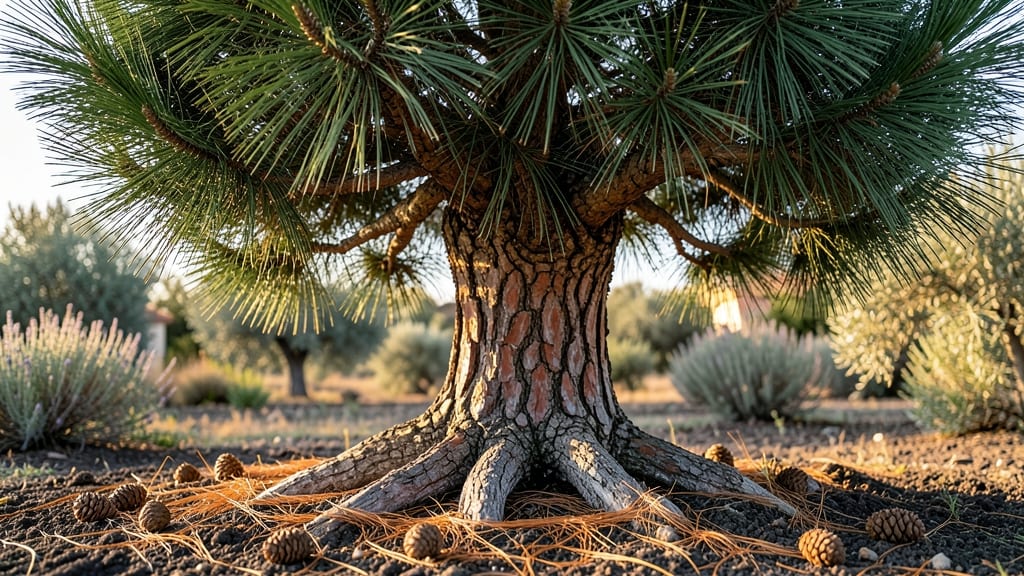
Your stone pine tree care starts with understanding its Mediterranean roots—it thrives where summers are hot, winters mild, and soil drains like a sieve. 🌿 I’ve pruned mine for years, and the key is working with its natural shape, not against it.
These trees reward patience with stunning foliage and those prized pine nuts, but they demand a light touch to stay vigorous.
Pruning isn’t just about aesthetics—it’s about health. Focus on removing dead branches first, then thin out crowded growth to improve airflow. Stone pines handle pruning best in late winter or early spring, but you can do light shaping anytime.
Just avoid heavy cuts after mid-summer, or you risk stressing the tree before winter. My rule? Never remove more than 25% of the canopy in one go.
The payoff is a tree that looks effortlessly elegant while producing more pine nuts each year. You’ll notice fewer brown needles, stronger new growth, and a shape that feels balanced—not to mention the delicious harvest.
Even in containers, these trees adapt well if you match their care to their Mediterranean instincts.
For those with limited space, dwarf varieties work beautifully in large pots. Just remember: stone pines hate soggy roots, so prioritize fast-draining soil and avoid overwatering. A little neglect is better than drowning them—these trees are tougher than they look!
📚 In This Guide
- What you need
- Instructions
- Tips and common mistakes
- Wrapping up and next steps
What you need
- ● Pruning shears: Bypass pruners (for cuts up to ½ inch) or anvil pruners (for thicker branches). Quantity: 1 pair (sterilize with rubbing alcohol after each use!).
- ● Loppers: Bypass style, 8–12 inches long, for branches ½–1½ inches thick. Quantity: 1 pair.
- ● Pruning saw: Curved-tooth for clean cuts on branches 1½+ inches thick. Quantity: 1.
- ● Gloves: Heavy-duty, cut-resistant (stone pine needles are sharp!). Quantity: 1 pair.
- ● Ladder or step stool: Sturdy, non-slip (for high branches). Height: At least 8–10 feet.
- ● Disinfectant: 70% isopropyl alcohol or bleach solution (1 part bleach:9 parts water) to sterilize tools.
- ○ Sealing wax or pruning paste: Optional but helpful for large cuts (1 small jar).
- ● Watering can or hose: With a gentle spray nozzle for post-pruning hydration.
- ● Mulch: Organic (pine bark or wood chips), 2–4 inches deep, kept 6+ inches away from the trunk.
- ● Pole pruner: Extends reach for high branches (12+ feet).
- ● Tree growth regulator: Hormone-based spray (e.g., Auxin) to control excessive growth (1 small bottle).
- ● Soil pH tester kit: Ensures optimal acidic to neutral (pH 5.0–7.0) soil for stone pines.
- ● Bird netting: Protects pine cones from squirrels or birds (if fruiting is a goal).
- ● Tree tie or zip ties: For supporting weak branches (small pack).
Step-by-step instructions for pruning stone pine trees
Here's how I keep my stone pines thriving—healthy, productive, and resistant to disease.
✂️ Step 1: Assess the Tree for Pruning Needs
Start in early spring, just as new growth begins. Look for dead, diseased, or crossing branches—these are your first targets. Stone pines handle pruning well, but you’ll want to remove no more than 25% of the canopy in one season to avoid stress. I always work with sharp, clean pruners to prevent tearing the bark.
Check for water sprouts—those fast-growing, vertical shoots that steal energy from fruit production. These should be cut back to the main branch. Also, scan for branches rubbing against each other; these often create wounds that invite pests. Mark these areas with a piece of twine or tape before you start cutting.
☀️ Step 2: Prune for Light and Airflow
Stone pines need good airflow to prevent fungal issues, especially in humid climates. Focus on thinning out the inner canopy—remove branches that block sunlight from reaching the center. You’ll see dense clusters of needles; these are prime spots for disease if light can’t penetrate. Aim to open up the tree so sunlight reaches at least 60% of the foliage.
I like to step back every few cuts and visualize the tree’s shape. Stone pines have a natural, slightly irregular form, so avoid over-pruning for symmetry. Instead, guide the tree’s growth by removing branches that grow inward or downward. This encourages a stronger, more open structure that supports heavy pinecone production.
⏰ Step 3: Time Summer Maintenance Pruning
Mid-summer is the best time for light maintenance. Wait until after the June drop—when the tree naturally sheds immature pinecones—so you’re not removing energy that could go toward fruit development. Focus on deadheading spent cones and trimming any new water sprouts that may have appeared.
Use sterilized pruning shears for small branches and a pruning saw for anything thicker than ½ inch. Make cuts just outside the branch collar—the swollen area where the branch meets the trunk—to promote faster healing. Avoid cutting into old wounds or calloused tissue, as this can slow recovery.
✂️ Step 4: Prepare for Winter and Early Spring
Late fall is the time to clean up pruning debris and apply a copper fungicide spray if you noticed any signs of disease earlier in the year. Stone pines are relatively hardy, but removing fallen needles and small branches prevents fungal spores from overwintering. I also check for pest damage, like needle cast or bark beetles, and treat if necessary.
In very cold climates, I avoid heavy pruning in late winter, as the tree is still dormant. Instead, I do a quick check for ice damage or broken branches from winter storms and remove only the most urgent cuts. This keeps the tree’s energy focused on recovering from cold stress rather than healing large wounds.
🌱 Step 5: Monitor and Adjust Year-Round
Stone pines grow slowly, so you’ll only need to prune every 2-3 years for major shaping. However, I recommend light maintenance annually to keep the tree healthy. Watch for new growth patterns—if branches start growing too vigorously in one direction, that’s a sign the tree is leaning toward more light or water.
Here’s the thing—stone pines are forgiving, but they reward consistent care. If you notice yellowing needles or stunted growth, it’s often a sign of over-pruning or poor airflow. Adjust your approach the next season by focusing on health over aesthetics. A well-pruned stone pine will produce larger, more abundant pinecones and stand strong for decades.
Tips & tricks for pruning stone pine trees
A few smart moves can make all the difference in keeping your stone pine thriving for years to come.
Tool Prep Matters: Before you even touch your tree, take 5 minutes to clean and sharpen your pruning tools. Dull blades tear bark instead of making clean cuts, which slows healing and invites disease. I wipe my shears with rubbing alcohol between cuts to prevent spreading any potential pathogens from one branch to another. This small step keeps your tree healthier and makes the work go faster.
Seasonal Timing Secret: The instructions mention spring and summer as key times, but here's what nobody tells you—fall cleanup is just as important. After the leaves fall, you can spot hidden problems like pest damage or fungal growth that might have gone unnoticed during the growing season. I schedule my fall cleanup right after the first frost when pests are less active, giving the tree a chance to heal before winter sets in.
Visual Cue for Canopy Health: When you're thinning the inner canopy in Step 2, here's how to know you've done enough: step back and look for an open "airy" center where sunlight can reach at least 60% of the foliage. You should be able to see through to the other side of the tree in several spots. If you're still struggling to see through, keep removing those dense clusters—this is where fungal issues start. Think of it like giving your tree a breath of fresh air.
Winter Pruning Wisdom: In cold climates, I've learned the hard way that late winter pruning can stress a dormant tree. Instead of heavy cuts, I focus on removing only the most urgent damage—broken branches from ice or snow load. For any larger cuts, I wait until early spring when the tree's sap starts flowing again. This simple adjustment has kept my trees healthier through harsh winters.
Pro Tips for Stone Pine Tree Care
- A few smart moves can make all the difference in keeping your stone pine thriving for years to come.
- Tool Prep Matters: Before you even touch your tree, take 5 minutes to clean and sharpen your pruning tools.
- Seasonal Timing Secret: The instructions mention spring and summer as key times, but here's what nobody tells you—fall cleanup is just as important.
Frequently asked questions
Got questions about keeping your stone pine tree thriving?
Here are some of the most common concerns—plus straightforward answers to help you care for this Mediterranean beauty with confidence.
When is the best time to prune a stone pine tree?
The ideal time to prune is late winter or early spring (before new growth begins). Avoid heavy pruning in summer or fall, as it can stress the tree and attract pests. Light shaping can be done year-round, but prioritize dormant-season pruning for major cuts. Pro tip: Never remove more than 25% of the foliage in one session!
How do I prune a stone pine tree to encourage pine nuts?
Stone pines produce nuts on older wood, so avoid aggressive pruning that removes mature branches. Focus on:
- Opening the canopy to improve air circulation (reduces disease risk).
- Trimming only dead, diseased, or crossing branches.
- Pruning just enough to shape without sacrificing fruiting branches.
What should I do if my stone pine tree has brown needles?
Brown needles are often a sign of overwatering, underwatering, or fungal issues. Check the soil—it should be dry but not bone-dry. If fungal disease (like needle blight) is suspected:
- Remove affected branches 1–2 inches below the browning.
- Apply a copper fungicide if needed (follow label instructions).
- Avoid wetting foliage during watering.
Can I grow a stone pine tree in a container?
Yes, but it’s challenging due to their size and root system. If you must:
- Use a large, deep container (minimum 20+ gallons) with drainage holes.
- Plant in well-draining soil (mix sand or perlite with potting mix).
- Prune roots annually to prevent circling.
- Move indoors in winter if temps drop below 10°F (-12°C).
How do I sterilize pruning tools to prevent disease?
Always sterilize tools before and after pruning to avoid spreading pathogens:
- Wipe blades with rubbing alcohol (70%+) or a 10% bleach solution.
- Use a sharp pocketknife for small cuts to minimize tearing.
- Disinfect shears with a commercial tool sanitizer (like Concrobium).
Wrapping up and next steps
Caring for your stone pine tree is a rewarding journey that blends patience, skill, and a touch of nature’s magic! 🌿 With the right pruning techniques—whether in spring, summer, or winter—you’ll foster healthy growth, abundant fruit, and a stunning, resilient tree.
Remember, consistency is key, and every trim brings you closer to a thriving, picturesque landscape.
Ready to take the next step? Grab your pruners, dust off your gloves, and schedule your first pruning session this season! Your stone pine will thank you with vibrant foliage and delicious pine nuts for years to come. 🌟